When buyers search for a bitumen melting machine or a barrels bitumen melting machine, the very first question they ask is almost always about output: how many tons can it melt per hour, and how many tons can it process in a full day? Capacity determines everything downstream — plant sizing, ROI, labor planning, and even which asphalt drum melter manufacturer you should be talking to. This guide breaks down real hourly and daily throughput figures, explains what drives them, and answers the other questions serious buyers raise before requesting a quote.
💬 Buyer insight: “We don’t just want a bitumen decanter — we want to know exactly how many drums it clears in an 8-hour shift before we commit budget.” This is the single most common opening line from procurement teams evaluating a bitumen decanter for sale.
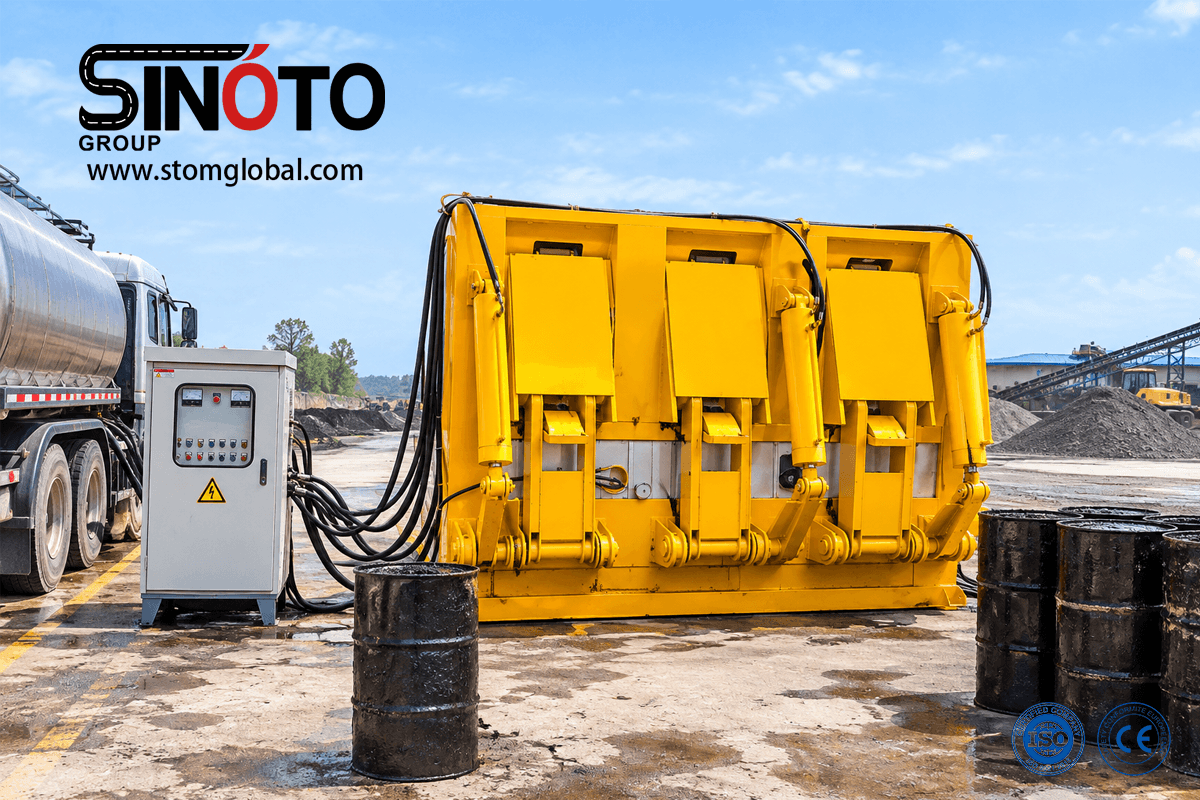
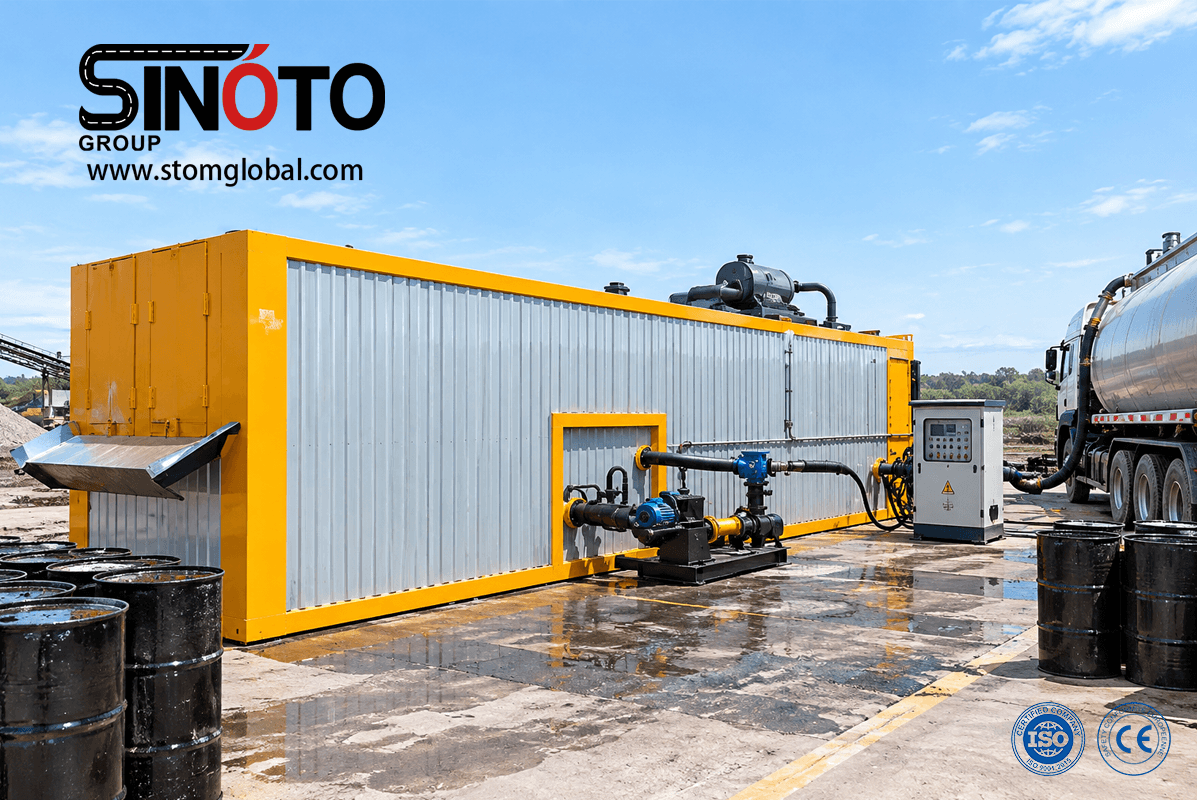
A bitumen decanter, sometimes called an asphalt drum melter or barrel bitumen melter, is built around one core job: pulling solid bitumen out of steel drums, melting it with indirect thermal-oil heat, and pumping it to a storage tank — continuously, not batch by batch. Capacity is expressed in tons per hour (t/h or TPH) because the process runs as a rolling line, not a one-off cook cycle.
Below is the standard capacity range across a typical bitumen melting machine model lineup:
| 📊 Model | Capacity (t/h) | Barrels Accommodated | Bitumen Pool Volume (m³) | Total Power (kW) |
|---|---|---|---|---|
| DT-4 | 4–5 | 30 pcs | 14 m³ | 9.5 |
| DT-6 | 6–8 | 40 pcs | 17 m³ | 18.5 |
| DT-10 | 8–10 | 44 pcs | 18 m³ | 20.5 |
| DT-12 | 12–15 | 60 pcs | 22 m³ | 20.5 |
🔑 Key takeaway: productive capacity across this bitumen drum melting machine range spans roughly 4 TPH on the smallest unit up to 15 TPH on the largest configuration. Most mid-sized asphalt plants and road maintenance contractors land on the DT-6 or DT-10 range, which balances throughput against footprint and fuel consumption.
📌 Icon note — Barrel-to-melt speed: a single 200L bitumen drum inside a well-tuned bitumen decanting unit typically finishes melting in 40–60 minutes, using a high-temperature thermal-oil coil system rather than direct open flame. That per-drum speed is what stacks up into the hourly TPH rating shown above.
Buyers rarely run a bitumen melting machine for a full continuous 24 hours, but understanding the theoretical daily ceiling helps with plant capacity planning against downstream asphalt mixing output.
Using the capacity table above as a baseline:
🧮 In practice, most operations run this asphalt drum melter across a single 8–10 hour shift rather than round-the-clock, so realistic daily output for a DT-10, for example, sits closer to 64–100 tons/shift depending on drum handling speed, ambient temperature, and how consistently barrels are fed onto the hydraulic loading rail.
💬 “Our thermal efficiency numbers matter as much as the raw TPH figure — a machine rated at 10 t/h on paper that overheats or jams on deformed drums will never hit that number in the field.” This is why serious buyers of a bitumen decanter price quote should always ask for real-world shift throughput, not just the spec-sheet ceiling.
Capacity opens the conversation, but it rarely closes the deal alone. When evaluating a bitumen melting machine manufacturer, procurement teams consistently raise five additional concerns:
These operational factors, alongside raw TPH, are what ultimately shape the final bitumen melting machine price a buyer is quoted, since higher automation and environmental controls add cost but reduce labor and compliance risk over the machine’s lifespan.
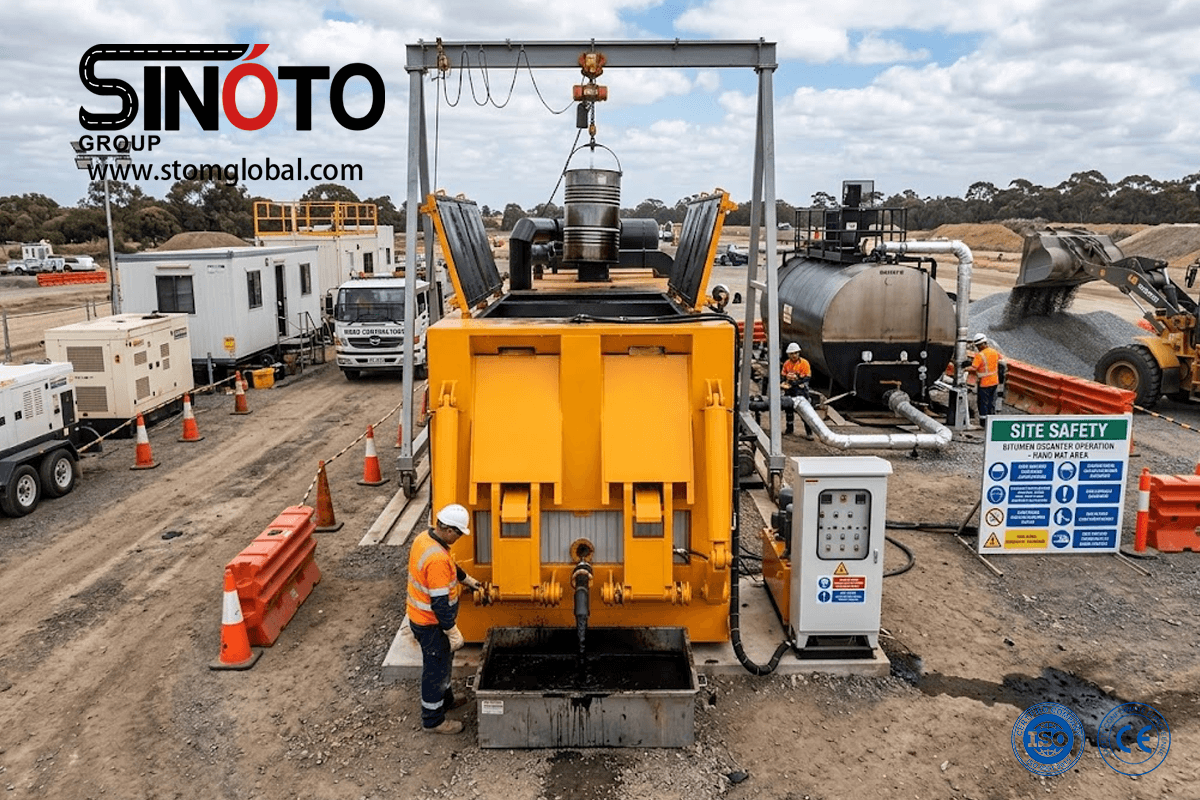
A frequent question from international buyers is whether a compact 20ft bitumen decanter configuration is available for containerized export, or whether larger models require breakbulk shipping.
The smaller barrel bitumen melter models (DT-4 class, roughly 8.5m long) are engineered with modular sectioning specifically so the main body dimensions optimize for standard container shipping — reducing freight cost and simplifying on-site assembly versus a fully welded, non-sectional unit. Larger models like the DT-10 or DT-12 (11.5m length class) typically ship in a 40ft HQ container footprint instead, given their longer rail systems and higher barrel accommodation count (44–60 pcs).
📋 Quick sizing guide for buyers comparing options from any asphalt drum melter manufacturer:
| Consideration | Compact Class (DT-4) | Mid Class (DT-6/DT-10) | High-Output Class (DT-12) |
|---|---|---|---|
| Best fit for | Small maintenance crews, low-volume road patching | Regional asphalt plants, mid-size contractors | Large-scale mixing plants, high-throughput terminals |
| Barrels/cycle | 30 pcs | 40–44 pcs | 60 pcs |
| Shipping format | 20–40ft container friendly | 40ft HQ container | Modular/oversized freight |
Whether you’re comparing a bitumen decanter price across suppliers, sizing a bitumen melting machine for a specific daily tonnage target, or vetting an asphalt drum melter manufacturer on safety and thermal efficiency, the fastest way to get accurate numbers for your own operation is to send your project details directly to the engineering team.
👉 Request a Free Quote & Technical Consultation — get exact tons/hour and tons/24h projections matched to your drum volume, fuel type, and site layout.

Whatsapp ID: 8619059581045

WeChat ID: +8619059581045


