If you have ever wondered how a thick, solid block of petroleum bitumen becomes a pourable, spray-ready liquid at room temperature, the answer lies inside a bitumen emulsion plant. This piece of equipment — sometimes called an asphalt emulsion plant — heats and mechanically shears hot bitumen into microscopic droplets (1–10 microns), then disperses them in water with the help of a surfactant (emulsifier). The result is a milky, brown liquid that can be stored, transported, and applied without the 150–180°C heating that traditional hot-mix asphalt demands.
For contractors, government road agencies, and asphalt producers evaluating a bitumen emulsion plant for sale, understanding the mechanism behind emulsification is the first step toward making a confident purchase. Below, we break down how the equipment works, what buyers should look for, and why choosing the right emulsion plant manufacturer can determine the long-term success of your paving operations.
💬 Industry Insight: “An emulsion is simply oil suspended in water — much like a droplet of cooking oil dispersed in dish-soap water. The emulsifier keeps the bitumen particles from re-joining, giving the mixture stability during transport and controlled breaking on-site.”
An asphalt emulsion plant follows four core stages, and the precision of each stage directly affects the finished product’s quality and shelf life.
⚙️ Step 1 – Bitumen Preparation
Base bitumen is heated to a temperature suited to the target grade. Too cold, and viscosity rises, making emulsification difficult; too hot, and the bitumen oxidizes, harming emulsifier stability.
⚙️ Step 2 – Soap Solution (Emulsifier) Preparation
An aqueous emulsifier solution — often pH-adjusted with acid — is prepared and preheated to roughly 55–75°C before entering the plant.
⚙️ Step 3 – Emulsification (Colloid Mill)
The heated bitumen and soap solution are fed into a colloid mill, where pressurization and high-speed shearing break the bitumen into uniform micro-droplets, forming a stable oil-in-water system at an outlet temperature of around 85°C.
⚙️ Step 4 – Storage
The finished emulsion cools and moves into stainless-steel storage tanks equipped with agitators to prevent settling and separation over time.
| Production Stage | Key Control Parameter | Typical Range |
|---|---|---|
| Bitumen heating | Temperature | Grade-dependent, avoids overheating |
| Soap solution prep | Temperature / pH | 55–75°C |
| Colloid mill emulsification | Outlet temperature | ~85°C |
| Storage | Agitation frequency | Continuous or scheduled |
A well-engineered bitumen emulsion plant keeps these three variables — bitumen temperature, emulsifier dosage, and soap-solution pH — tightly synchronized, which is exactly what separates a reliable asphalt emulsion plant manufacturer from a low-cost assembler of generic tanks and pumps.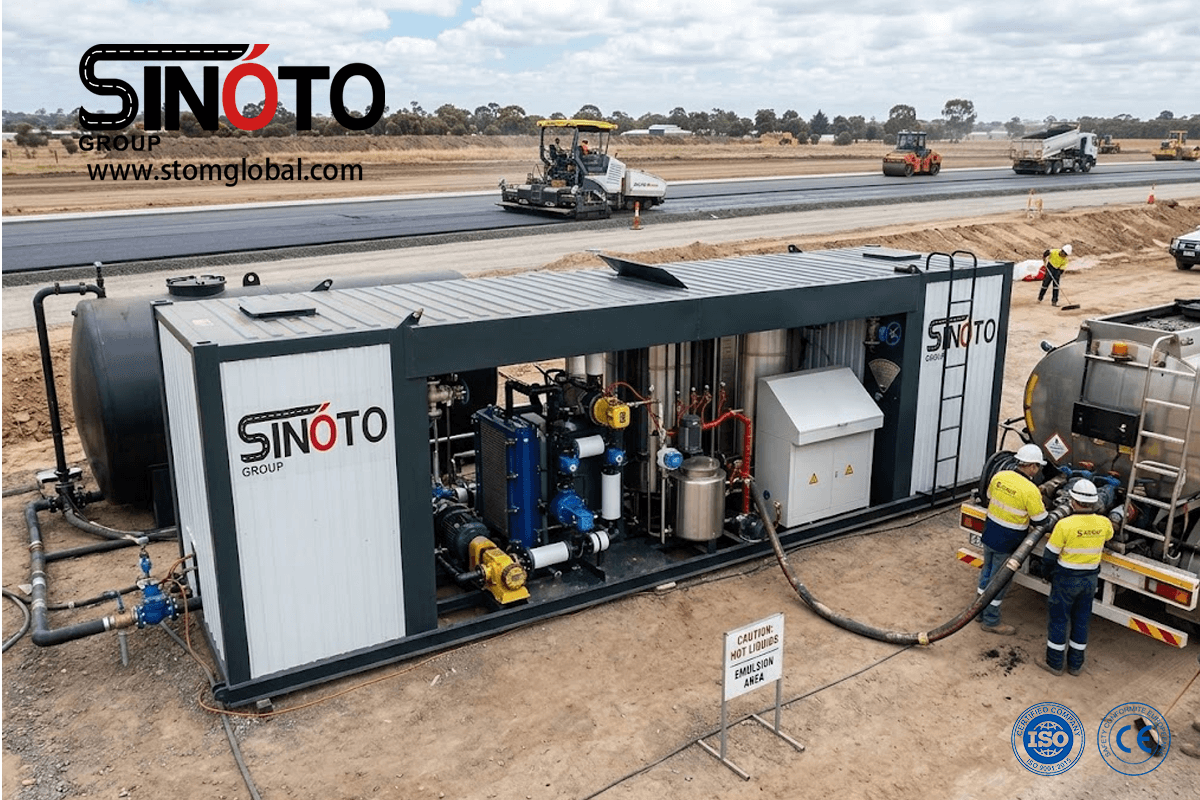
One of the most common buyer questions is which emulsion chemistry a new bitumen emulsion plant should be configured to produce. The answer depends almost entirely on your local aggregate (stone) chemistry.
✅ Cationic emulsion (positively charged bitumen particles) bonds well with both acidic and alkaline stone, especially silica-rich aggregates like granite, where opposite charges attract for fast breaking and strong adhesion. This is why a cationic emulsion plant is the most widely adopted configuration in modern road construction worldwide.
✅ Anionic emulsion only performs well with alkaline aggregates and struggles on damp, acidic stone due to charge repulsion.
✅ Non-ionic emulsion carries no charge and is reserved for niche applications.
Beyond charge type, emulsions are also classified by breaking speed:
| Classification | Breaking Speed | Typical Application |
|---|---|---|
| Rapid-Setting (RS) | Fast | Chip seals, surface treatment spraying |
| Medium-Setting (MS) | Moderate | Cold-mix, general spraying |
| Slow-Setting (SS) | Slow | Slurry seal, micro-surfacing |
Choosing the correct bitumen emulsion formula — and pairing it with a plant capable of accurate emulsifier dosing — ensures the mixture neither sets too fast (causing clumping before paving) nor too slow (delaying traffic opening).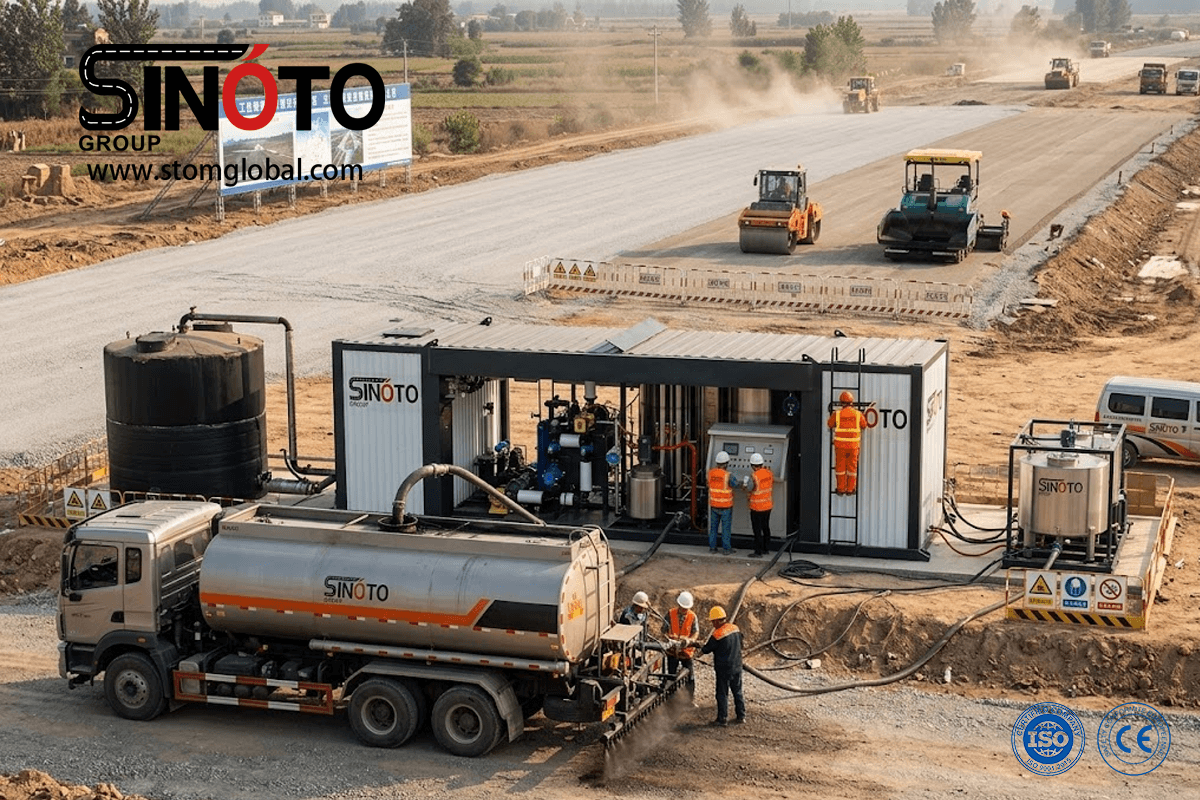
When shopping for a bitumen emulsion plant for sale, buyers typically weigh four practical factors: production capacity, automation level, corrosion resistance, and, of course, asphalt emulsion plant price.
Emulsion plants are commonly available in 4, 6, 8, 10, 15, and 20 t/h configurations. A 6 tph asphalt emulsion plant suits smaller municipal road maintenance programs or moderate-volume producers, while a 10 tph bitumen emulsion plant is better suited to larger provincial or national highway projects with continuous demand. Oversizing wastes capital; undersizing bottlenecks your paving schedule.
Plants range from fully automatic continuous systems — where a program controls soap-solution dosing precisely — to semi-automatic or manual batch systems requiring hand-mixed formulations. Full automation reduces labor dependency and improves consistency batch after batch.
Because emulsifiers and acids are corrosive, tanks and piping should be stainless steel. This materially extends equipment lifespan and reduces maintenance costs over the plant’s operating life.
Bitumen emulsion plant price varies significantly with capacity, automation, and material grade. Buyers should request itemized quotations that separate the colloid mill, storage tanks, control cabinet, and heating system, rather than accepting a single bundled figure that hides component quality.
📋 Buyer Checklist:
- Confirm required t/h capacity against your annual paving volume
- Ask whether the colloid mill is imported or domestically manufactured
- Request stainless-steel grade specifications for tanks
- Compare asphalt emulsion plant price across at least three manufacturers before deciding
A cheaper asphalt emulsion plant manufacturer may quote an attractive upfront number, but the true cost of ownership includes downtime, emulsion quality inconsistency, and premature corrosion. Buyers evaluating an emulsion plant manufacturer should prioritize:
A trustworthy bitumen emulsion plant manufacturer will also walk you through realistic bitumen emulsion plant price ranges based on your intended emulsion type (cationic vs. anionic) and target output, rather than pushing a one-size-fits-all package.
Once produced, bitumen emulsion finds its way into nearly every stage of road construction and maintenance:
| Application | Purpose |
|---|---|
| Tack coat / prime coat / seal coat | Bonding and protective layer between pavement lifts |
| Slurry seal / micro-surfacing | Preventive maintenance, waterproofing, skid resistance |
| Cold recycling | Reuse of milled pavement material, reducing raw material cost |
| Chip seal / penetration macadam | Low-cost treatment for lower-grade roads |
| Pothole patching | Rapid, compaction-free repair using compressed-air spraying |
Micro-surfacing, in particular, is considered an advanced application: a mix of polymer-modified emulsion, mineral filler, crushed stone, and water is laid 5–10 mm thick and can extend pavement service life by 5–8 years while opening to traffic almost immediately.
Because emulsion-based methods avoid heating asphalt to 150–180°C, projects using a properly configured bitumen emulsion plant report meaningfully lower fuel consumption, reduced fume emissions, and fewer burn-related safety incidents compared with hot-mix operations — a compelling argument for both budget-conscious and environmentally accountable road agencies.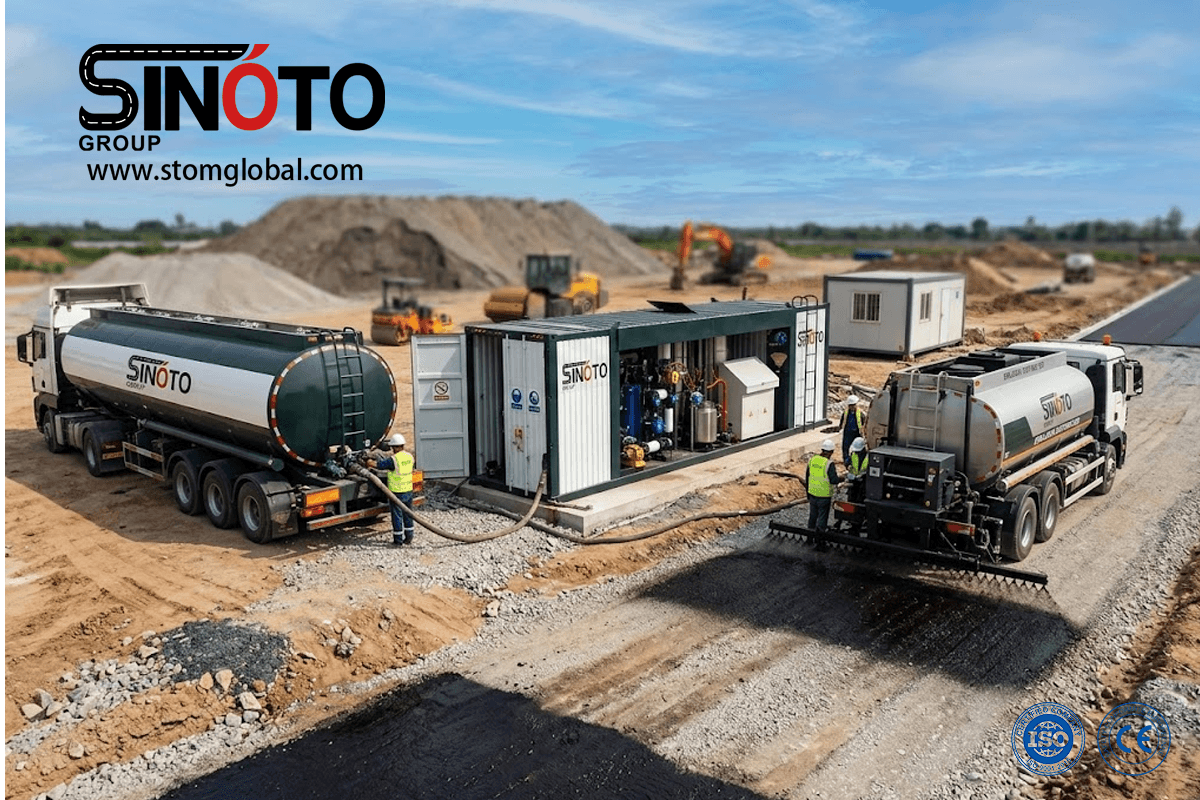
Whether you are comparing a 10 tph bitumen emulsion plant against a smaller 6 tph asphalt emulsion plant, or simply trying to understand realistic asphalt emulsion plant price benchmarks, the decision ultimately comes down to matching plant capacity, automation, and construction quality to your actual project needs — and partnering with a manufacturer who can prove both engineering competence and after-sales reliability.
A well-selected cationic emulsion plant, built with corrosion-resistant materials and precise dosing controls, doesn’t just produce emulsion — it protects your paving schedule, your budget, and the long-term performance of the roads you build.

Whatsapp ID: 8619059581045

WeChat ID: +8619059581045



