If you are sourcing a jumbo bag bitumen melting machine for a road construction project, asphalt plant, or bitumen storage depot, you have probably run into two model numbers again and again: STBD-6 and STBD-10. Both machines come from the same product family, both are designed to melt 1-ton jumbo bags of solid bitumen, and both promise fast, clean decanting — so what actually separates them, and which one fits your operation?
This article breaks down the real differences between STBD-6 and STBD-10, explains what buyers should look for before purchasing, and answers the pricing questions that come up most often when shopping for a bulk bitumen melting machine.
ℹ️ Quick Definition: A jumbo bag bitumen melting machine (also called a big bag bitumen melter or bitumen decanter) is a heavy-duty industrial heating unit built to melt, liquefy, and pump out solid bitumen packed in 1-ton FIBC (“jumbo”) bags — without wasting material or exposing workers to open flame.
Before comparing models, it helps to understand what this equipment actually does. A jumbo bag bitumen melter is engineered in two main sections:
Because it uses indirect thermal oil heating rather than an open flame, this type of bulk bitumen melting machine avoids the fire and explosion risks associated with older direct-heating designs. Combined with automatic temperature and pressure controls, it gives operators a safer and more controllable way to handle bulk bitumen handling on site — a major concern for buyers evaluating any new bitumen equipment.
📊 Core Buyer Concerns Addressed:
| Buyer Concern | How the Machine Solves It |
|---|---|
| Bitumen waste in bags | Residual-free discharge system recovers 100% of material |
| Fire/safety risk | Thermal oil indirect heating, no open flame |
| Slow melting | Dual heating (thermal oil + flue gas recovery) |
| Manual bag handling | Integrated hydraulic/electric hoist |
| Transport difficulty | Compact skid-mounted, container-shippable design |
This is the question most buyers ask first, and the answer comes down to capacity, feeding structure, and footprint. Both models share the same core technology — indirect thermal oil heating, automatic temperature control, and a hydraulic hoist system — but they are built for different production scales.
| Technical Parameter | STBD-6 | STBD-10 |
|---|---|---|
| Productive Capacity | 5–6 t/h | 10–12 t/h |
| Max. Hoisting Capacity | 2,000 kg | 2,000 kg × 2 hoists |
| Max. Hoisting Height | 3 m | 3 m |
| Qty. of Feeding Mouths | 3 | 5 |
| Melting Pool Capacity | 32 m³ | 80 m³ (35+45) |
| Heating Method | Oil burner / thermal oil furnace | Oil burner / thermal oil furnace |
| Bitumen Pump Capacity | 16.8 m³/h | 24 m³/h |
| Overall Dimension (Working) | 16000×2250×6500 mm | 16000×7000×6500 mm |
| Total Power | 15 kW | 22 kW |
| Total Weight | 12,000 kg | 20,000 kg |
ℹ️ In short:
💬 Buyer Insight: “Which model do I actually need?” usually comes down to daily bitumen consumption. If your plant processes under 50 tons of bitumen per day, the STBD-6 is typically sufficient. Above that — especially for continuous, multi-shift operations — the STBD-10’s higher pump capacity and dual melting pools prevent bottlenecks during peak demand.
Both models retain the same maximum hoisting height (3 m) and transport-condition footprint discipline, meaning the STBD-10’s extra capacity doesn’t come at the cost of shipping complexity — it simply ships as a 2-piece configuration instead of one.
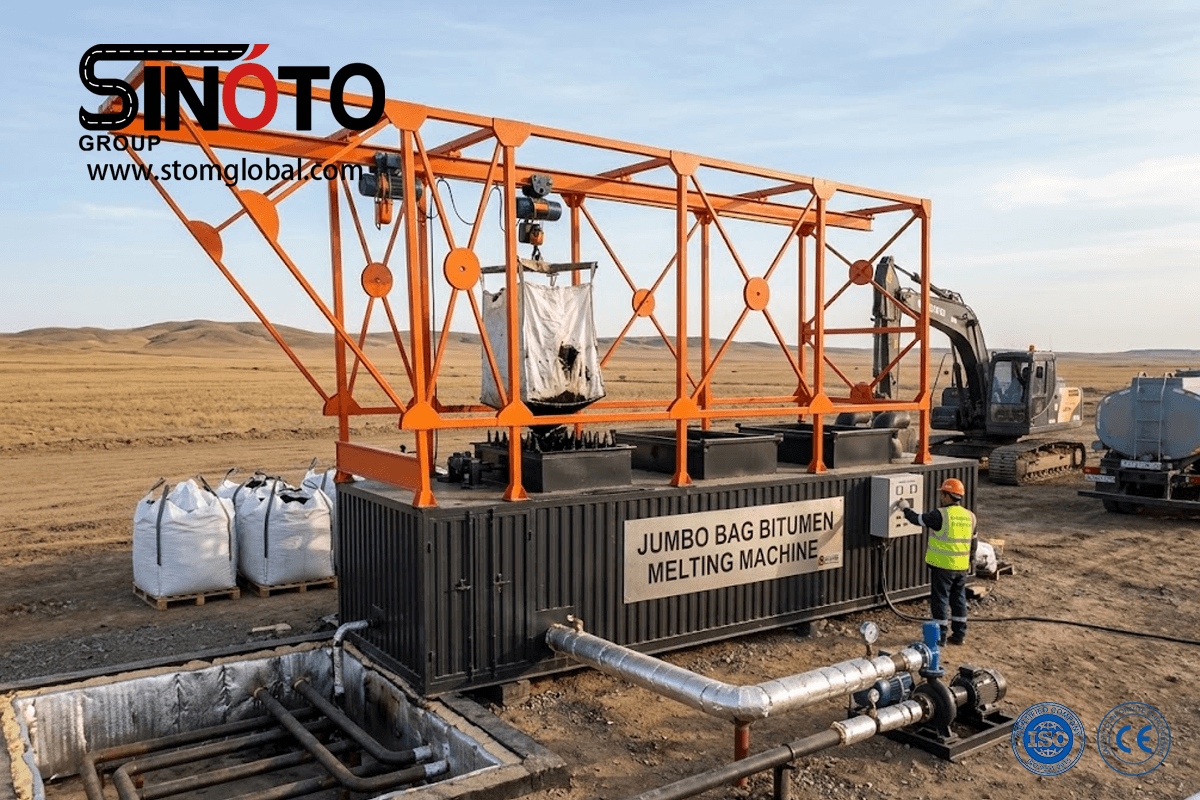
Many buyers researching a jumbo bag bitumen melter are switching away from barrel-based melting systems, and the reasons are consistent across the industry:
This is why demand for a bulk bag asphalt melter has grown steadily among contractors modernizing their asphalt supply chain, particularly in regions where jumbo bag bitumen packaging has become the standard import format.
When comparing offers from different suppliers, not all machines advertised as a jumbo bag bitumen melting machine for sale are built to the same standard. Buyers should verify the following before placing an order:
ℹ️ These are the same specifications referenced in the technical parameter table above, and any reputable supplier of a bulk bitumen melting machine should be able to provide full documentation for each of them.
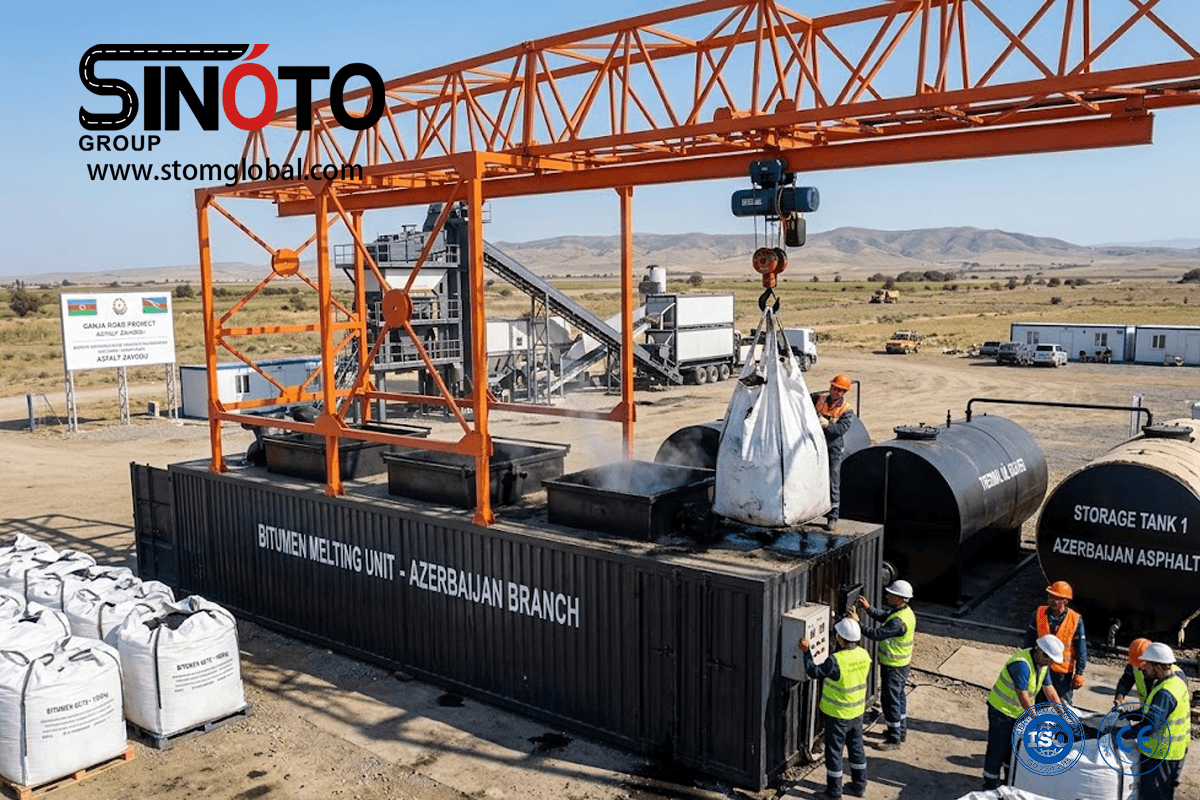
Pricing is one of the most common questions buyers raise, but there is no single fixed number — a jumbo bag bitumen melter price or bitumen bag melter price varies based on several factors:
Because these variables shift the final quotation significantly, the most reliable way to get an accurate jumbo bag bitumen melter price is to request a tailored quote based on your site’s daily tonnage requirement, available heating fuel, and delivery destination.
Both the STBD-6 and STBD-10 deliver the same core advantages of a modern bitumen melting machine: indirect thermal oil heating for safety, residual-free discharge for zero waste, automatic temperature control for consistent bitumen quality, and a hoist-integrated design for efficient bulk bitumen handling. The real decision point is scale — STBD-6 for moderate daily throughput, STBD-10 for high-volume, multi-shift asphalt production.
Whichever model fits your project, getting the specification and pricing right upfront saves significant cost and downtime later.
📩 Have a project in mind? Request a Free Quote for the Jumbo Bag Bitumen Melting Machine →
#JumboBagBitumenMeltingMachine #BitumenMeltingMachine #BulkBitumenHandling #AsphaltEquipment #RoadConstruction #BitumenStorage

Whatsapp ID: 8619059581045

WeChat ID: +8619059581045


