Choosing between a stationary and a mobile setup is one of the most important decisions you will make when buying an asphalt mixing plant. The wrong choice can leave capital tied up in underused equipment, or force you to relocate a plant that was never designed to move. This guide compares both options from a buyer’s point of view, covering capacity, mobility, emissions, budget and support, so you can shortlist the right asphalt plant before you speak to any supplier.
📊 Quick Facts: Stationary Asphalt Batching Plant (LB Series)
| ⚙️ Capacity | ⏱️ Mixing Cycle | 🌿 Emissions | 🔧 Assembly |
|---|---|---|---|
| 90–340 tph | 45 seconds | ≤20 mg/Nm³ | Within 72 hours |
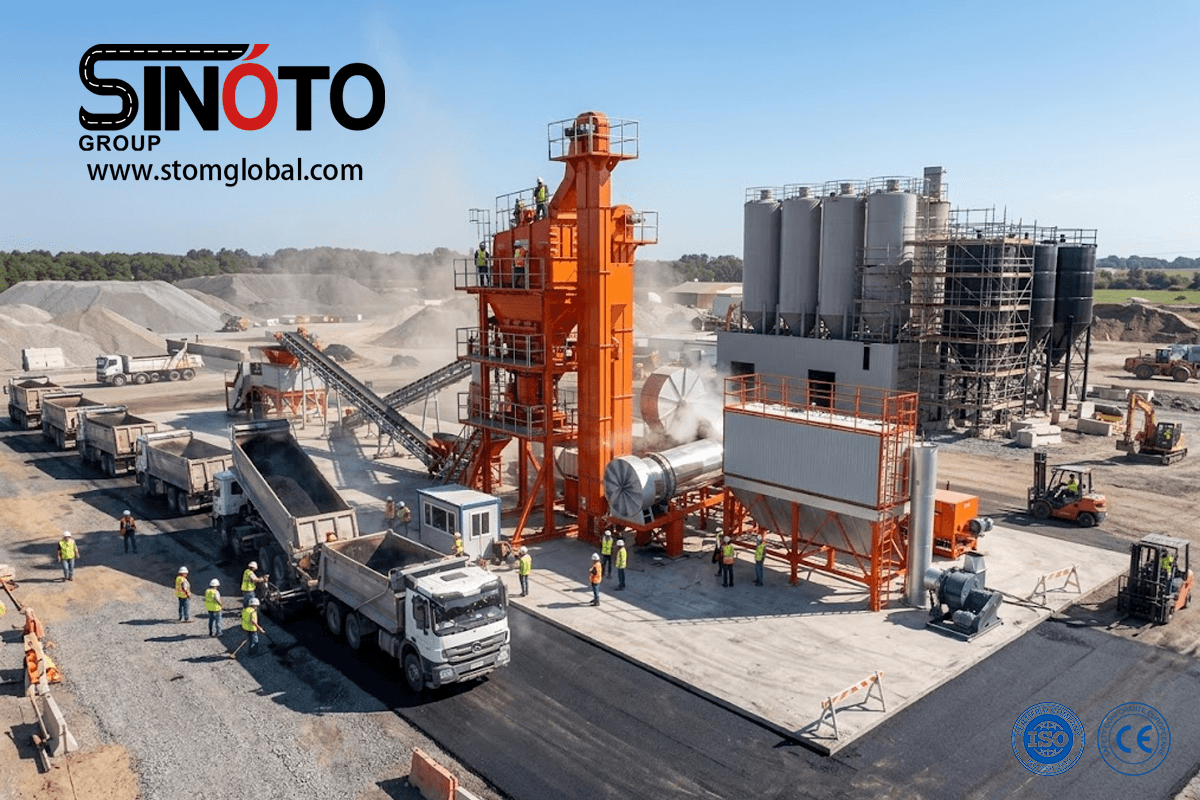
A stationary asphalt batching plant is built for long-term production at a fixed location. The cold feeders, drying drum, screening tower, mixer and dust collector work as one permanent system, which supports higher output and a more complete emission-control package. A mobile plant places its main modules on trailers or wheeled chassis, so it can be towed from one job to the next with limited foundation work.
Neither option wins in every situation. The right answer depends on how long you will stay on one site, how many tonnes per hour you need, and what your local environmental rules demand. The table below summarizes the typical differences.
| Factor | 🏗️ Stationary Plant | 🚚 Mobile Plant |
|---|---|---|
| Capacity | 40–400 tph range; LB series 90–340 tph | Usually smaller, for low-to-medium output |
| Best project length | Long-term, multi-year | Short-term, frequent moves |
| Installation | Foundation required; modular structure | Fast setup, minimal foundation |
| Dust and emission control | Gravity collector plus baghouse system | Compact system, limited by space |
| Hot mix storage | Silo options of 40 t, 60 t or 80 t | Limited or smaller storage |
| Typical use | Highways, airports, ports, municipal supply | Remote repairs, short contracts, rural roads |
💡 Buyer’s Rule of Thumb: If your work stays in one region for a year or longer, a stationary plant usually gives a lower cost per tonne than moving a mobile unit again and again.
Modern buyers compare far more than tonnage. When you evaluate a stationary asphalt mixing plant, these are the selling points that matter most, based on the LB series from Stom Global (SINOTO):
Choosing an experienced asphalt mixing plant manufacturer matters because these features only pay off when they are engineered and commissioned correctly. A capable asphalt plant manufacturer will also let you choose your fuel (diesel, heavy oil, fuel oil, coal or natural gas), so you can use the cheapest energy source in your region.
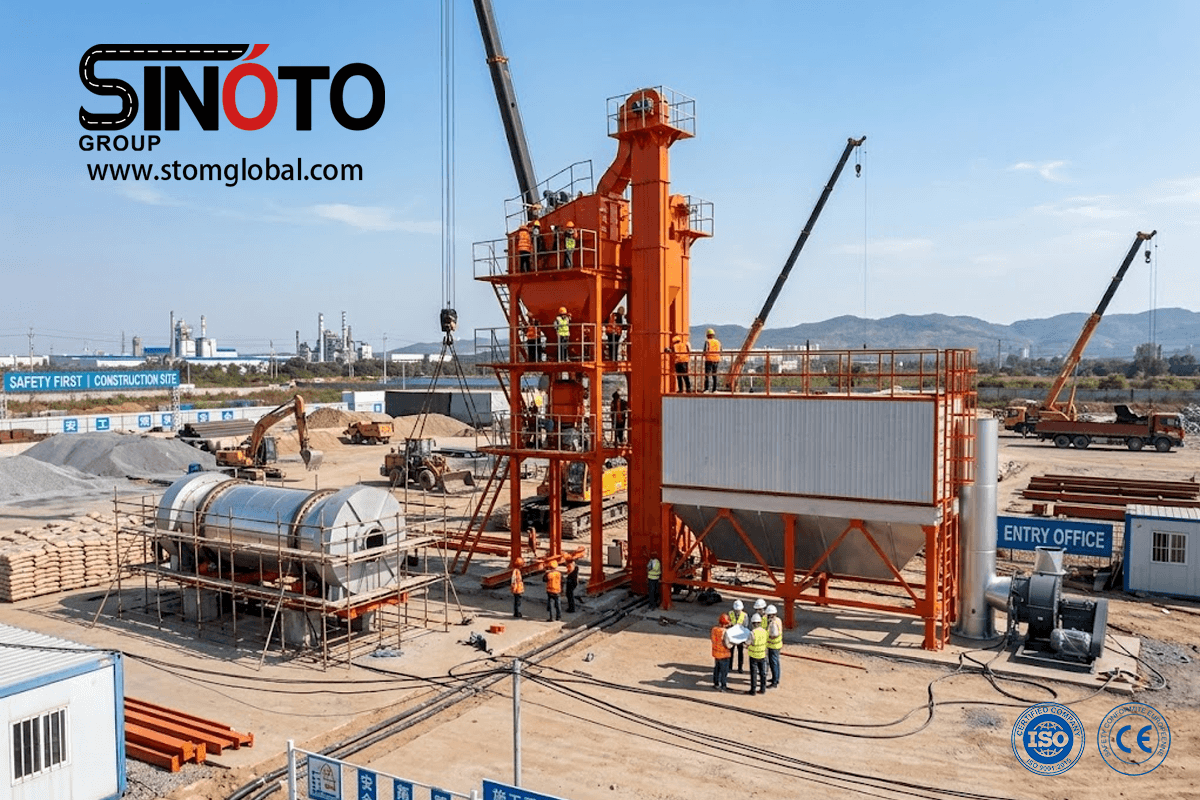
Almost every buyer asks about asphalt plant price first, yet a fair asphalt mixing plant price depends on configuration rather than a single number. The main cost drivers are:
Compare stationary and mobile options on lifetime cost, not purchase price alone. A mobile unit may save on setup for short jobs, while a stationary plant usually lowers cost per tonne over a long contract. When you request an asphalt plant quotation, ask for an itemized list covering main components, wear parts, commissioning, operator training and warranty terms, so offers from different suppliers can be compared fairly.
💰 Cost Tip: Send your daily tonnage, mix types, fuel availability and site altitude with your inquiry. The more detail you share, the more accurate the offer will be.
Once you have chosen a stationary layout, capacity is the next question. The LB series covers everything from urban maintenance to large highway work:
| Model | Capacity | Total Power | Mixer Capacity | Covering Area |
|---|---|---|---|---|
| LB1000 | 90 tph | about 242 kW | 1,100 kg | 40×32×18 m |
| LB1500 | 130 tph | 326 kW | 1,600 kg | On request |
| LB2000 | 175 tph | about 413 kW | 2,200 kg | 43×37×18 m |
| LB3000 | 260 tph | about 590 kW | 3,000 kg | 43×42×18 m |
| LB4000 | 340 tph | about 836 kW | 4,000 kg | 53×42×18 m |
Use this simple guide:
The LB1000 suits municipal repair work, while the LB3000 and LB4000 handle major road construction. Working with a professional asphalt batch plant manufacturer also means the configuration can be customized to your mix design and local conditions.
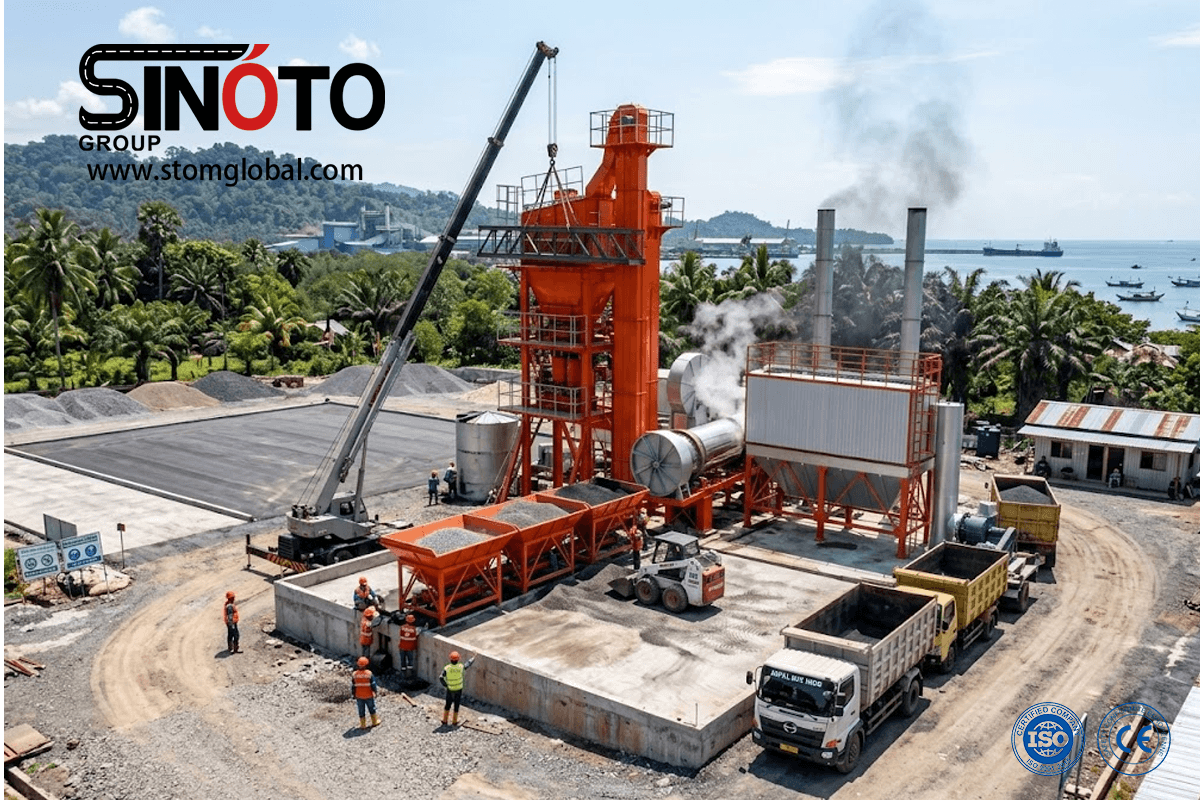
Searching for an asphalt mixing plant for sale can be overwhelming, because listings range from new factory-direct equipment to unverified used machines. A dependable asphalt plant supplier should be able to show:
Stom Global, the brand of Henan SINOTO Machinery Technology Co., Ltd., is an asphalt mixing plant supplier serving road construction projects worldwide. Its asphalt batching plant for sale range includes stationary, mobile and continuous models, alongside supporting equipment such as emulsion and polymer modified bitumen plants.
In short: choose a stationary plant for long-term, high-volume, strictly regulated work, and a mobile plant for short, scattered jobs. Either way, define your daily tonnage, project duration and emission requirements before you ask for offers.
📧 info@stomglobal.com | 💬 WhatsApp: +86-190 5958 1045
#AsphaltMixingPlant #AsphaltBatchingPlant #StationaryAsphaltPlant #AsphaltPlantForSale #RoadConstruction

Whatsapp ID: 8619059581045

WeChat ID: +8619059581045

