💬 Quick Answer
Functionally, yes. SINOTO’s SBS modified bitumen plant lists a dedicated mixing tank and a separate swelling tank in every model (STMB-6, STMB-10 and STMB-20), fed by a screw-feeding, static-weighing modifier system. Buyers should still ask for the process flow diagram to confirm the exact tank sequence for their project.
Anyone comparing a polymer modified bitumen plant for a road or waterproofing project soon meets one technical question. Does the line include a pre-blending tank, so the polymer can begin swelling before it reaches the high-shear mill? It is a smart question to ask. Rushing this stage is one of the most common reasons a modified bitumen plant delivers material that separates in storage or misses softening-point targets.
Based on the specifications published by SINOTO (Henan Sinoto Machinery Technology Co., Ltd.), the STMB series is built around a mixing tank, a swelling tank and a colloid mill. This article explains what that means in practice, what buyers should verify, and why this modified bitumen production plant design appeals to road contractors worldwide.
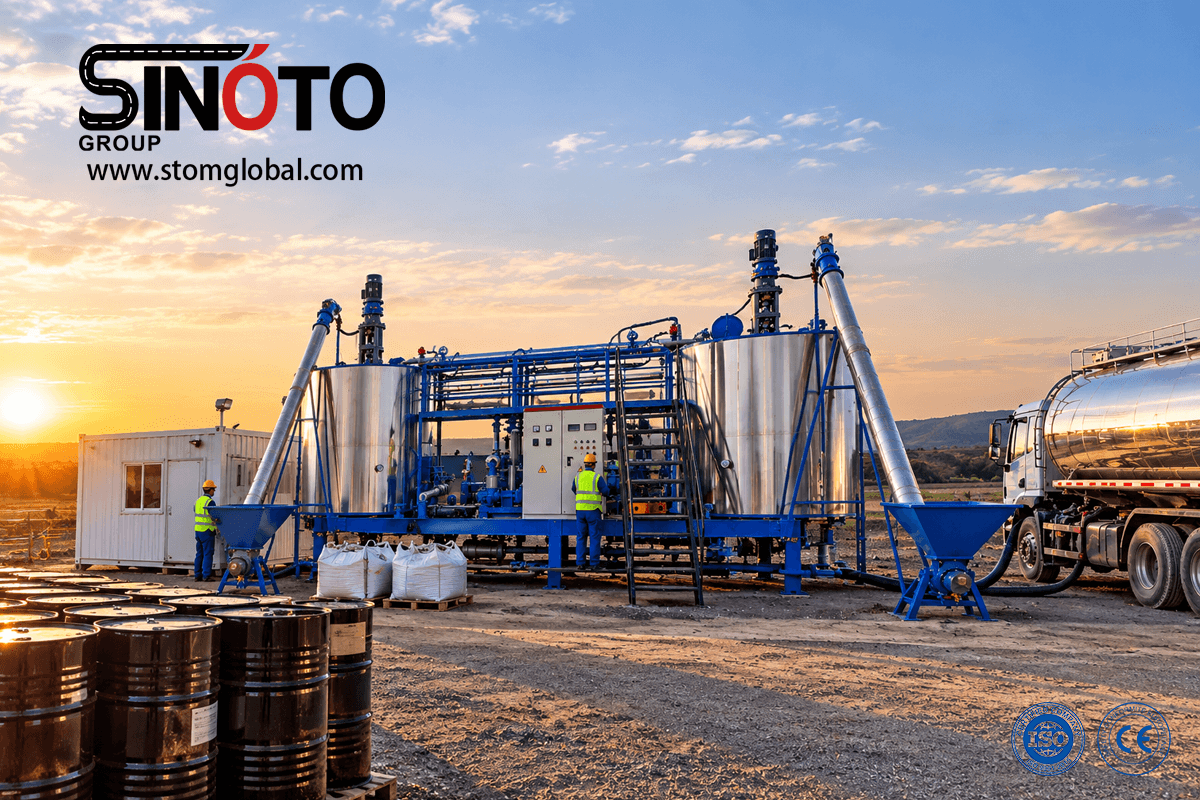
SBS (styrene-butadiene-styrene) is a block copolymer supplied as pellets or crumb. It does not simply dissolve in hot bitumen. It first absorbs the light oil fractions of the base bitumen and swells. Only then can shear forces break it into fine particles that form a stable network through the binder. SINOTO describes its process as three separate actions: shearing, swelling and development.
If dry, unswollen polymer is pushed straight into a colloid mill, three problems tend to appear:
That is why any serious SBS polymer modified bitumen plant separates wetting and swelling from milling. The infographic-style table below shows the sequence in a typical SINOTO PMB plant.
| Stage | Icon | What Happens | Why It Matters |
|---|---|---|---|
| 1. Rapid heating | 🔥 | Thermal oil system heats the base bitumen | Lowers viscosity so the polymer can be wetted |
| 2. Metering and feeding | ⚖️ | Base bitumen is metered; SBS enters through a screw-feeding system | Accurate modifier ratio |
| 3. Mixing and swelling | 🌀 | Polymer is dispersed in the mixing tank, then swells in the swelling tank | Softens pellets before milling |
| 4. High-shear milling | ⚙️ | Colloid mill grinds the polymer to micron size | Fineness above 85% under 10 microns |
| 5. Development and storage | ⏳ | Maturation and storage system lets the polymer network develop | Elasticity and thermal stability |
SINOTO’s component list follows the same order: Rapid Heating System, Screw Feeding System, Base Asphalt Metering System, Rapid Mixing System, Colloid Mill, and Modified Bitumen Maturation and Storage System. For a modified asphalt plant, this sequence is what separates a laboratory-grade result from a repeatable production-grade result.
The published technical parameters show that mixing and swelling capacity are built into every model. Here are the figures most relevant to your question:
| Item | STMB-6 | STMB-10 | STMB-20 |
|---|---|---|---|
| Productive capacity | 5–6 t/h | 8–10 t/h | 15–20 t/h |
| Mixing tank capacity | 7 m³ | 5 m³ | 6 m³ |
| Swelling tank capacity | 7 m³ | 5 m³ | 6 m³ |
| Colloid mill | 45 kW / 75 kW | 75 kW | 2 × 75 kW |
| SBS modifier adding system | 2 × 2 tph | 2 × 3 tph | 2 × 4 tph |
| Spiral-plate heat exchanger | – | 100 m² | 2 × 100 m² |
| Control system | Manual | Manual / Automatic | Manual / Automatic |
| Thermal oil furnace | 6×10⁵ kcal | 8×10⁵ kcal | 12×10⁵ kcal |
| Total power | 65 kW | 100 kW | 200 kW |
| Total weight | 6.5 t | 10 t | 25 t |
Three details stand out for anyone assessing this polymer modified asphalt plant.
1. Dedicated tanks for two different jobs. The mixing tank and swelling tank are listed as separate items, with matched volumes in each model. That layout allows polymer dispersion and swelling to happen in sequence before the mill and the maturation stage, instead of being squeezed into one vessel.
2. A dual-channel modifier feeder. Each model uses a paired feeding system (for example 2 × 3 tph on the STMB-10). The modifier is weighed statically, which SINOTO says is more accurate than dynamic weighing. Accurate dosing matters because polymer content directly drives the final performance grade.
3. A colloid mill built for continuous work. The STMB-20 uses two 75 kW mills that can run in series or in parallel. SINOTO says the wear-resistant mill material supports up to 100,000 tons of trouble-free operation.
💡 Engineer’s Note
SINOTO’s FAQ explains that development tanks use thermal oil heating and specialized paddles so the polymer can fully react and swell in the bitumen. In plain terms, the plant gives the polymer time and temperature, not just shear.
The plant accepts SBS, SIS, PE, EVA, SBR and rubber powder, and it is compatible with polymer brands such as Kraton, Dynasol and LG Chem. So one modified bitumen plant can switch between, for example, high-elasticity and high-viscosity binders through preset software parameters.
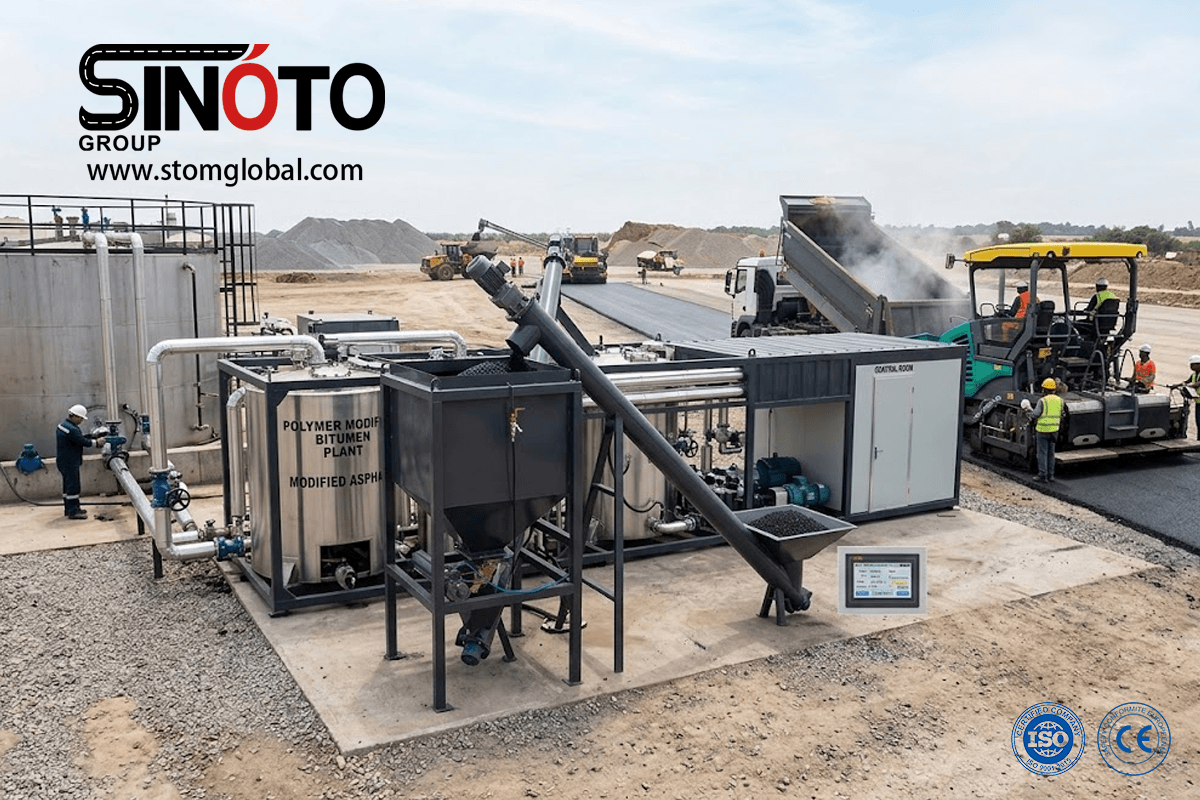
When you shortlist a PMB plant for sale, the swelling question is only one item on a longer checklist. Procurement teams typically focus on the following concerns.
| Buyer Concern | Icon | What to Ask the Supplier | SINOTO’s Published Position |
|---|---|---|---|
| Pre-blending / swelling stage | 🌀 | Which tanks come before the mill? Can I see the flow diagram? | Mixing tank and swelling tank listed in all models |
| Dispersion quality | 🔬 | What fineness can the mill guarantee? | More than 85% below 10 microns |
| Modifier flexibility | 🔄 | Which polymers can the line process? | SBS, SIS, PE, EVA, SBR, rubber powder |
| Dosing accuracy | ⚖️ | Static or dynamic weighing? Is it automated? | Static weighing; PLC-controlled automatic dosing |
| Wear life | 🛠️ | What is the expected mill life? | Up to 100,000 tons of trouble-free operation |
| Aging control | 🌡️ | How is overheating prevented? | Rapid heating under air-sealed conditions |
| Site logistics | 🚚 | Can it move between projects? | Modular, container-friendly design |
| Continuous output | ⏱️ | Can it run without batch gaps? | Designed for continuous 24-hour operation |
A few practical tips when reviewing offers for modified bitumen equipment:
A supplier who can answer these points clearly is usually a supplier who understands the process, not just the machine.
Beyond the swelling stage, SINOTO highlights five product strengths that matter to road builders and waterproofing producers.
🧠 Intelligent control. The PLC and industrial computer manage the asphalt pump through frequency conversion and regulate thermal oil through dual control. A dedicated thermal oil regulating valve forms a PID loop with the PLC and temperature sensors. This lets the bitumen temperature rise and fall precisely, even when the furnace runs at low power.
⚙️ High-performance colloid mill. The colloid mill and asphalt pump follow German-derived technology and use high-wear-resistant materials. Consistent fineness protects your product quality and your equipment life.
🔁 Adaptive functionality. The line handles multiple modifiers and lets operators switch production modes from the software. One SBS bitumen plant can therefore serve several asphalt grades without hardware changes.
⚡ High production efficiency. The spiral-plate heat exchanger raises the bitumen temperature quickly, so production does not depend on batch intervals. Rapid heating in an air-sealed condition also helps prevent asphalt aging.
📦 Modular design. The integrated layout suits container shipping. Pipelines for bitumen and thermal oil are insulated with rock wool, and production can start once pipelines and power are connected.
The output is used in two major fields. In road construction, modified bitumen serves the surface, base and sub-base layers, improving durability, stability and aging resistance while reducing noise and sticking. In waterproofing, it works as a base material for basements, underground projects and roofs, and it can be combined with materials such as fiberglass for stronger results.
📌 Why it matters for ROI
A well-designed polymer modified bitumen plant does more than make PMB. It protects binder quality batch after batch, and consistent quality means fewer rejected loads and fewer pavement complaints.
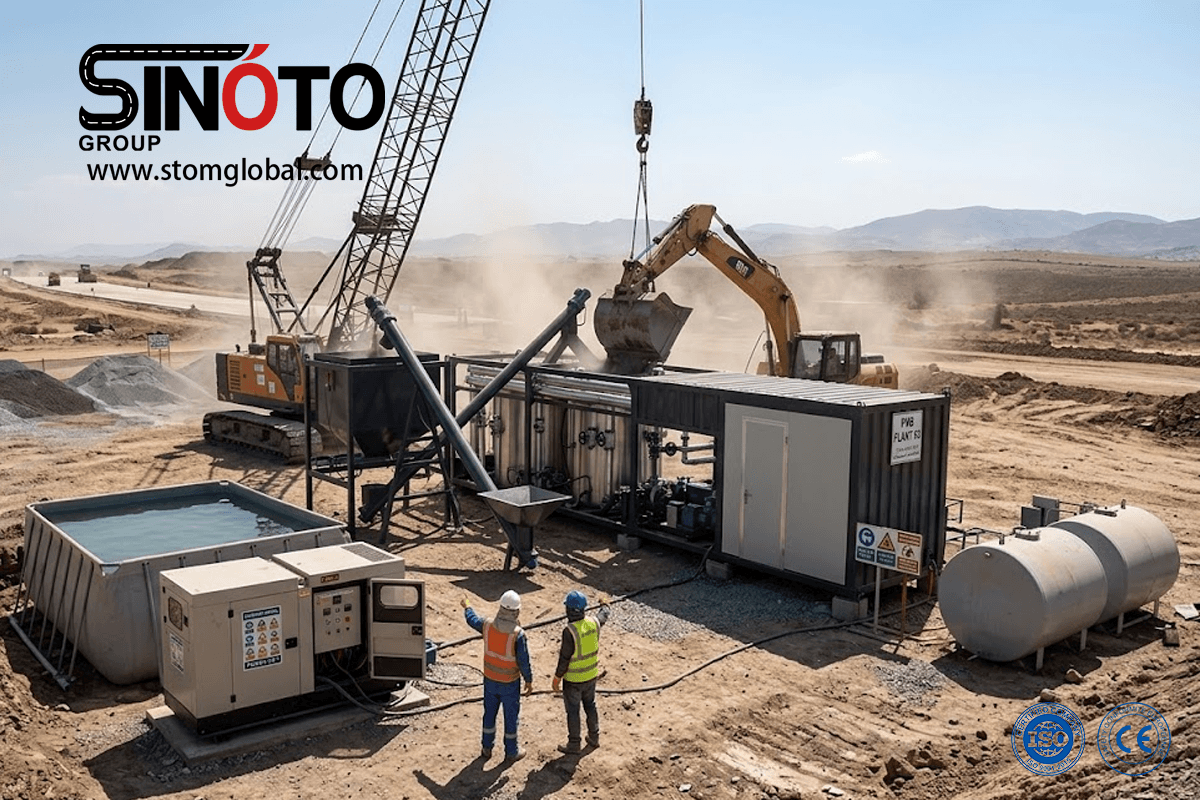
Sizing is the last step, and it is simpler than it looks. Match the model to your realistic daily binder demand:
Before you contact a supplier, gather these details so the proposal comes back accurate:
Then ask directly: “Please send the process flow diagram showing the mixing tank, swelling tank and colloid mill sequence for my model.” That single request confirms the pre-blending question and shows you how serious the supplier is.
Choosing between suppliers of a polymer modified bitumen plant should come down to process transparency, component quality and after-sales support, not just price. The right PMB plant becomes a long-term asset that protects your binder quality for years.
👉 Request a Free Quote and Process Flow Diagram from SINOTO Now
📧 info@stomglobal.com | 💬 WhatsApp: +86 190 5958 1045
#PolymerModifiedBitumenPlant #PMBPlant #SBSModifiedBitumen #ModifiedAsphaltPlant #BitumenEquipment #RoadConstruction

Whatsapp ID: 8619059581045

WeChat ID: +8619059581045

