When a city engineer, contractor, or slurry paving company starts planning a resurfacing project, one of the very first technical questions that comes up is deceptively simple: how thick can the slurry or micro-surfacing layer actually be paved? The answer matters more than most people realize. Pave too thin, and the treatment won’t seal cracks or restore skid resistance. Pave too thick, and the mixture may crack, ravel, or fail to cure properly. Getting the thickness right is the difference between a pavement preservation treatment that lasts five to seven years and one that fails within a single winter.
This article breaks down exactly how paving thickness is engineered into modern asphalt slurry seal equipment, what thickness ranges you should expect from different machine sizes, and how to choose the right Slurry Sealing Paver for your project — whether you’re treating a quiet residential street or a heavy-traffic highway.
📌 Quick Answer: Most Slurry Seal Equipment on the market today, including standard slurry sealing pavers, can apply a slurry coat for asphalt anywhere from 3mm to 15mm in a single pass, with certain heavy-duty and cold-mix configurations capable of reaching up to 40mm for deeper rut-filling and leveling work.
The paving thickness produced by a Slurry Sealing Paver isn’t a fixed number — it’s an engineered range that depends on the interaction between the machine’s spreading box, the mix design, and the pavement condition being treated. Four factors drive this range:
On SINOTO’s Slurry Sealing Paver line, this translates into a standard paving thickness of 3–15mm, adjustable in real time from the operator’s cab using the hydraulic-controlled spreading box. This is the industry-standard range for both lower seal coats and standard micro-surfacing work.
💡 Info Tip: A 3–15mm range covers roughly 95% of routine pavement preservation equipment applications — from thin sacrificial sealing layers to structural micro-surfacing courses that correct minor rutting.
It’s also worth understanding how thickness relates to application type, since not every job calls for the same depth of slurry coat for asphalt:
| Application Type | Typical Thickness | Purpose |
|---|---|---|
| Type I Slurry Seal (fine sand mix) | 3–6mm | Sealing hairline cracks, restoring surface texture on low-traffic roads |
| Type II Slurry Seal (standard mix) | 6–10mm | General waterproofing and skid-resistance restoration |
| Type III / Micro-Surfacing (coarse mix) | 8–15mm | Rut-filling, wheel-path leveling, and heavy-traffic durability |
| Fiber-Reinforced Micro-Surfacing | 10–15mm | Extra crack-bridging strength on highways and airport runways |
Choosing the wrong thickness for the application is one of the most common causes of premature failure. A Type I mix spread at 15mm, for example, tends to crack from excess binder content, while a coarse Type III mix spread at only 3mm won’t fully embed the largest aggregate particles, leading to raveling under traffic.
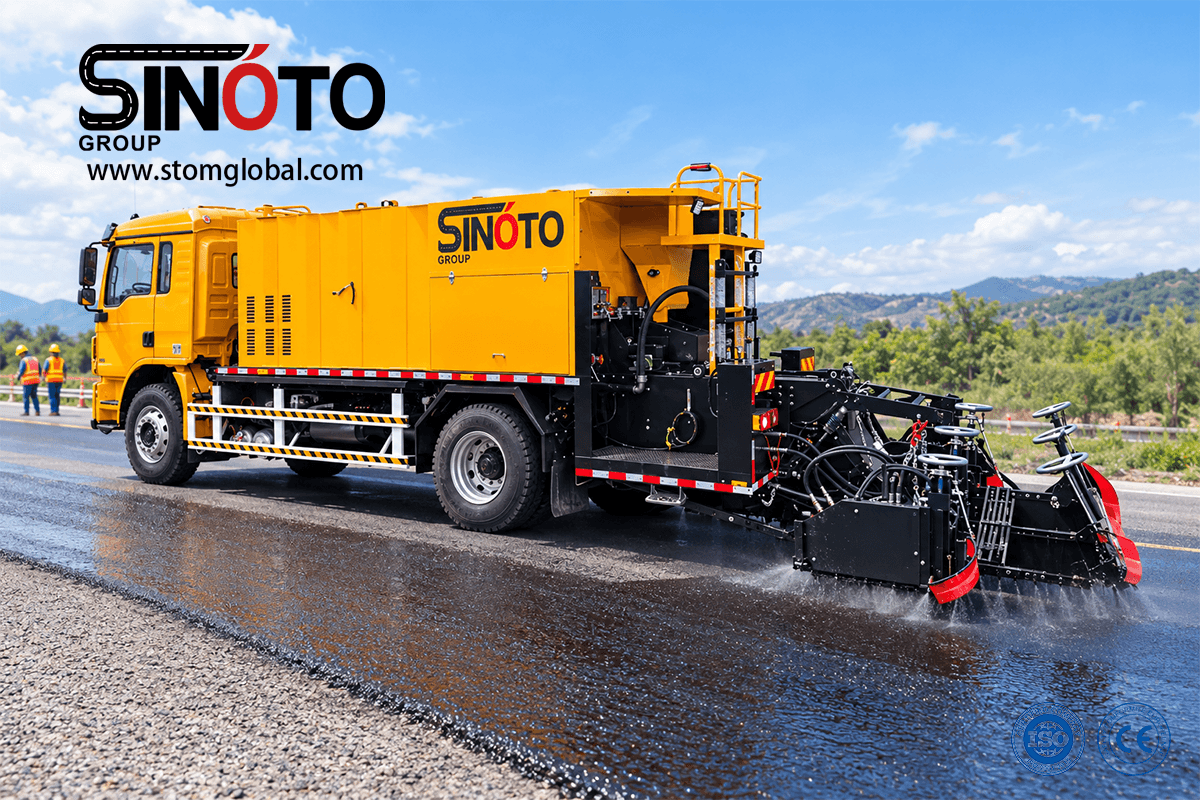
Unlike manually pulled slurry boxes from decades past, today’s Asphalt Slurry Seal Machine platforms use closed-loop hydraulic and electronic systems to hold thickness constant across the entire job — even as truck speed changes.
Here’s how the control chain works on a modern paver truck:
💡 Info Tip: On intelligent microsurfacing machines, a real-time feedback loop tracks material consumption as it happens and automatically corrects the flow so the mixing ratio — and therefore the paved thickness — stays constant no matter how the truck’s speed changes.
This level of automation is exactly why modern slurry seal asphalt treatments are so much more consistent than older, manually-dragged slurry boxes — the finished mat holds within a millimeter or two of the specified thickness across an entire lane mile.
Beyond the mechanical controls, the crew’s setup routine plays a role too. Before any pass begins, an experienced slurry paving company will typically:
📌 Info Tip: Even the best Slurry Seal Truck can only hold its programmed thickness if the mix design and crew calibration are correct — the machine and the mix design work together, not independently.
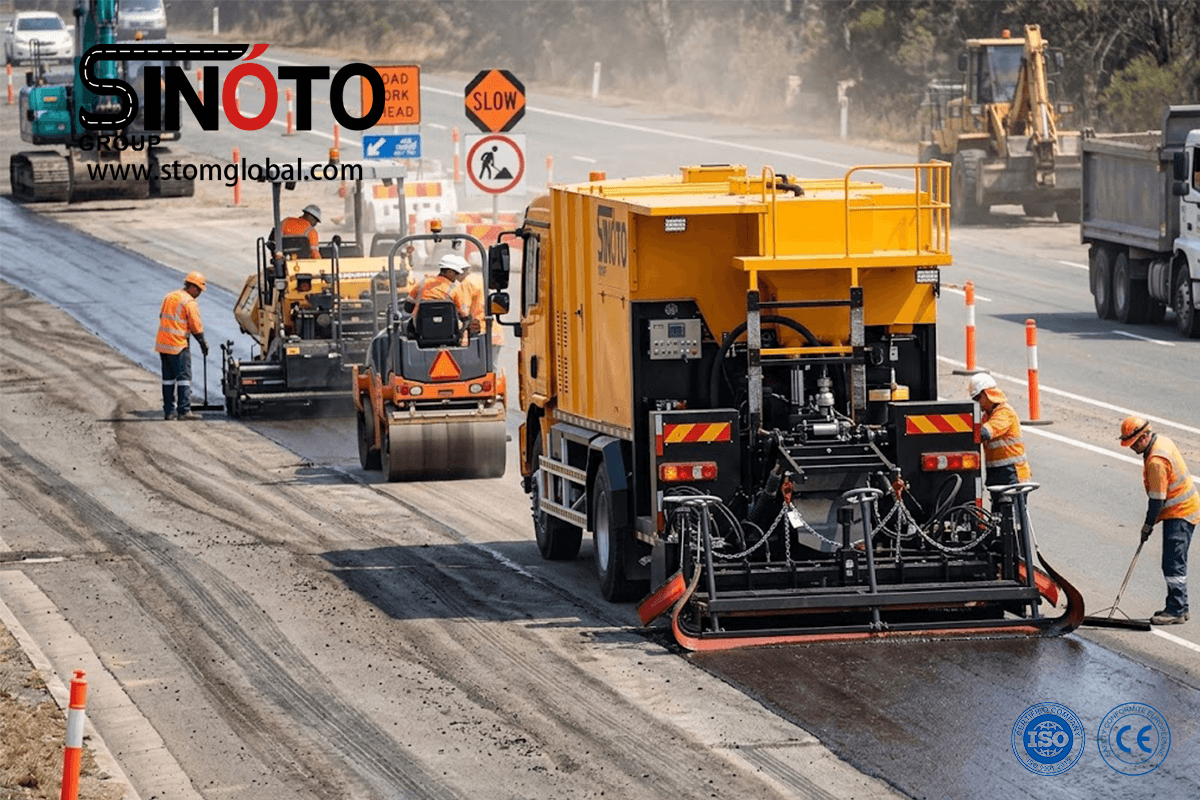
Not every Slurry Seal Truck is built the same size, and thickness capability often scales with hopper capacity and mixer output. Below is a comparison of common models so a slurry paving company can match machine size to project scope.
| Model | Chassis Type | Aggregate Hopper (m³) | Paving Thickness (mm) | Paving Width (mm) | Best Suited For |
|---|---|---|---|---|---|
| STSP5110TFC | 4×2 | 3 | 3–15 | 1600–2500 | Small municipal streets, patch sealing |
| STSP0635TFC | 4×2 | 6 | 3–15 | 1600–2500 / 2500–4300 | Mid-size roads, parking lots |
| STSP5250TFC | 6×4 | 10 | 3–15 | 2500–4300 | County & city roads |
| STSP5138TFC | 8×4 | 11 | 3–15 | 2500–4300 | Highways, high-output projects |
| STSP5139TFC | 8×4 | 12–13 | 3–15 (up to 3–40 for cold-mix variants) | 2500–4300 | Highways, airports, large contracts |
As the table shows, the thickness range itself (3–15mm) stays consistent across the product line — what changes with machine size is throughput, tank capacity, and paving width. A Slurry Seal Machine for Sale with an 8×4 chassis and a 12–13 m³ hopper doesn’t pave thicker than a compact 4×2 unit; it simply covers more lane-miles per hour at that same precise thickness, which is what makes it suitable for highway-scale asphalt slurry seal truck operations.
📌 Note: Larger cold-mix configurations of the Slurry Sealing Paver platform can extend the thickness range up to 40mm, which is used specifically for leveling courses and deeper rut correction rather than standard slurry sealing.
Beyond the hopper and thickness specs, a slurry paving company evaluating an asphalt slurry seal truck should also compare the supporting systems that keep the mixture workable and consistent from tank to pavement:
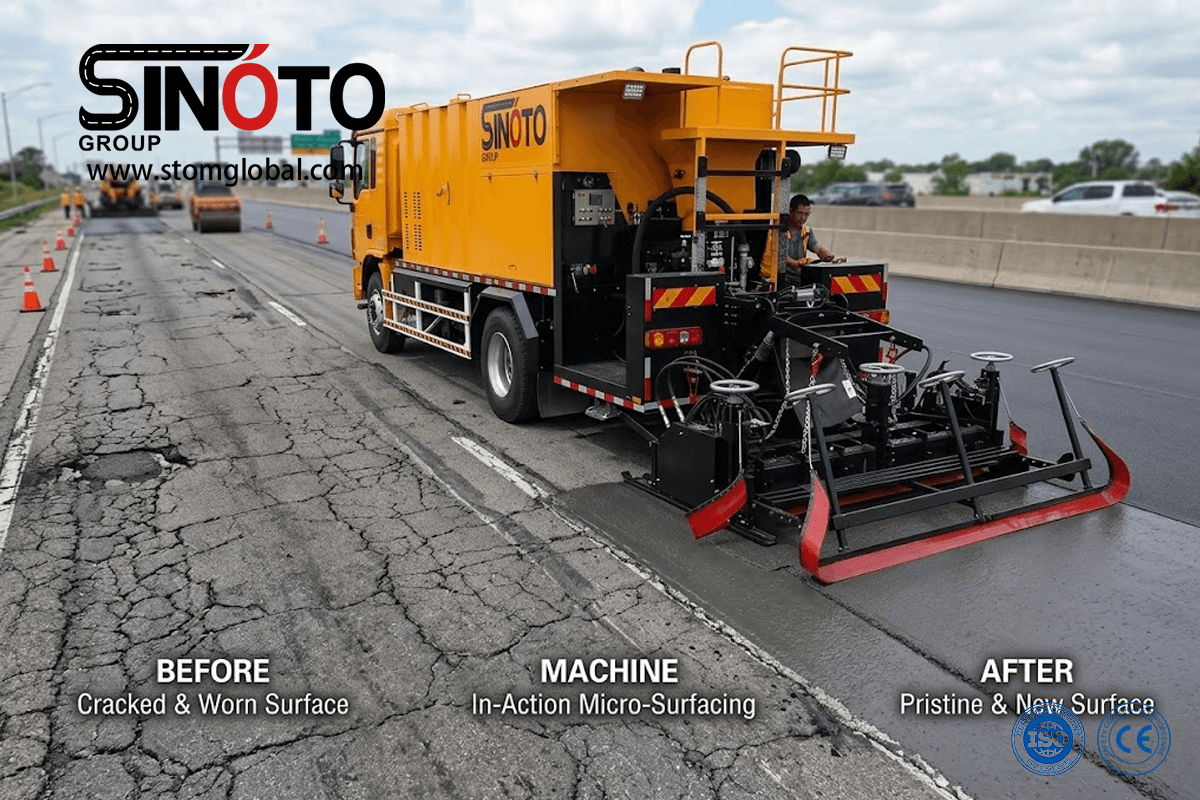
Selecting the correct Asphalt Slurry Seal Machine isn’t just about matching a thickness spec on paper — it’s about long-term project economics. Here’s why thickness control matters so much when evaluating pavement preservation equipment:
For contractors comparing an asphalt slurry seal truck purchase, it’s worth confirming not just the advertised thickness range, but the quality of the components controlling that range — hydraulic pump brand, mixer design, and electronic control system all affect how tightly the machine actually holds its target thickness in the field.
Component quality is where budget Slurry Seal Equipment and premium platforms tend to diverge most. On higher-end machines, look for:
💡 Info Tip: Automatic asphalt-aggregate ratio control, which adjusts material output to match changes in driving speed, is one of the features that most directly minimizes seams and thickness variation between passes.
If you’re sourcing a Slurry seal truck for sale or comparing a Slurry Seal Machine for Sale for an upcoming pavement preservation contract, thickness capability should be near the top of your evaluation checklist — alongside hopper size, chassis brand, and control system quality.
SINOTO’s Slurry Sealing Paver lineup offers a standard 3–15mm paving thickness across all chassis sizes (4×2, 6×4, and 8×4), with cold-mix variants extending up to 40mm for deeper leveling work. Every unit is built with a famous-brand chassis (Shacman or Sinotruck), imported hydraulic components (Danfoss, Bucher, SEW), and an automatic ratio-control system designed to keep thickness consistent from the first meter of the job to the last.
Whether you need a compact unit for neighborhood streets or a high-capacity paver truck for highway-scale contracts, matching the machine to your thickness and throughput requirements up front will save significant cost and rework down the line.
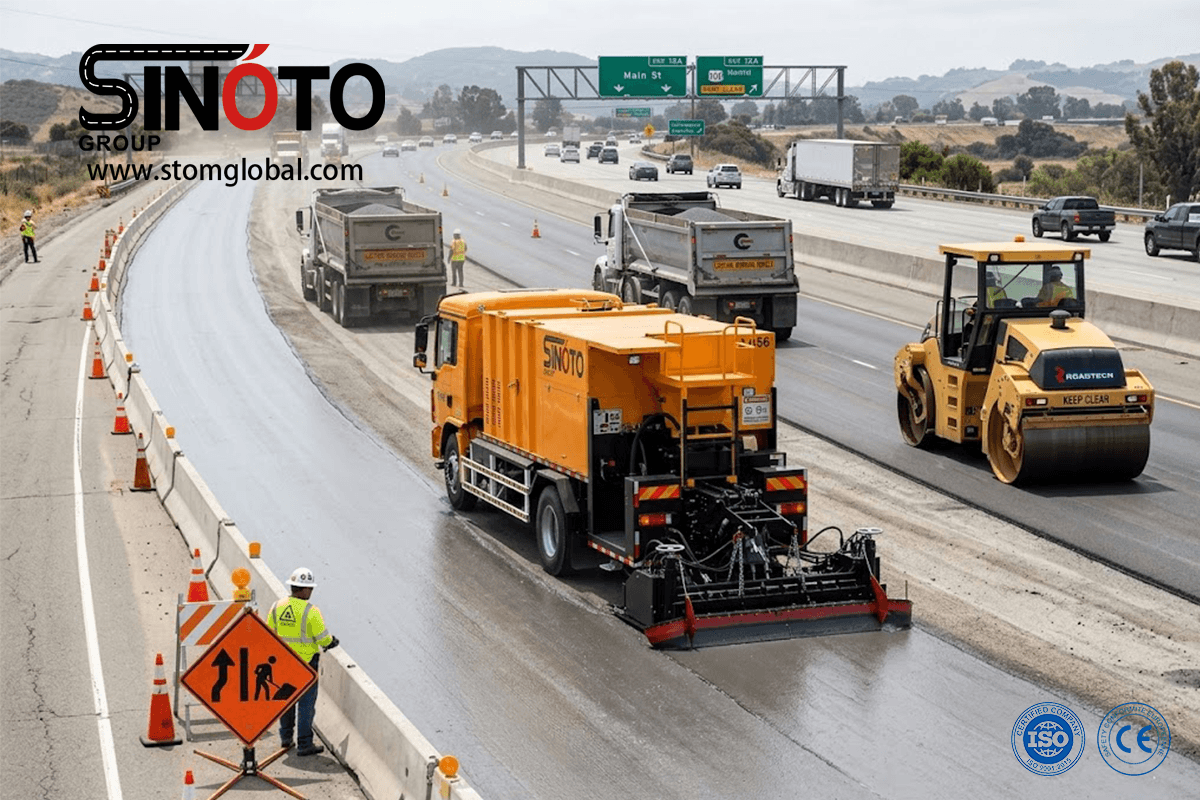
👉 Get a Free Quote & Talk to Our Slurry Seal Equipment Specialists
Send us your project details — road type, expected traffic volume, and target lane-miles — and our team will help you select the right Slurry Sealing Paver model, thickness setting, and mix design for your pavement preservation program.

Whatsapp ID: 8619059581045

WeChat ID: +8619059581045

