Modern highway construction is under growing pressure to be more durable, quieter, and more sustainable — and rubberized asphalt made from recycled tires is one of the clearest answers to that challenge. But how exactly does a crumb rubber modified bitumen plant transform base asphalt and waste tire rubber into a high-performance paving binder? This guide breaks down the process step by step, compares plant models, and answers the questions buyers ask most often before purchasing.
A crumb rubber modified bitumen plant (often abbreviated CRMB plant) is industrial equipment that blends crumb rubber — ground particles from recycled tires — with hot base bitumen under controlled temperature, shear mixing, and reaction time. The result is a modified binder with better elasticity, aging resistance, and temperature performance than conventional asphalt.
Unlike a standard polymer modified bitumen plant, which uses SBS, PE, or EVA polymers, a crumb rubber modified asphalt plant adds a dedicated rubber digestion (or “reaction”) tank, a high-precision rubber powder dosing system, and heavy-duty pumps designed for the thick, abrasive consistency of rubberized bitumen. These additions are what make CRMB production genuinely different from ordinary modified-asphalt manufacturing — and why not every asphalt plant can be simply retrofitted to handle it.
🔑 Key components of a crumb rubber modified bitumen plant typically include:
This combination allows the plant to process tire recycling waste into a usable construction material at scale, rather than sending old tires to landfill.
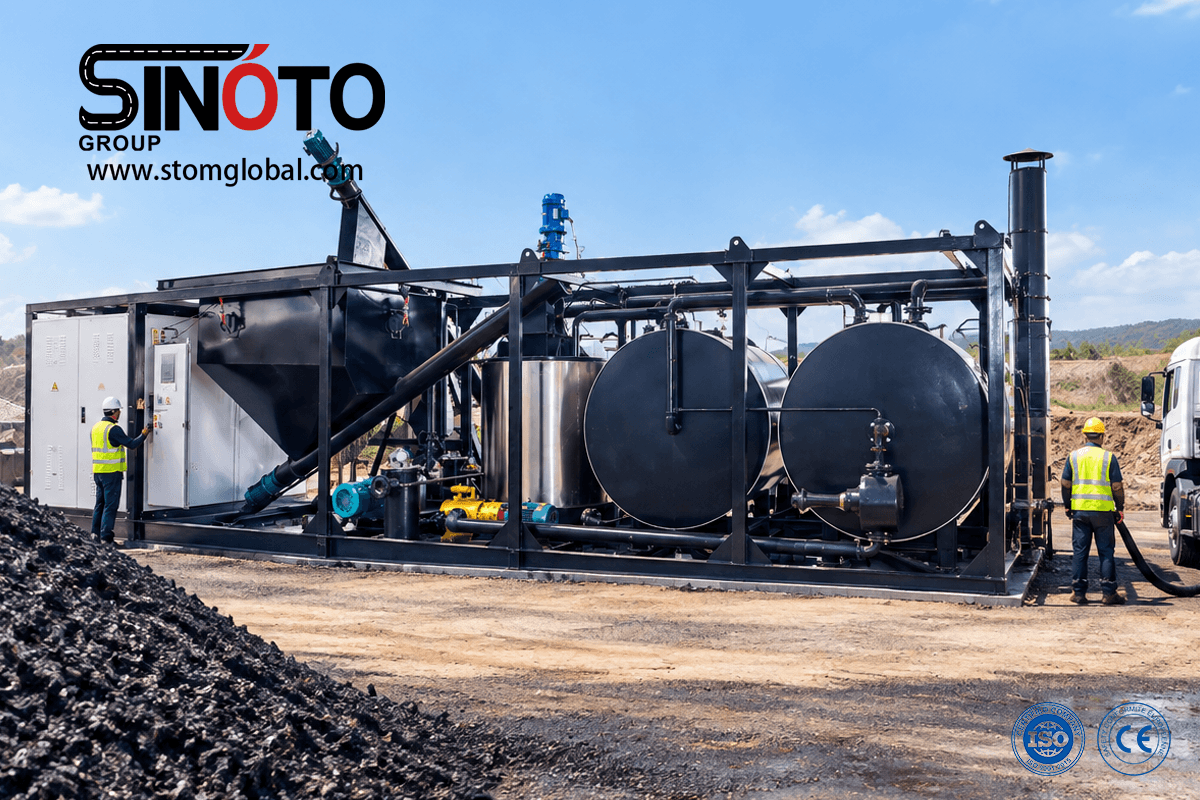
This is the core question buyers want answered before committing to an investment. The working principle can be broken into five stages:
1. Bitumen Preheating. Base asphalt is heated using a spiral plate rapid heat exchanger, which can raise the temperature by more than 50℃ under sealed conditions. Sealed heating prevents oxidation and premature aging of the asphalt before it even reaches the mixer.
2. Crumb Rubber Dosing. Ground tire rubber is stored in a rubber powder silo and fed into the system using loss-in-weight, high-precision static weighing — a method more accurate than dynamic weighing for this application. This ensures the crumb rubber content meets exact project specifications, which matters most for highway and airport runway paving where tolerances are strict.
3. High-Shear Mixing. Preheated bitumen and dosed rubber powder enter the rapid mixing tank, where high-speed stirring physically disperses the rubber particles throughout the asphalt matrix. This step is what fully develops the blend rather than leaving rubber as loose, unreacted filler.
4. Digestion / Reaction Phase. The blended material moves into the rubberized bitumen reactor, where a PLC-controlled cycle holds temperature and time — typically 45–60 minutes — allowing the rubber to swell and chemically interact with the asphalt. Anti-settling agitation with high-torque paddles keeps rubber particles in suspension throughout this phase so the final binder stays homogeneous rather than separating.
5. Storage, Pumping, and Output. The finished rubberized asphalt is moved using a dedicated rubber bitumen pump (commonly rated around 30m³/h, 7.5KW, frequency-converting control) engineered for high-viscosity material, then transferred to storage or directly to a paving crew.
“The digestion phase is where the real transformation happens — it’s the difference between rubber that’s merely mixed in and rubber that’s actually developed into the binder.” — Technical FAQ, CRMB Process Engineering
Because the entire sequence runs on a closed, PLC-automated loop, a well-designed crumb rubber modified asphalt plant can operate continuously for 24 hours without batch interruptions, which is a major factor in overall output and project scheduling.
Buyers comparing a rubberized asphalt plant to conventional or polymer-modification equipment should look for five differentiators:
These features matter directly to pavement preservation programs, where contractors need consistent binder quality across every batch, not just the first one.
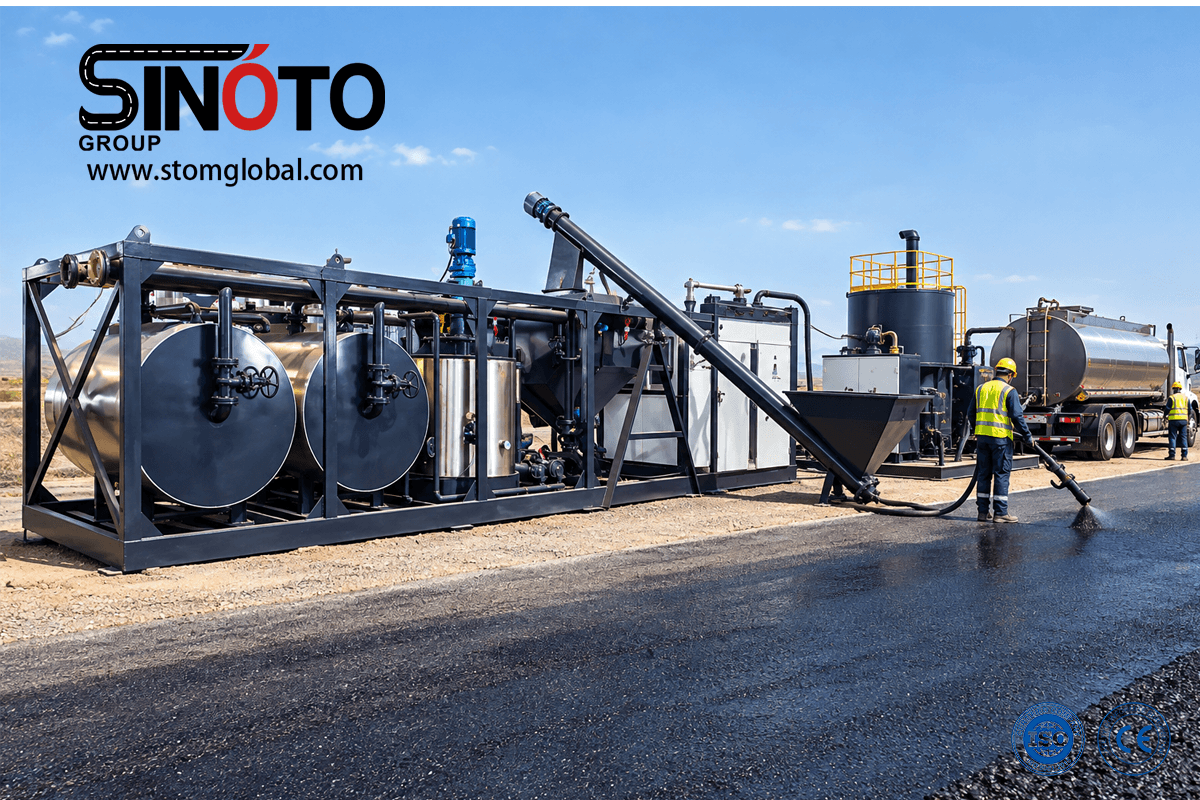
One of the first questions buyers ask is about crumb rubber asphalt plant price and capacity fit. Below is a comparison of the three standard models:
| Parameter | CRMB-6 | CRMB-10 | CRMB-15 |
|---|---|---|---|
| Capacity | 6 t/h | 10 t/h | 15 t/h |
| Mixer Motor Power | 5.5KW | 7.5KW | 11KW |
| Rapid Mixing Tank | 1.5 m³ | 2 m³ | 2.5 m³ |
| Rubber Powder Silo | 4 m³ | 6 m³ | 5 m³ ×2 |
| Bitumen Pump | 9.89 m³/h, 3KW | 16.8 m³/h, 5.5KW | 24 m³/h, 7.5KW |
| Rubberized Bitumen Reactor (optional) | 10 m³ ×2 | 15 m³ ×2 | 20 m³ ×2 |
A 10 tph rubber asphalt plant (CRMB-10) tends to be the most common mid-scale choice, balancing throughput against footprint and utility demand for regional highway or municipal maintenance contracts. Smaller CRMB-6 units suit pavement preservation and localized repair work, while CRMB-15 is sized for continuous large-volume highway paving programs.
Factors that influence rubber modified bitumen plant price beyond raw capacity include:
Because specifications and rubber modified bitumen plant for sale listings vary by supplier, it’s worth requesting a detailed quotation that itemizes each subsystem rather than a single lump-sum figure — this makes it far easier to compare a crumb rubber asphalt plant price across vendors on an apples-to-apples basis.
Crumb rubber asphalt delivers measurable performance gains over conventional binder: better high- and low-temperature stability, improved aging resistance, and greater durability. In field use, it also reduces road noise and surface stickiness, improving driving safety — an increasingly common requirement in urban highway construction specifications and noise-sensitive corridors.
Beyond the road surface itself, the same modified bitumen produced by these plants is also used in waterproofing applications — basements, underground structures, and roofing — often combined with stone paint or fiberglass reinforcement for enhanced performance.
From a sustainability standpoint, every ton of crumb rubber processed through a crumb rubber modified bitumen plant represents recycled tire material diverted from landfill or stockpiling. Combined with the life-cycle cost advantage of fewer repaving cycles, this positions rubberized asphalt as a practical fit for agencies pursuing both pavement preservation targets and circular-economy commitments in tire recycling.
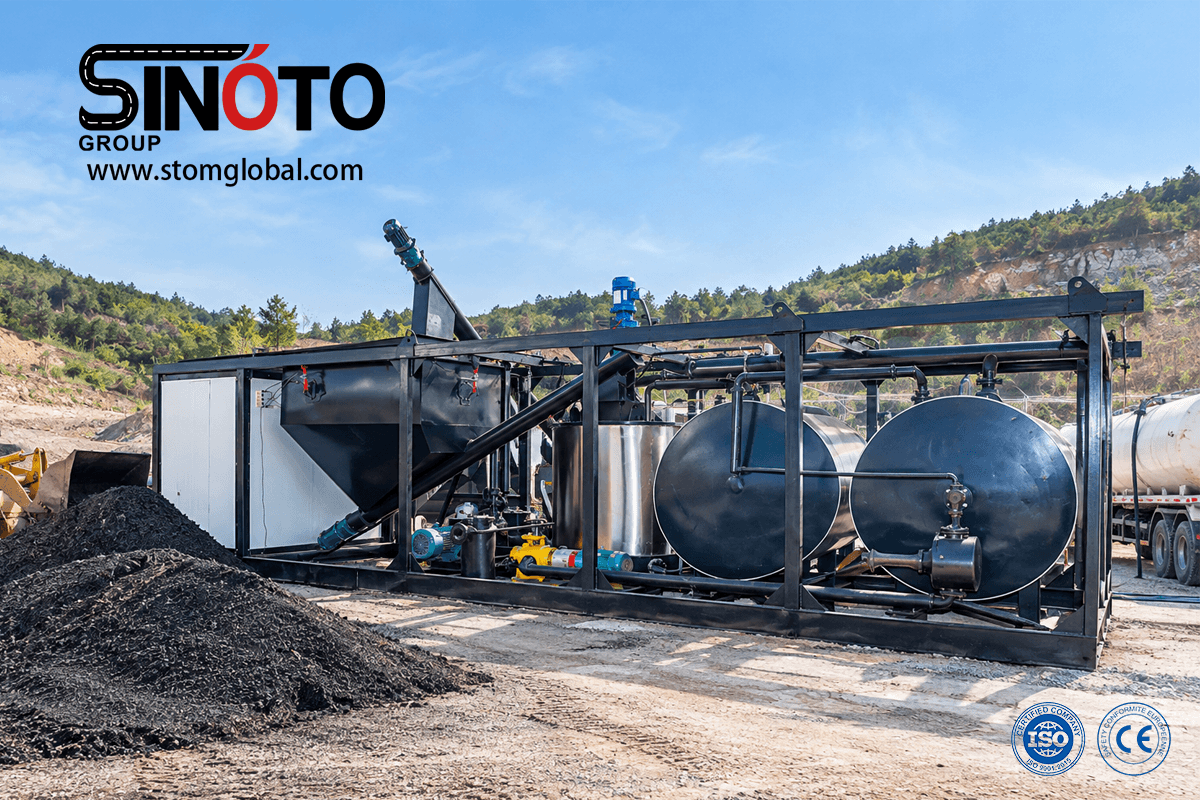
Whether you’re evaluating a 6, 10, or 15 tph configuration, getting a project-specific quotation is the fastest way to compare real crumb rubber asphalt plant price options against your capacity and budget needs.
👉 Request a Free Quote for Your Crumb Rubber Modified Bitumen Plant
#CrumbRubberModifiedBitumenPlant #RubberizedAsphalt #TireRecycling #HighwayConstruction #PavementPreservation #AsphaltPlant

Whatsapp ID: 8619059581045

WeChat ID: +8619059581045

