Quick answer: A well-built barrels bitumen melting machine keeps thermal oil out of the bitumen through four layers of protection — seamless heavy-wall coil tubing with zero longitudinal seams, all headers and flange joints located outside the melting chamber, 100% weld inspection plus hydrostatic and pneumatic hold testing before shipment, and a closed-loop pressure/level monitoring system that flags a micro-leak long before it contaminates a batch.
Buyers evaluating a bitumen drum decanter almost always ask about capacity, fuel consumption and container shipping first. The question that separates an experienced purchaser from a first-time one is this one: what happens if the heating coil inside the melt chamber develops a crack? A coil failure in a bitumen drum melting machine is not a maintenance nuisance — it is a product-quality event. Thermal oil bleeding into the pool changes penetration, softening point and solubility, and a contaminated 18 m³ tank can wipe out the margin on an entire road section.
This article explains, in engineering terms, how leak prevention is designed and verified in a modern asphalt melting machine, what test documentation you should demand from any bitumen melter manufacturer, and how to detect a developing leak in the field.
In an indirect-heated bitumen decanting machine, thermal oil circulates through a closed coil at roughly 240–300 °C while bitumen surrounds the coil at 120–160 °C. The oil side runs at a positive gauge pressure — typically 0.3–0.6 MPa generated by the circulation pump — while the bitumen pool sits at near-atmospheric pressure.
That pressure differential matters. Oil always migrates toward bitumen, never the reverse. A pinhole the size of a needle tip will bleed oil continuously and silently, because the bitumen’s viscosity prevents any visible bubbling or spray. This is why leak prevention in a drum bitumen melter is built into the coil design rather than handled with post-failure repairs.
📌 Engineering note: Thermal oil and bitumen are both hydrocarbons and are fully miscible at operating temperature. Unlike a water leak, which flashes to steam and announces itself immediately, an oil leak in an asphalt drum melter blends invisibly into the product. Detection must be indirect — through system pressure, expansion tank level and lab testing.
The consequences are measurable:
| Contamination level | Typical effect on 70/100 grade bitumen | Commercial outcome |
|---|---|---|
| < 0.3% thermal oil | Penetration rises 3–8 dmm | Usually still within spec |
| 0.5–1.5% | Softening point drops 2–5 °C, viscosity falls | Batch fails acceptance testing |
| > 2% | Solubility and ductility both shift | Full tank rejected; rutting risk if paved |
| Continuous slow leak | Thermal oil loss + fire risk near burner | Unplanned shutdown, oil recharge cost |
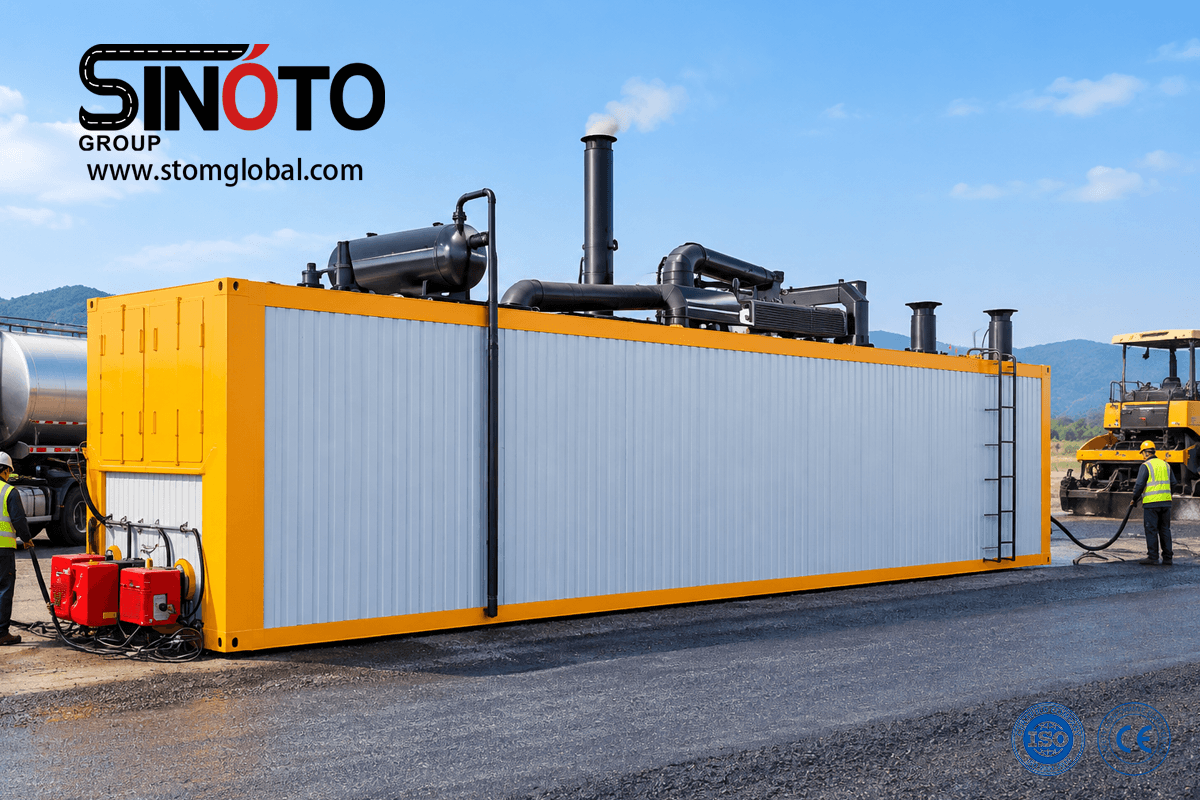
The most reliable leak is the one that has no place to start. In a bitumen drum melting unit, that means eliminating the failure points before the machine is ever fired.
1. Seamless tube, not welded pipe. The heating coil is formed from seamless carbon steel (ASTM A106 Gr.B / GB 20# equivalent) with a wall thickness of 3.5–5.0 mm against a design pressure far above working pressure. Longitudinally welded (ERW) pipe is cheaper and is the single most common source of coil failure in low-cost equipment, because the seam is the weakest line under thermal cycling.
2. Cold-bent U-returns instead of welded elbows. Every weld inside a melting chamber is a candidate crack site. Forming the return bends by mandrel bending removes 60–80% of the internal weld count in a typical automatic asphalt melter coil bank.
3. Headers and flanges outside the chamber. Inlet and outlet headers, gaskets and bolted flanges are positioned outside the chamber shell. If a gasket ever weeps, it drips onto the frame where an operator can see it — not into the bitumen pool. Only continuous tube passes through the chamber wall, sealed with a welded penetration sleeve.
4. Finned tube with external-only attachment. Finned surfaces raise heat exchange area to roughly 1.5× a plain thermal oil pipe, which is how a quality bitumen drum melting machine melts a drum in 40–60 minutes. Critically, the fins are high-frequency welded to the outside of the tube — the fin weld never penetrates the pressure wall.
5. Floating supports and expansion loops. A coil heated from ambient to 280 °C grows several millimetres per metre. Rigidly clamped coils accumulate fatigue stress at the supports and crack after a few hundred cycles. Sliding brackets and designed expansion bends absorb that movement.
6. Controlled film temperature. Thermal oil degrades and cokes above its film-temperature limit. Coke deposits create insulated hot spots, local overheating and eventual tube rupture. Coil geometry is sized for an oil velocity of ≥ 2 m/s to keep film temperature well below the fluid’s rated maximum.
💬 Buyer’s perspective: “We inherited a second-hand asphalt melting machine where someone had repaired the coil with a threaded coupling inside the tank. It held for one season. The following spring we lost forty tonnes of binder to a slow leak before anyone connected the falling expansion tank level to the failed penetration tests.” — Contractor feedback frequently cited during technical consultations with a bitumen melting machine manufacturer.
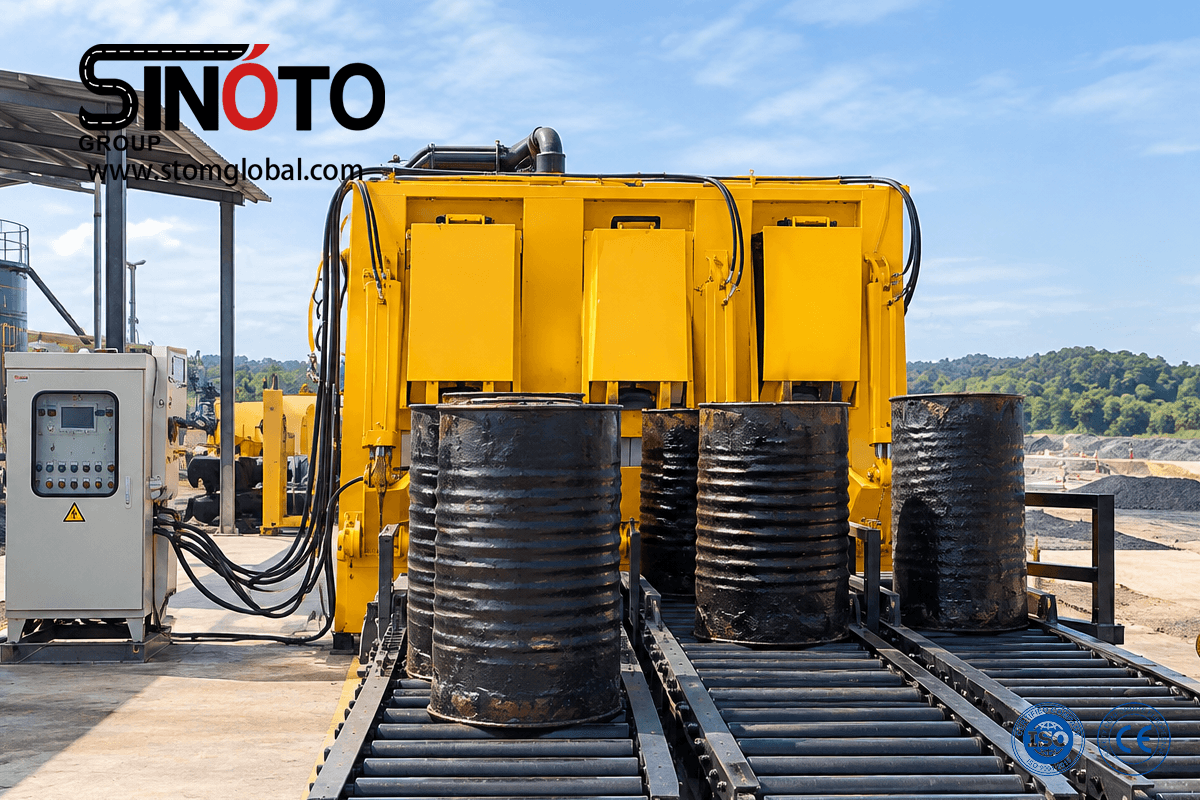
Design intent means nothing without verification. A credible SINOTO bitumen decanter — or any professionally manufactured bitumen decanter — ships with a test file, not just a nameplate. The standard sequence looks like this:
| Stage | Test | Typical parameters | Acceptance criterion |
|---|---|---|---|
| 1 | Raw material certification | Mill certificate per tube batch | Chemistry & wall thickness verified |
| 2 | Weld NDT | Dye penetrant (PT) on 100% of butt welds; RT on random sample | No linear indications |
| 3 | Hydrostatic test | 1.5 × design pressure, 30 min hold | Zero pressure drop, no weeping |
| 4 | Pneumatic soap test | 0.6–0.8 MPa dry air / nitrogen | No bubble formation at any joint |
| 5 | 24-hour pressure hold | Sealed coil, ambient | Pressure decay within instrument tolerance |
| 6 | Hot commissioning | Full thermal cycle to operating temperature | Stable expansion tank level |
| 7 | Post-cycle re-test | Repeat hydrostatic after thermal cycling | Confirms no fatigue leakage |
Stage 7 is the one most often skipped by budget suppliers and the one that matters most. A coil can pass a cold hydrostatic test and still fail once thermal expansion loads the welds. Testing after a full heat cycle is what proves the assembly, not just the tubing.
✅ Documentation checklist: Ask your bitumen melter manufacturer for the material certificate, the PT/RT report, the hydrostatic test record with pressure-time data, and the commissioning log. Any manufacturer of a serious asphalt drum melter will have these on file for every serial number.
Even with sound design, monitoring closes the loop. A modern bitumen drum melting unit with PLC control watches three independent signals that together make a silent leak practically impossible.
Expansion tank level. The thermal oil circuit is closed. Under normal operation, level moves predictably with temperature and returns to the same cold baseline every shutdown. A cold-baseline level that drops shift over shift means oil is going somewhere — and in a decanter, “somewhere” means the bitumen pool. This is the single most sensitive leak indicator available and it costs nothing to monitor.
Circulation pressure differential. The PLC logs pump discharge and return pressure. A developing breach shows as a slow, non-recoverable drop in system pressure at constant pump speed and oil temperature.
Temperature control behaviour. A fully automatic temperature system regulates burner firing against setpoint. When a coil section is compromised or coked, the burner runs longer to hold the same pool temperature — a pattern visible in the firing-rate log before anything else goes wrong.
Layered on top of these are the safety interlocks that make an enclosed asphalt melting machine safer than open-flame melting in the first place: high-temperature alarms, over-pressure cut-off, low-flow protection on the oil pump, and automatic burner shutdown.
| Warning sign | Likely meaning | Recommended action |
|---|---|---|
| Cold expansion tank level falling weekly | Micro-leak in coil or external circuit | Isolate circuit, hydrostatic test |
| Burner firing time up 15%+ at same output | Coking or fouled heat exchange surface | Sample oil; check acid value & viscosity |
| Bitumen penetration drifting upward | Possible oil ingress into pool | Lab test: penetration, softening point, solubility |
| Visible oil film on bitumen surface at low level | Active leak | Shut down immediately; drain and inspect |
Field verification of contamination. If you suspect a leak in a bitumen drum decanter, pull a sample and run three tests: penetration at 25 °C, softening point (ring and ball), and solubility in trichloroethylene. Thermal oil ingress raises penetration and lowers softening point together — a combination that rarely occurs from simple overheating, which moves both in the opposite direction.
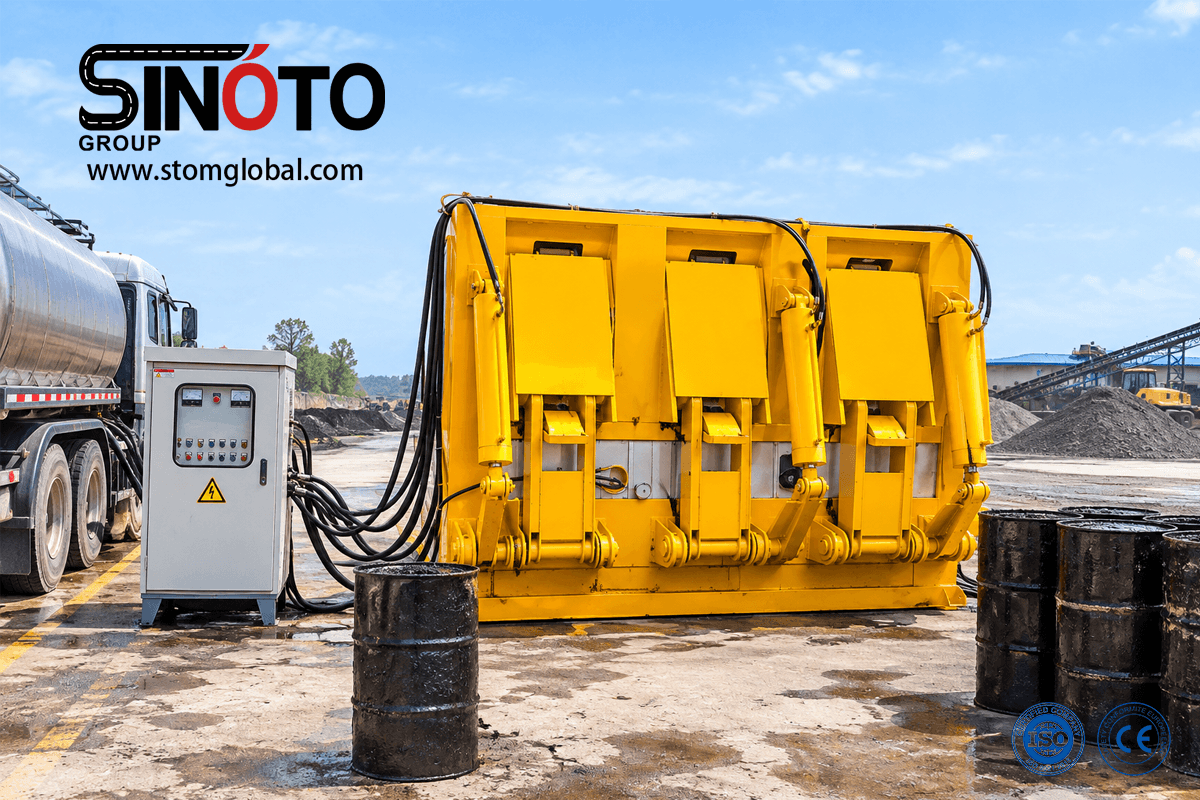
Capacity selection is straightforward; integrity questions are where due diligence pays. For reference, the standard model range covers most contractor requirements:
| Model | Capacity (t/h) | Barrels held (pcs) | Bitumen pool (m³) | Total power (kW) |
|---|---|---|---|---|
| DT-4 | 4–5 | 30 | 14 | 9.5 |
| DT-6 | 6–8 | 40 | 17 | 18.5 |
| DT-10 | 8–10 | 44 | 18 | 20.5 |
| DT-12 | 12–15 | 60 | 22 | 20.5 |
Heating is available as diesel/gas burner or thermal oil furnace, and units are built to fit standard 40ft HQ containers with a modular layout.
Before signing, put these questions to any supplier of a bitumen drum melting machine:
⚠️ Red flag: If a supplier of an asphalt melting machine cannot answer question 2 specifically, the coil was probably not designed with contamination risk in mind. Vague reassurance is not an engineering answer.
Question 6 deserves emphasis. Sectional coil banks with external flanged connections mean a field repair takes a day rather than a chamber teardown — a meaningful difference on a remote project site where a bitumen decanting machine is the bottleneck for the entire paving operation.
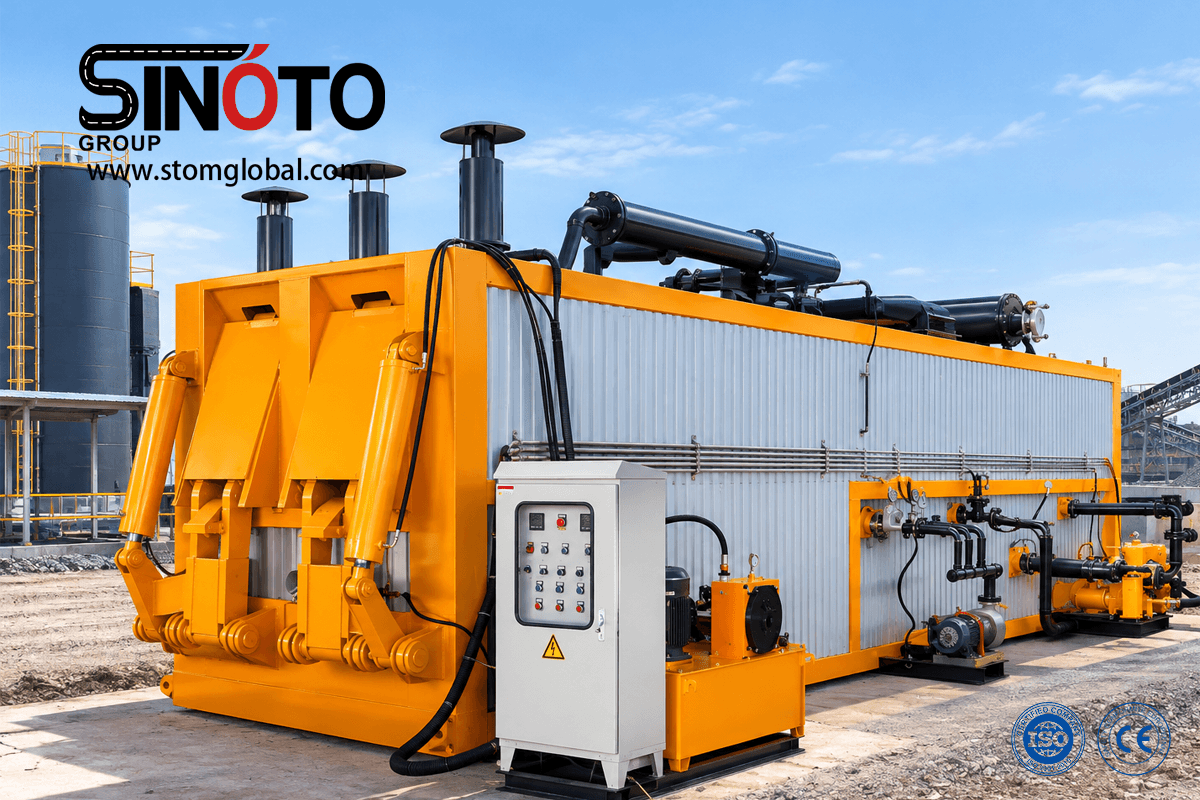
Preventing thermal oil contamination in a barrels bitumen melting machine is not one feature but a chain: seamless heavy-wall tubing, minimised internal welds, headers outside the chamber, fatigue-tolerant supports, controlled film temperature, verified pressure testing after thermal cycling, and continuous PLC monitoring of the closed oil loop. Break any link and the risk returns.
For buyers, the practical takeaway is simple — evaluate a drum bitumen melter on its test documentation and coil architecture, not only on tonnes per hour. A machine that melts 10 t/h and contaminates one tank per season is more expensive than a machine that melts 8 t/h and never does.
Request coil construction drawings, full test documentation and a model recommendation matched to your drum throughput and heating source.

Whatsapp ID: 8619059581045

WeChat ID: +8619059581045

