When contractors evaluate a cement spreader machine for a road base or soil stabilization project, one question comes up more than any other: how precisely can it actually control the amount of cement laid down per square meter? Overspreading wastes material and inflates project costs; underspreading weakens the stabilized layer and risks structural failure down the line. For anyone comparing a cement spreader, a cement spreader truck, or a cement distributor for an upcoming contract, spreading accuracy is the single metric that determines whether the machine pays for itself.
ℹ️ Quick Answer: A well-engineered automatic cement spreader equipped with a closed-loop weighing system can achieve a spreading accuracy of approximately ±1%, regardless of vehicle speed. That means for every ton of cement distributed, waste or shortfall is typically limited to just a few kilograms — a level of precision that manual or gravity-fed systems simply cannot match.
This article breaks down exactly how that accuracy is achieved, what technical specifications to look for, and how to evaluate a cement spreader for sale based on real performance data rather than marketing claims alone.
The precision of any automatic cement spreader comes down to three integrated systems working together in real time: the weighing system, the conveyor/metering system, and the control software.
Here’s the general workflow:
💬 “The metering system does not need to be calibrated. Just input the specific construction parameters in the system.” — This design philosophy removes one of the biggest sources of human error in traditional cement spreading operations, where manual calibration drift is a common cause of inconsistent layers.
Because the entire process is automated, a single driver can operate the whole machine — no second technician is needed to monitor discharge rates manually, which also reduces long-term labor costs.

Not all powder-spreading equipment is built the same way, and the difference in accuracy between a modern cement spreader truck and an older-style cement distributor can be significant.
|
Feature |
Traditional Cement Distributor |
Modern Automatic Cement Spreader Truck |
|
Metering method |
Manual gate/valve adjustment |
Automatic weighing + closed-loop control |
|
Accuracy |
Highly variable, operator-dependent |
±1% typical |
|
Speed sensitivity |
Output changes with driving speed |
Output stays constant regardless of speed |
|
Dust control |
Often minimal |
Bag-filter system + low-position discharge curtain |
|
Data logging |
None |
Vehicle networking platform with remote data transmission |
|
Labor requirement |
Often 2+ workers |
1 driver |
⚠️ Note: A cement distributor near me search often turns up a mix of legacy pull-behind spreaders and modern truck-mounted systems. It’s worth confirming whether the unit uses an electronic weighing system or a purely mechanical gate — this single detail is the biggest predictor of spreading consistency across a job site.
The takeaway: if your project has strict specification tolerances (common on highway and railway subgrade work), a truck-mounted automatic cement spreader with digital metering is almost always the safer investment over a conventional distributor.
Accuracy doesn’t exist in isolation — it’s tied directly to the hardware behind the machine. Below are the core specifications that influence how consistently a cement spreading machine performs in the field.
|
Parameter |
Typical Value |
Why It Matters |
|
Cement Bin Capacity |
15–25 m³ |
Larger bins mean fewer refill stops, maintaining consistent flow pressure |
|
Spreading Capacity |
0.9–60 kg/m² |
A wide range allows precise dosing for both thin lime layers and heavy base courses |
|
Max. Spreading Width |
2500 mm |
Wider coverage per pass reduces overlap-related over-application |
|
Engine Power |
~257 kW (350 hp) |
Stable hydraulic pressure supports consistent conveyor speed |
|
Weighing System |
Load-cell based |
Directly enables the ±1% accuracy claim |
|
Anti-Bridging Device |
Patented arch-breaking mechanism |
Prevents cement clumping, which would otherwise cause uneven discharge |
ℹ️ Info: The patented arch-breaking device deserves special attention. Cement is prone to forming arches or lumps inside a storage bin, especially in humid conditions. If the material bridges, the discharge rate becomes inconsistent even with a perfect weighing system downstream. This mechanical safeguard is what keeps the metering data trustworthy over long shifts.
Dust control also indirectly supports accuracy: a dust-free cement spreader with a bag-filter system and low-position discharge curtain prevents material loss to wind drift, which would otherwise skew the effective application rate versus what the onboard system reports.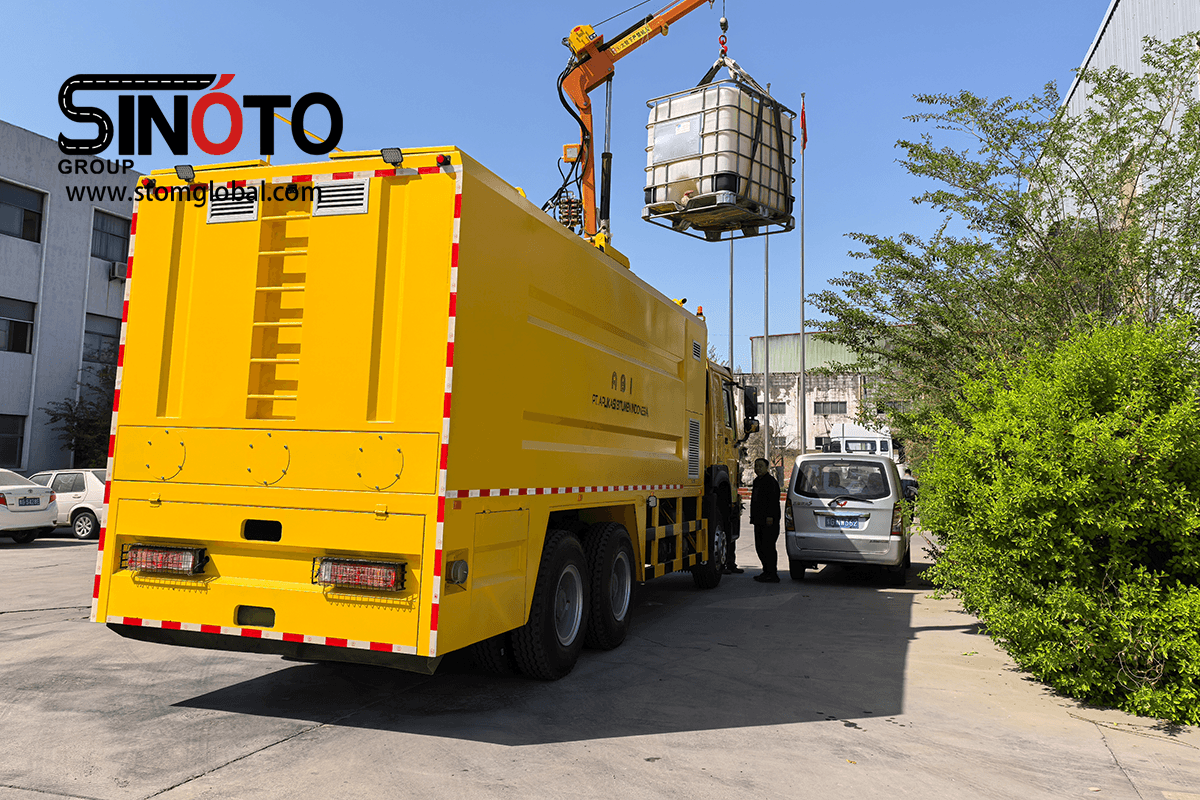
Once accuracy requirements are clear, the next step is sourcing the right equipment. Buyers researching cement spreader truck price, browsing listings for a cement spreader for sale, or comparing a cement spreader truck for sale from different manufacturers should evaluate more than the sticker price.
Key questions to ask any supplier:
💬 A useful reference point: mid-size automatic cement spreader trucks (around 18 m³ bin capacity, 2500 mm spreading width) are commonly built on established chassis brands such as SinoTruck or Shacman, with Euro V main engines — details that affect both cement spreader truck price and long-term operating cost.
Because pricing varies significantly by bin capacity, chassis brand, hydraulic components (imported hydraulic pumps and valves typically add cost but improve durability), and control system sophistication, it’s worth requesting a full technical parameter sheet — not just a headline price — before comparing quotes across suppliers.
Whether you’re searching locally for a cement distributor near me or sourcing internationally for a fleet upgrade, the evaluation criteria stay largely the same:
⚠️ Reminder: Spreading accuracy is only as good as ongoing maintenance. Even the best cement spreading machine will drift out of tolerance if inspection hatches aren’t used regularly to check for material buildup or if the anti-bridge vibration system isn’t maintained.

The short answer to “how accurate is the spreading volume?” is that modern automatic cement spreader technology has largely solved the precision problem that plagued older cement distributor designs. With closed-loop weighing systems, speed-independent metering, and anti-bridging hardware working together, a well-built cement spreader truck can reliably hold spreading rates within ±1% of the target — a level of consistency that translates directly into material savings and more predictable subgrade quality.
For buyers comparing options — whether searching listings for a cement spreader truck for sale, requesting a cement spreader truck price, or evaluating a cement distributor near me — the deciding factor should always be the accuracy and reliability of the underlying weighing and control system, not just the size of the tank or the horsepower of the engine.

Whatsapp ID: 8619059581045

WeChat ID: +8619059581045

