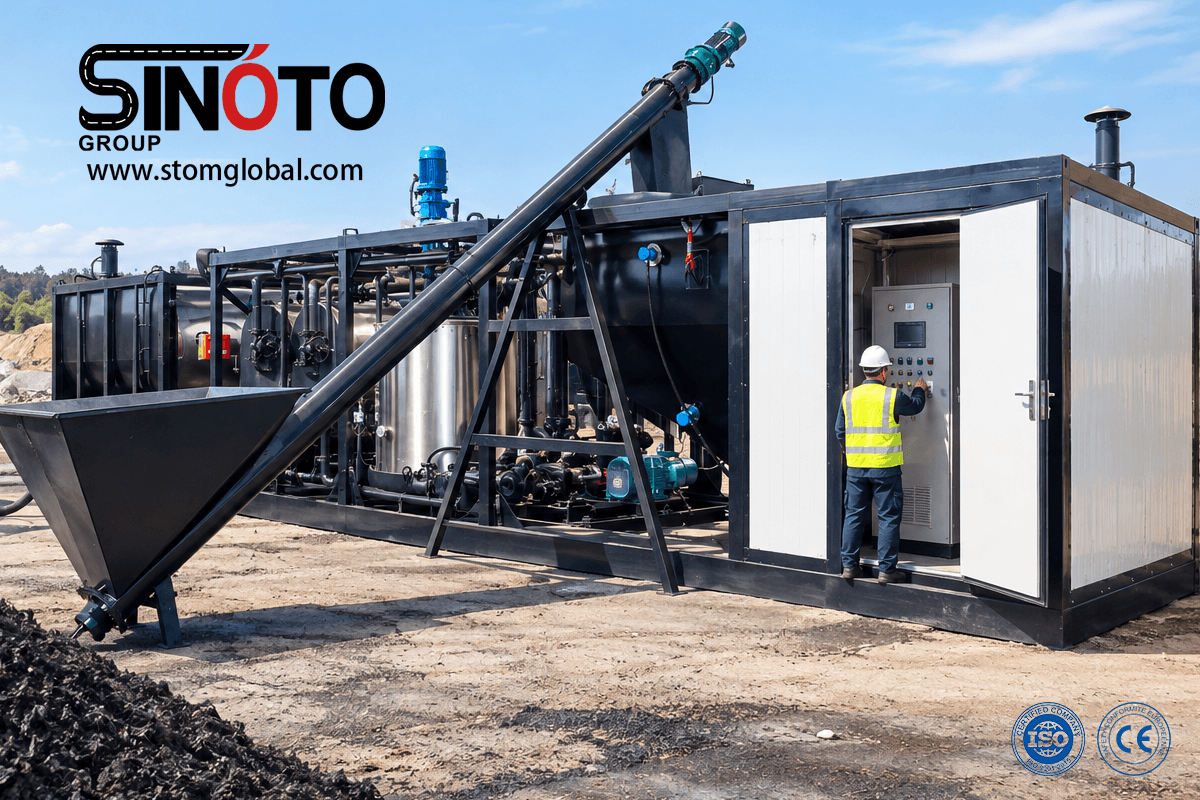
If you’re comparing machines for a road-building or pavement preservation project, you’ve probably already searched for a crumb rubber modified bitumen plant and landed on three model numbers that look nearly identical on paper: CRMB-6, CRMB-10, and CRMB-15. The names only tell you the hourly output — 6, 10, and 15 tons per hour — but the real differences that affect your project timeline, budget, and long-term maintenance costs run much deeper.
This guide breaks down exactly what separates these three models, what buyers in highway construction and tire recycling industries actually care about when shortlisting a supplier, and how to decide which rubberized asphalt plant fits your operation. We’ll also look at the technical specs side-by-side, explain why crumb rubber asphalt plant price varies so widely between suppliers, and show you where to send an inquiry once you’ve made up your mind.
💡 Quick Answer: CRMB-6, CRMB-10, and CRMB-15 are the same core system scaled to three throughput tiers (6, 10, and 15 tons/hour). The differences go beyond capacity — heat exchanger surface area, mixing tank volume, motor power, rubber powder silo size, and pump flow rate all scale up together to keep the rubber-bitumen reaction consistent at higher volumes.
A crumb rubber modified bitumen plant is a processing system that blends crumb rubber — usually ground from recycled waste tires — with hot base bitumen under controlled heat, shear mixing, and reaction time. The result is a rubberized binder with far better elasticity, aging resistance, and temperature performance than plain asphalt.
This matters to buyers for three practical reasons:
🛣️ Road performance — Pavements built with rubberized asphalt resist rutting in summer and cracking in winter better than conventional mixes, extending service life and reducing the frequency of resurfacing.
🔇 Noise and safety — Rubber-modified surface layers reduce tire noise and improve skid resistance, a growing requirement in urban highway construction contracts.
♻️ Tire recycling value — Every ton of crumb rubber consumed by the plant is a ton of scrap tire diverted from landfill, which is increasingly tied to environmental compliance credits in many regions.
The Sinoto crumb rubber modified asphalt plant line uses the same high-shear technology found in polymer-modified bitumen (PMB) systems, but adds dedicated rubber digestion tanks and anti-settling agitation to keep rubber particles suspended during the reaction phase — a detail that separates a reliable plant from one that clogs pumps and produces inconsistent binder.
This is the question most buyers actually type into Google, so here’s the direct side-by-side comparison pulled from the manufacturer’s technical datasheet.
| Parameter | CRMB-6 | CRMB-10 | CRMB-15 |
|---|---|---|---|
| Capacity | 6 t/h | 10 t/h | 15 t/h |
| Rapid Heat Exchanger | 100 m² | 80 m² × 2 | 100 m² × 2 |
| Rapid Mixing Tank Capacity | 1.5 m³ | 2 m³ | 2.5 m³ |
| Mixer Motor Power | 5.5 kW | 7.5 kW | 11 kW |
| One-time Hoist Capacity | 12 m³/h, 4 kW | — | 20 m³/h, 5.5 kW |
| Rubber Powder Silo Capacity | 4 m³ | 6 m³ | 5 m³ × 2 |
| Weighing Scale Elevator | 6 m³/h, 2.2 kW | 10 m³/h, 3 kW | 15 m³/h, 4 kW |
| Bitumen Pump | 9.89 m³/h, 3 kW | 16.8 m³/h, 5.5 kW | 24 m³/h, 7.5 kW |
| Flow Meter | 1–10.5 m³/h | 1.6–16.8 m³/h | 2.8–28 m³/h |
| Rubber Bitumen Pump | 30 m³/h, 7.5 kW (all models, frequency-converting control) | ||
| Rubberized Bitumen Reactor (optional) | 10 m³ × 2 | 15 m³ × 2 | 20 m³ × 2 |
The key takeaway: capacity isn’t the only thing that scales. The heat exchanger surface area, mixer motor power, and bitumen pump flow rate all increase in proportion so that a larger plant doesn’t simply run the same mixing process faster — it maintains the same reaction quality at greater volume. This is what separates a genuine crumb rubber modified bitumen plant from a scaled-up single-tank mixer that struggles with consistency above 6 tons/hour.
All three models share the same control philosophy: a PLC and industrial-computer system that automatically manages bitumen temperature, flow rate, rubber powder weight, and mixture liquid level, with manual override available if the instrumentation fails.
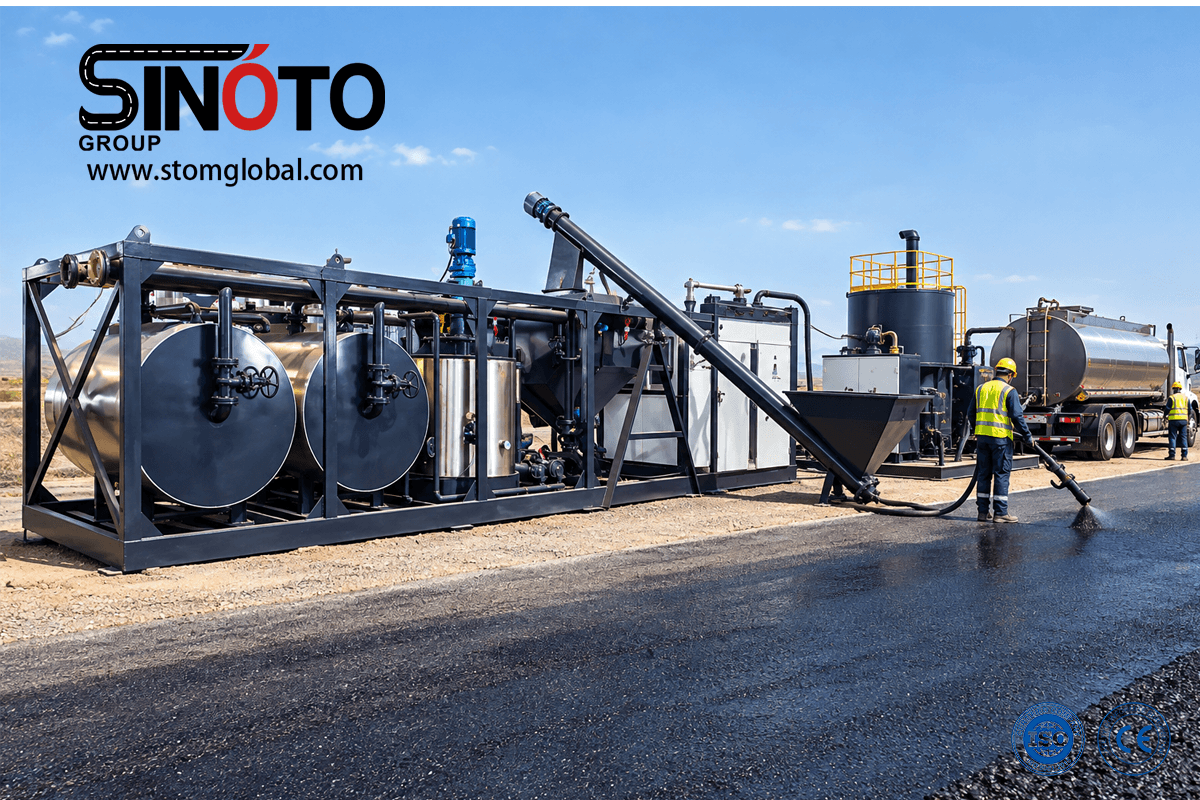
Buyers typically fall into one of three categories, and matching your project scale to the right model avoids both under-capacity bottlenecks and wasted capital on unused output.
🔎 According to the manufacturer’s technical FAQ, rubber powder dosing across all three models uses high-precision loss-in-weight technology, which is specifically relevant for buyers supplying crumb rubber asphalt to highway and airport runway specifications where binder consistency is contractually enforced.
One detail worth flagging for procurement teams: the reaction (“digestion”) cycle across all models runs on a PLC-controlled 45–60 minute cycle that allows rubber powder to properly swell before mixing. This timing doesn’t change much between the 6, 10, and 15 tph models — what changes is how much material moves through that cycle per hour, which is why silo capacity and hoist throughput scale alongside the reactor size.
Rubber modified bitumen plant price is rarely a flat number — it depends on capacity tier, whether the optional rubberized bitumen reactor is included, control system specification, and shipping/installation terms. A few cost factors buyers consistently ask about:
Beyond the sticker price, buyers researching a rubber modified bitumen plant for sale should weigh total life-cycle cost. Rubberized asphalt pavement typically lasts longer and needs fewer maintenance cycles than conventional mixes, and waste rubber powder generally costs less than SBS or other polymer modifiers — an advantage that compounds at large production volumes. For agencies and contractors comparing crumb rubber asphalt plant price across quotes, it’s worth asking each supplier to itemize the heat exchanger, mixing tank, and dosing system specs separately, since these — not just the headline tonnage — determine long-term reliability.

Tire recycling through crumb rubber modified bitumen is one of the more scalable industrial uses for scrap tires, and it’s increasingly tied to sustainability requirements in public infrastructure tenders. A few reasons buyers are prioritizing this technology:
✅ Converts a waste stream (scrap tires) into a functional construction material rather than landfill or stockpile liability
✅ Rubberized binder improves rutting resistance in hot climates and cracking resistance in cold climates
✅ Reduces road noise, a factor increasingly written into urban paving specifications
✅ Lower material cost per ton compared to polymer modifiers like SBS at scale
The equipment itself is designed to support this efficiency: continuous 24-hour operation under air-sealed heating conditions prevents asphalt aging during processing, and the spiral plate heat exchanger rapidly raises bitumen temperature without requiring batch-interval stoppages — meaning less downtime between loads and more consistent output quality across a full production shift.
There’s no universally “best” model — the right crumb rubber modified bitumen plant depends on your project’s daily tonnage requirements, budget, and whether you need buffer capacity from an optional reactor. Smaller municipal crews are usually well served by the CRMB-6, mid-size regional contractors gravitate toward the CRMB-10, and large-scale highway or airport contracts justify the CRMB-15’s higher throughput and continuous-production design.
If you’re ready to compare specifications against your project’s tonnage requirements or want a formal quote for CRMB-6, CRMB-10, or CRMB-15, request a quote here →
#CrumbRubberModifiedBitumenPlant #RubberizedAsphalt #TireRecycling #HighwayConstruction #PavementPreservation #CRMBPlant

Whatsapp ID: 8619059581045

WeChat ID: +8619059581045