Choosing an asphalt mixing plant for sale starts with one core question: should your mix be produced continuously in a single drum, or weighed and mixed batch by batch? That decision shapes your investment, your fuel bill, your mix accuracy and how easily you can move equipment between job sites. This guide explains the real difference between a continuous asphalt plant and an asphalt batching plant, so you can match the technology to your project instead of paying for features you will never use.
💡 Quick Answer: A continuous asphalt mixing plant dries aggregate, sprays bitumen and mixes the material inside one drum without stopping. A batch plant dries, screens, weighs and mixes in separate cycles. Continuous means lower cost and simpler operation. Batch means tighter recipe control.
A continuous asphalt plant, commonly called a drum mix plant, moves cold aggregate from the feed bins into a rotating drying drum. Drying, bitumen spraying and mixing all happen inside that same drum. Finished hot mix leaves in an uninterrupted stream and goes straight to a storage silo or a waiting truck. In an asphalt drum mix plant, the process needs no hot elevator, vibrating screen or weighing hopper.
An asphalt batching plant works in stages. Aggregate is dried, lifted to a screening unit, sorted into hot bins and weighed. It then drops into a separate mixer together with weighed bitumen and filler. Every batch is a self-contained cycle, so the recipe can change from one batch to the next.
📊 Process at a Glance
🟠 Continuous: 🔥 Dry → 🛢️ Coat with bitumen → 🔄 Mix → 📦 Silo (all in one drum, non-stop)
🔵 Batch: 🔥 Dry → 📶 Screen → ⚖️ Weigh → 🔄 Mix → 📦 Silo (cycle by cycle)
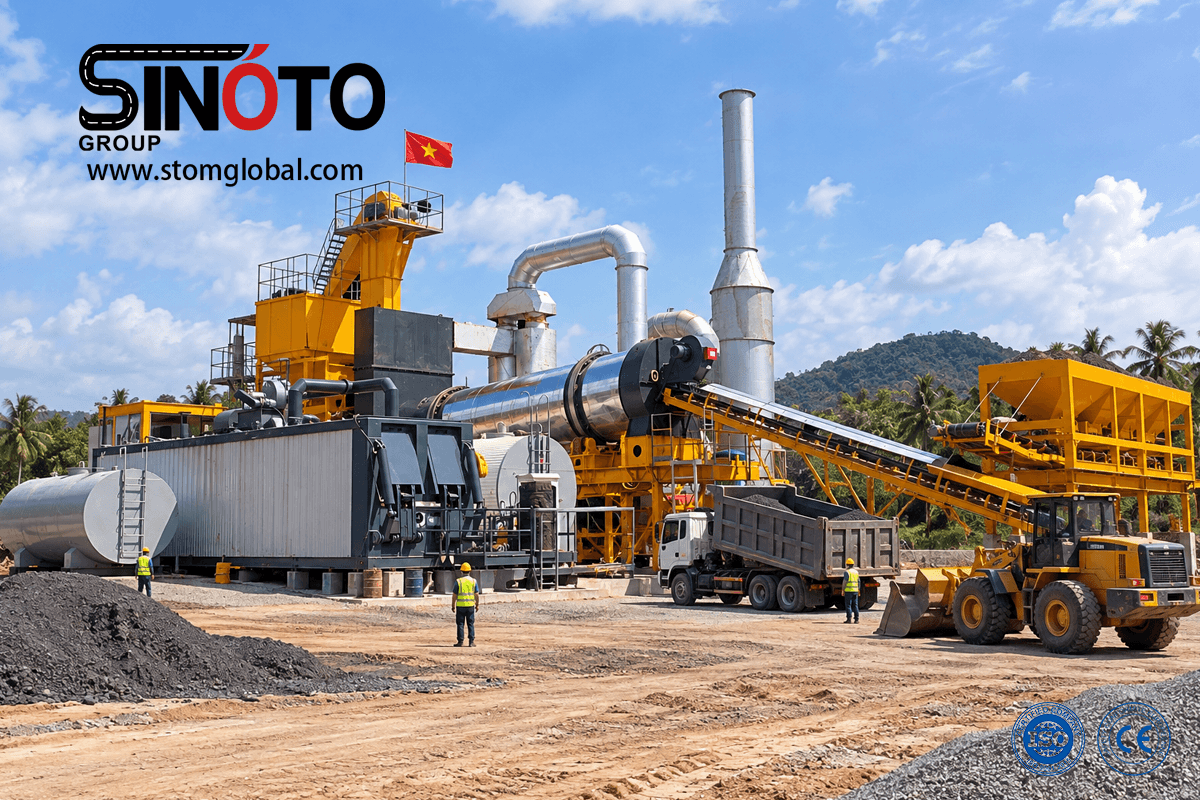
Both technologies produce a hot mix asphalt plant output that can meet road-building standards, but each has its own trade-offs. The table below covers what buyers compare most often when browsing a batch mix plant for sale against a continuous model.
| Factor | Continuous (Drum Mix) Plant | Batch Plant |
|---|---|---|
| ⚙️ Process | Drying, coating and mixing in one drum | Separate drying, screening, weighing and mixing |
| 💰 Initial Investment | Lower, with fewer components | Higher, with more equipment |
| ⛽ Energy Use per Ton | Lower, thanks to continuous thermal exchange | Typically higher |
| 🎯 Mix Precision | Good for standard road mixes | Excellent, adjustable batch by batch |
| 🧱 Structure and Footprint | Compact and simple | Larger and more complex |
| 🔧 Maintenance | Fewer wear parts, lower cost | More moving parts to service |
| 🛣️ Best For | Municipal roads, low-grade highways, base and lower layers of high-grade highways | Other high-grade projects and environmentally sensitive areas |
If you are shopping for an asphalt batch plant for sale, expect to pay more, but you gain finer control over gradation. A continuous hot mix plant wins on price, energy use and simplicity. Your project specification should decide which one is right.
✅ Manufacturer Guidance: SINOTO recommends continuous plants for municipal roads, low-grade highways and the base or lower layers of high-grade highways. For other high-grade road projects or environmentally sensitive areas, a batch-type plant is the better choice.
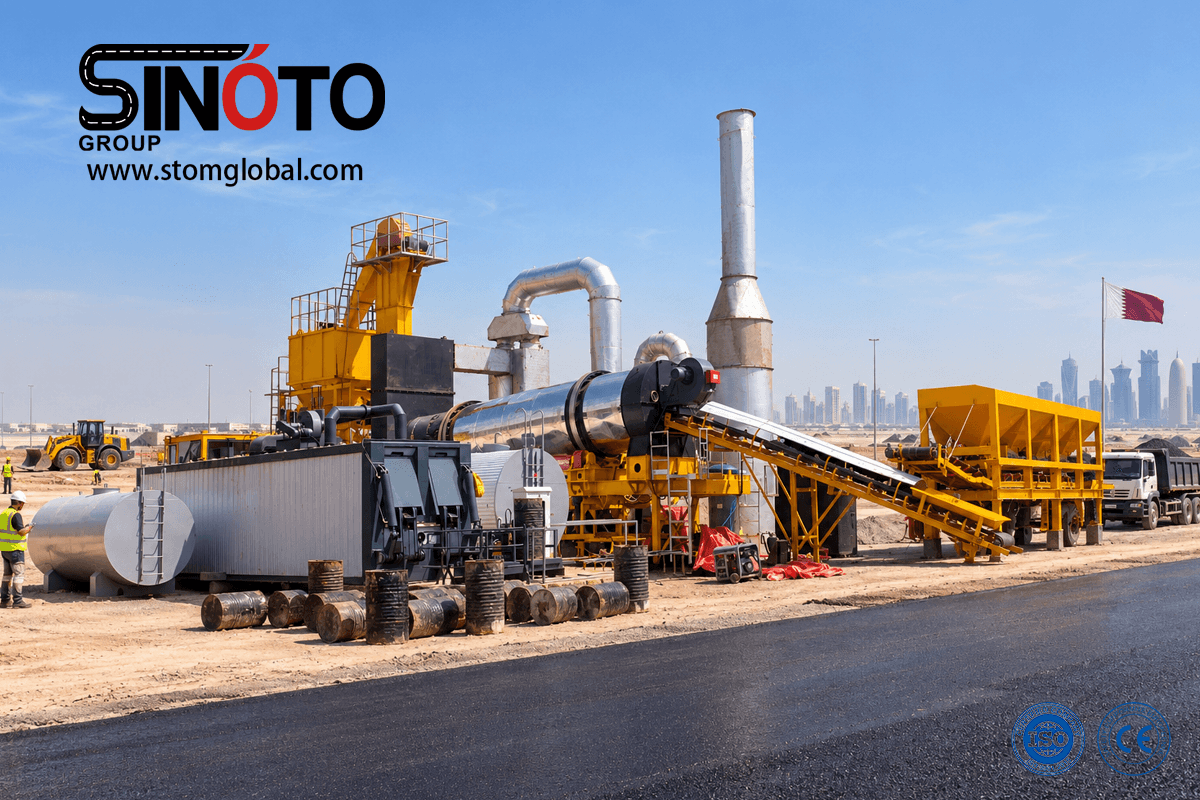
Contractors and distributors rarely buy on capacity alone. These are the concerns we hear most often:
Smaller contractors doing patching or rural road work sometimes ask about a mini batching plant. If your daily output is modest, compare that option with a continuous model. SINOTO’s range starts at a capacity of about 40–60 tph, which already covers many small and mid-size projects.
🗨️ Buyer Question: Does a continuous plant really save fuel?
Answer: Yes. Optimized burner technology and continuous heat exchange reduce heat loss compared with traditional batching, which lowers fuel consumption per ton of mix.
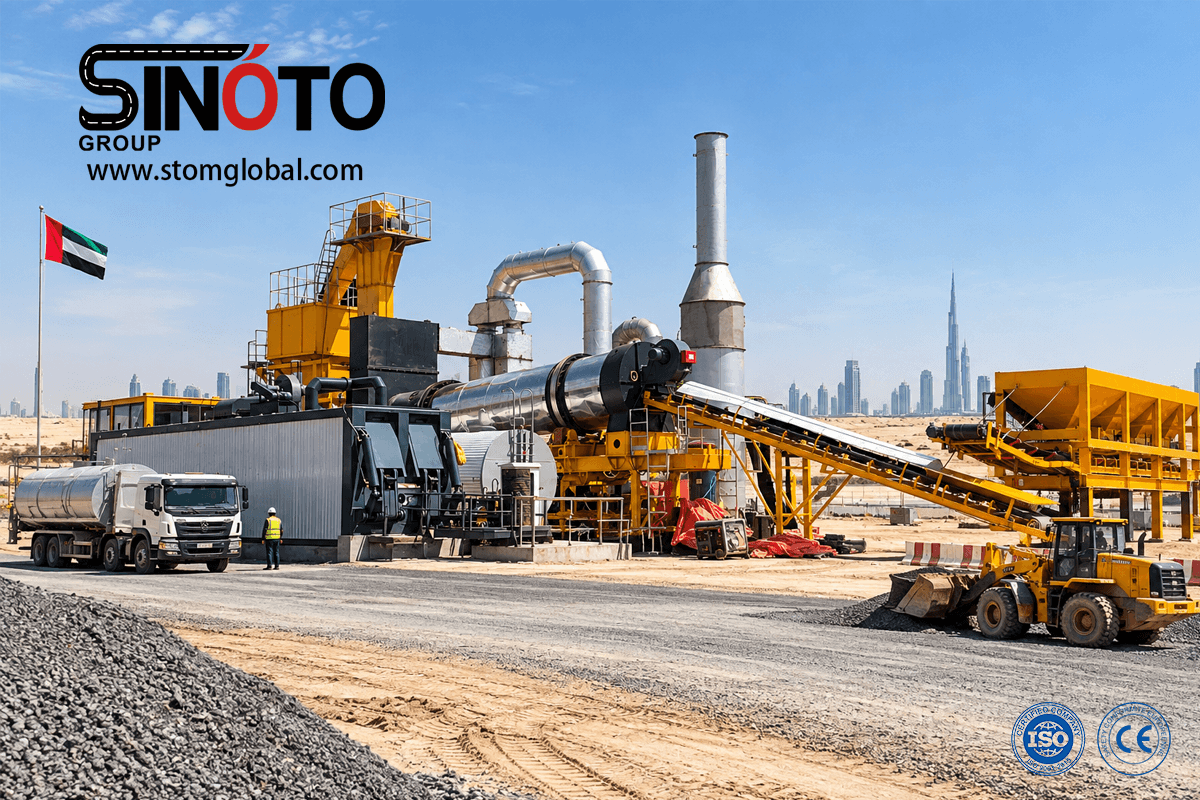
The next decision after the process is mobility, and continuous technology comes in both forms.
A stationary asphalt mixing plant (SINOTO’s DHB series) is the right choice when you supply a city or region from one permanent site. Once installed, it delivers steady, high-volume output for years.
A mobile asphalt mixing plant (the MDHB series) is built for projects that move. A mobile drum mix plant rides on a semi-trailer unit with a traveling chassis, a suspension system and 10.00-R20 tyres. You can tow it to the next site, set it up quickly and keep transfer costs low. A portable drum mix plant suits highway contractors who follow the work along a road corridor, or rental operators serving several remote sites in one season.
Whichever layout you pick, the same continuous process produces the mix. Only the chassis and installation differ. A mobile setup also saves on foundation work, which shortens the time before your first ton is produced.
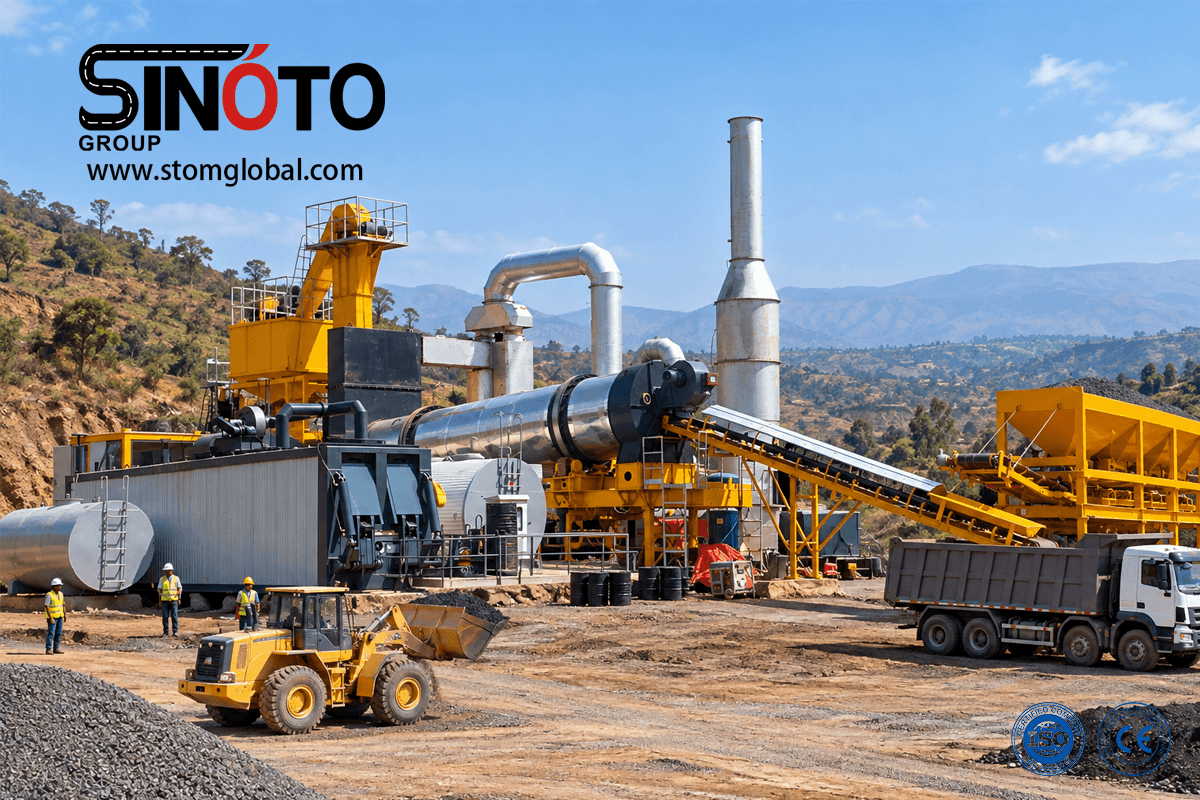
SINOTO offers a complete continuous range from 60 to 120 tph. Each plant includes a cold aggregate feed system, drying drum, burner, dust collection system, bitumen supply system, pneumatic system and control system. Mobile models add a semi-trailer unit.
| Model | Capacity (t/h) | Total Power (kW) | Dryer Drum (mm) | Bitumen Tank (m³) | Hot Mix Silo (m³) |
|---|---|---|---|---|---|
| DHB60 / MDHB60 | 60 | 100 | Φ1500×6500 | 30 | 3.5 |
| DHB80 / MDHB80 | 80 | 142 | Φ1500×6650 | 40 | 4.5 |
| DHB100 / MDHB100 | 100 | 160 | Φ1600×9000 | 40 | 10 |
| DHB120 / MDHB120 | 120 | 215 | Φ1800×9000 | 40 | 10 |
Specifications are for reference only and may be adjusted to your project.
Here is what sets these plants apart:
The verdict: choose a continuous asphalt mixing plant when cost, output and simplicity matter most and your roads fit municipal or base-layer specifications. Choose a batch design when the highest mix precision or the strictest environmental standard is non-negotiable. Either way, a well-matched hot mix asphalt plant pays back through steady production and predictable running costs.
📩 Ready to compare options? Tell us your target capacity, fuel type, voltage and project location, and our engineers will recommend the right configuration.
📧 info@stomglobal.com | 📱 WhatsApp: +86-190 5958 1045
#AsphaltMixingPlant #DrumMixPlant #ContinuousAsphaltPlant #HotMixAsphaltPlant #RoadConstruction #AsphaltBatchingPlant

Whatsapp ID: 8619059581045

WeChat ID: +8619059581045

