A cement spreader is purpose-built machinery designed to distribute cement — or blends of cement with lime, fly ash, or other powdered materials — evenly across a construction surface. Paired with soil stabilizers and road rollers, this cement spreading machine is the backbone of cement-stabilized base courses, subgrade treatment, and cold-recycling projects on highways, railways, and municipal roads.
For contractors evaluating a cement spreader truck price against project ROI, the real question isn’t just “does it spread cement?” — it’s whether the machine delivers accurate dosage, minimizes dust exposure, and holds up across thousands of operating hours. Below, we break down the buyer concerns that matter most, using the STOM HTN5251TFS cement distributor truck as a reference model.
📌 Quick Fact: A well-calibrated automatic cement spreader can hit ±1% spreading accuracy — turning “close enough” dosing into a measurable cost saving on every kilometer of road base.
Soil stabilization projects demand consistency. An uneven pass means weak spots in the base layer, re-work, and wasted material. This is where soil stabilization cement spreader technology earns its keep.
✅ Fully automatic control — the spreading rate stays fixed regardless of vehicle speed, so operators don’t have to manually compensate on slopes or turns. ✅ Patented anti-arching device — prevents cement from bridging or clumping inside the bin, a common failure point in cheaper powder spreader trucks. ✅ One-driver operation — the entire spreading process runs from the cab, cutting labor costs on large-scale road construction cement spreader work. ✅ Vehicle networking platform — construction data (speed, dosage, coverage) is logged and can be transmitted remotely, giving site managers real-time visibility from a mobile phone.
This combination is why the machine performs equally well as a road base cement spreader, a lime spreader truck, or a fly ash spreader — the control logic adapts to the material, not just cement.
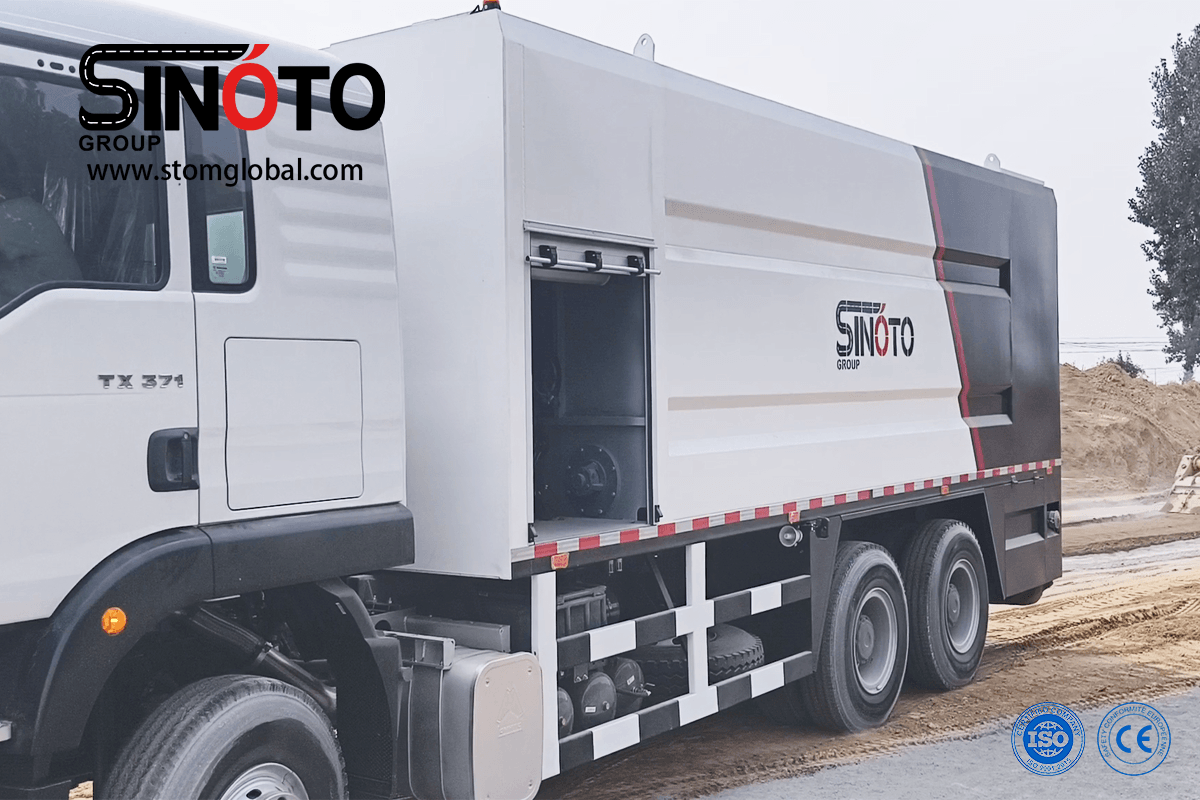
Chassis selection directly affects durability, fuel economy, and after-sales serviceability — three factors that top most buyer checklists before requesting a cement spreader truck price quote.
The STOM cement spreader machine is built on a choice of proven heavy-duty platforms:
| Chassis Brand | Configuration | Emission Standard | Driving Position |
|---|---|---|---|
| SinoTruck | Standard | Euro V | Left or right-hand drive |
| Shacman | Alternative option | Euro V | Left or right-hand drive |
🔧 Both chassis options pair with a 257 kW (350 hp) main engine and a dedicated 74 kW auxiliary engine (Euro III) that powers the spreading system independently of the drivetrain — meaning the truck can spread cement at a near-idle crawl speed of ≤1.8 km/h while still hitting a 80 km/h road-transport speed between job sites.
“Chassis Brand: SinoTruck / Shacman — Left driving or right driving” — this dual-chassis, dual-drive-position flexibility lets buyers match the truck to local parts networks and import regulations, which matters enormously for fleets operating across multiple countries.
For buyers comparing a cement spreader truck for sale internationally, this flexibility often decides the deal — a SinoTruck chassis may suit markets with existing SinoTruck service centers, while a Shacman chassis may better fit fleets standardized on that brand.
Accuracy is the single biggest differentiator among cement spreader machine for sale listings. A machine that “looks” powerful but drifts on dosage will cost more in wasted cement over a season than the equipment itself.
📊 Key performance figures:
| Parameter | Value |
|---|---|
| Cement Bins Capacity | 18 m³ |
| Spreading Capacity | 0.9–60 kg/m² |
| Max. Spreading Width | 2,500 mm |
| Spreading Accuracy | ±1% |
| Curb Weight / Total Weight | 15 t / 23 t |
| Overall Size (L×W×H) | 9,500 × 2,500 × 4,100 mm |
The automatic cement spreader with weighing system works by letting the operator input a target kg/m² dosage on a touchscreen; the controller then manages conveyor speed, gate opening, and vehicle-speed compensation automatically. There’s no manual recalibration required between jobs — a real advantage over older mechanical cement powder spreader designs that need constant adjustment.
Dust control is built into the same accuracy story: a bag-filter dust collector and a low-position discharge curtain keep material contained, which matters both for operator health and for compliance on eco-sensitive municipal sites.
While road base construction is the primary use case, the same cement spreading machine platform extends into several adjacent applications:
This versatility is a major reason contractors search for a cement spreader machine for sale rather than a single-purpose unit — one chassis investment covers multiple material-handling jobs across a project’s lifecycle.
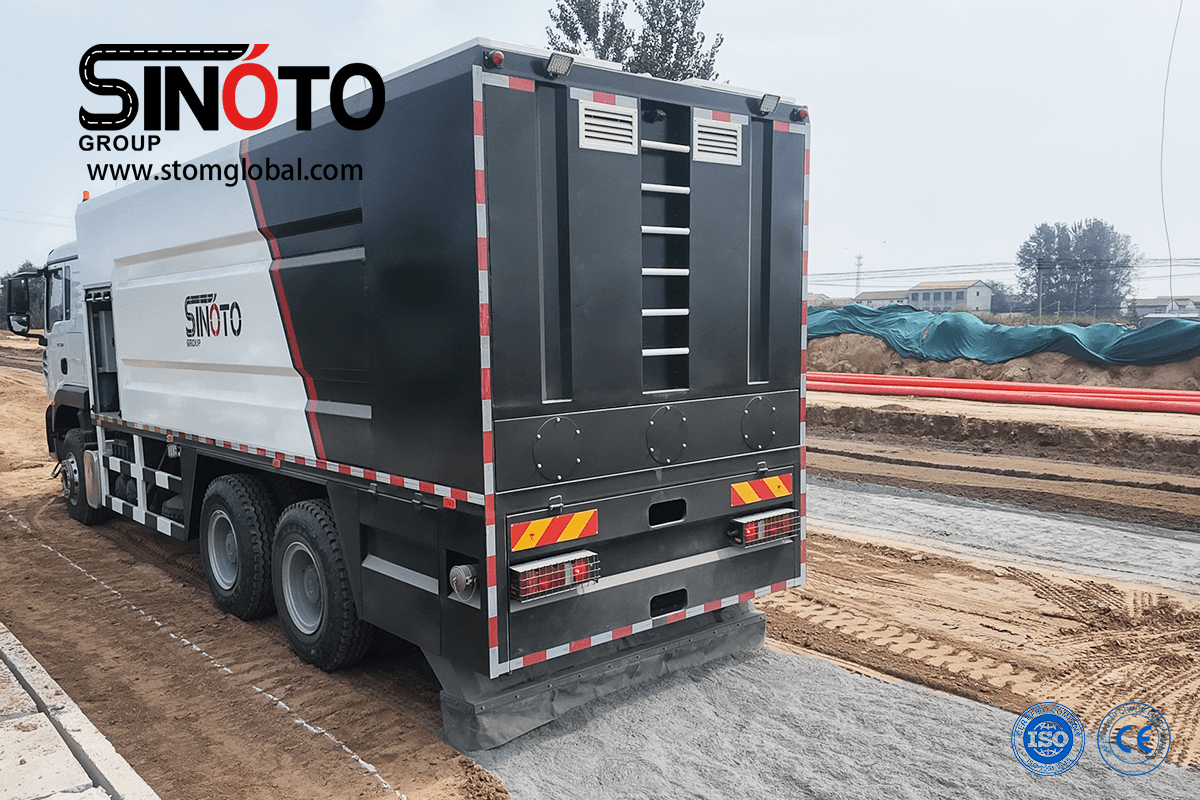
Before finalizing a cement spreader truck price comparison, buyers should verify:
📌 A machine engineered for soil stabilization equipment duty should reduce, not add to, your site’s labor and rework costs. That’s the real test of value.
If you’re comparing a cement spreader truck for sale for an upcoming road construction, soil stabilization, or cold-recycling project, our engineering team can walk you through chassis options, bin sizing, and delivery timelines tailored to your job scope.
👉 Request a Free Quote for the Cement Spreader Truck
#CementSpreader #SoilStabilization #RoadConstructionEquipment #CementSpreaderTruck #HeavyMachinery #ConstructionEquipment

Whatsapp ID: 8619059581045

WeChat ID: +8619059581045

