If you manage highway, railway, or municipal construction projects, you already know that uneven material distribution can compromise an entire pavement structure. A cement spreader (also known as a cement spreading machine or cement distributor truck) solves this problem by evenly applying cement, lime, or fly ash across a construction surface — with far greater accuracy and speed than manual methods.
Below, we break down what buyers actually look for when sourcing this equipment, the technical specifications that matter most, and answers to two of the most common pre-purchase questions: warranty coverage and spare parts availability.
A cement spreader truck is mounted equipment designed to uniformly distribute powdered materials — cement, lime, or fly ash — over a road base or subgrade. It’s typically used alongside soil stabilizers and road rollers to build cement-stabilized crushed stone base courses, or in soil improvement and cold recycling projects.
ℹ️ How it works: Material is loaded into a bin, moved through a conveyor system, and released through a controlled discharge width — commonly up to 2500mm — while a metering system regulates the exact spreading rate (kg/m²).
This is why the equipment is also marketed as a cement powder spreader or powder spreader truck: it isn’t limited to cement alone. The same chassis and conveyor system can handle lime spreading and fly ash distribution, making it a multi-purpose asset for contractors working across different soil-stabilization specifications.
“Just input the required kg/m² into the touch screen, and the system manages the rest — ensuring zero material waste.” — Standard operating principle for automatic weighing-system spreaders.
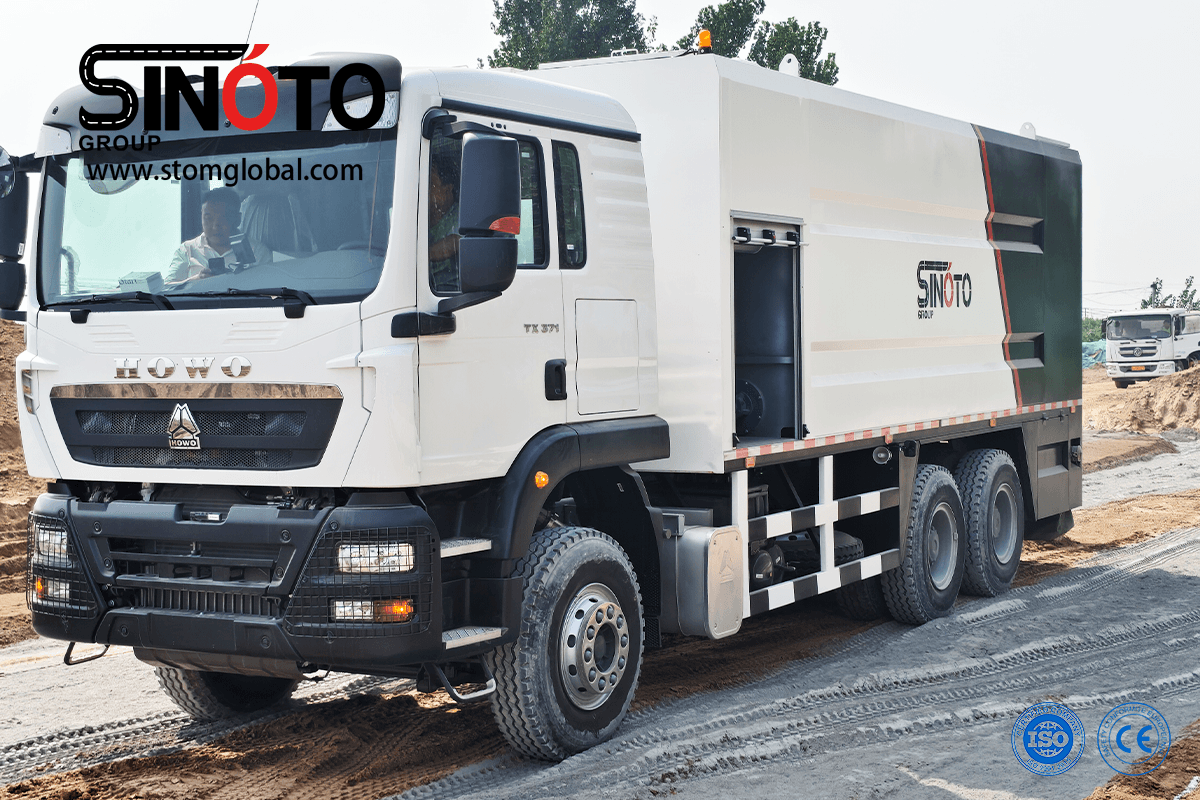
Buyers evaluating an automatic cement spreader typically prioritize five things: spreading accuracy, dust control, ease of operation, remote monitoring, and build durability. Here’s how a modern cement spreader machine typically performs against those criteria:
| Buyer Priority | What to Look For | Typical Performance |
|---|---|---|
| Spreading accuracy | Weighing + touchscreen input system | ±1% accuracy |
| Dust control | Bag-filter system + low-position discharge curtain | Near dust-free operation |
| Ease of operation | Single-driver, fully automatic control | Spreading rate unaffected by vehicle speed |
| Remote monitoring | Vehicle networking / mobile connectivity | Real-time construction data, recorded & transmitted |
| Feed reliability | Anti-bridge vibration + arch-breaking device | Prevents material clumping/arching |
ℹ️ A patented arch-breaking device is a detail worth asking about directly — it prevents cement from clumping inside the bin, which is one of the most common causes of uneven spreading and unplanned downtime on cement distributor truck fleets.
For buyers comparing multiple cement spreader machine for sale listings, the presence (or absence) of a calibration-free metering system is also a strong differentiator — some systems require field recalibration, while better-engineered units simply take your target parameters and run.
This is where the equipment earns its place as soil stabilization equipment rather than a niche accessory. A soil stabilization cement spreader is engineered to work in tandem with soil stabilizers to build stronger, longer-lasting subgrades — critical for highways, rural roads, airport runways, and railway embankments.
Typical applications include:
ℹ️ Road base construction — laying uniform cement layers beneath asphalt or concrete pavement
ℹ️ Cold recycling projects — spreading cement into reclaimed asphalt/aggregate for in-place stabilization
ℹ️ Lime and fly ash spreading — using the same chassis as a lime spreader truck or fly ash spreader for alternative binder materials
ℹ️ Foundation treatment — improving load-bearing capacity of weak or unstable soils before construction begins
Because a road construction cement spreader must perform consistently across varying material densities, spreading capacity is a key spec to check. A working range of roughly 0.9–60 kg/m² gives contractors flexibility to switch between light lime dressing and heavy cement-stabilized base work without changing equipment — a meaningful advantage for fleets handling mixed road base cement spreader contracts.
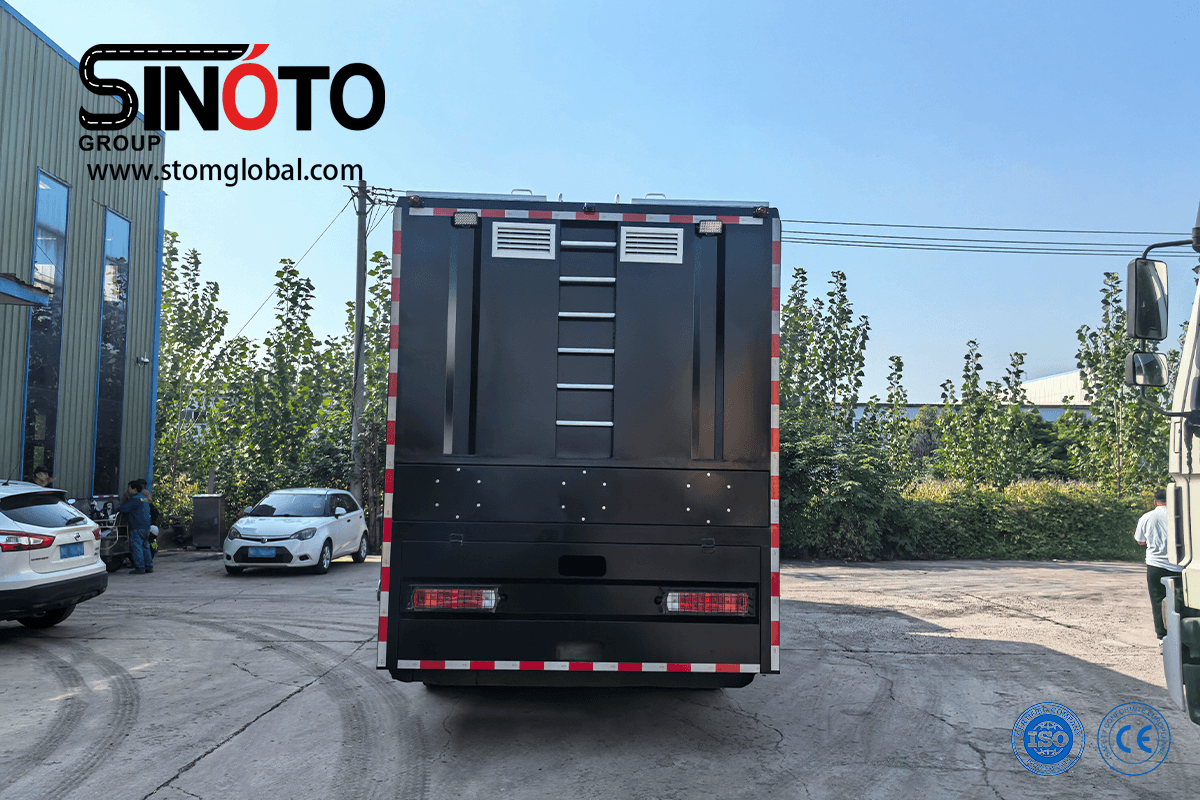
Cement spreader truck price varies significantly based on bin capacity, chassis brand, automation level, and country of manufacture. As a general guide, buyers should expect pricing to scale with:
When comparing cement spreader for sale listings, don’t evaluate price in isolation. A lower upfront cost on a cement spreader machine for sale can be offset by higher long-term maintenance costs if the hydraulic system, conveyor, or dust collector uses lower-grade components. Ask suppliers for a full configuration list — chassis, auxiliary engine, hydraulic pump/valve brand, weighing system, and controller — before comparing quotes side by side.
These are two of the most frequently asked questions from buyers evaluating a cement spreader truck, so here are direct answers:
What is the warranty period?
The standard warranty period is 1 year, covering the core mechanical, hydraulic, and electrical systems under normal operating conditions.
Do you provide spare parts?
Yes. Spare parts support is provided for key components — including hydraulic pumps, valves, conveyor and metering system parts, filters, and controller units — so fleets can minimize downtime throughout the equipment’s service life. This is particularly important for contractors running a powder spreader truck continuously across multi-phase road or soil-stabilization projects, where fast access to replacement parts directly affects project timelines.
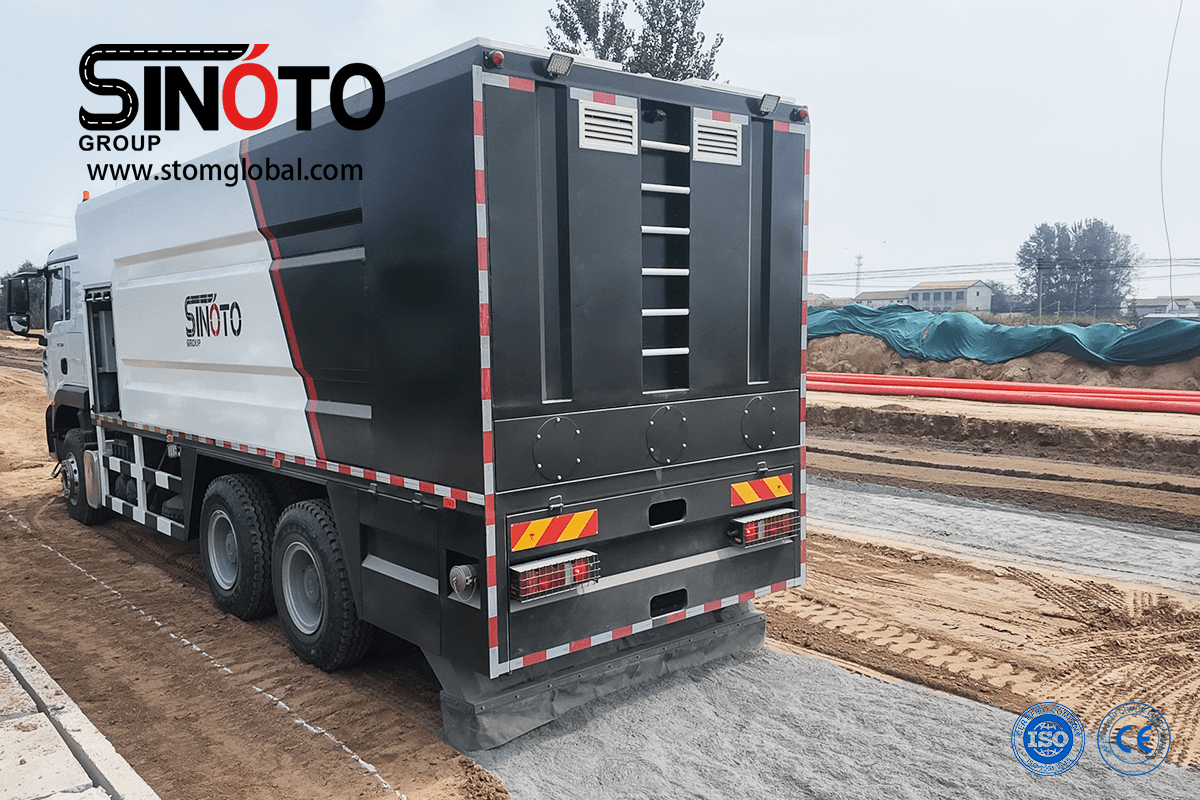
Whether you’re sourcing a cement spreader truck for a single highway project or building out a fleet of soil stabilization equipment, the details that matter most are spreading accuracy, dust management, feed reliability, and after-sales support — including warranty terms and spare parts access. A well-configured automatic cement spreader doesn’t just apply material; it protects your project timeline and your long-term equipment investment.
Ready to get a detailed quote or technical spec sheet? Request a Free Quote Now →
#CementSpreader #RoadConstruction #SoilStabilization #ConstructionEquipment #RoadBaseConstruction #HeavyMachinery

Whatsapp ID: 8619059581045

WeChat ID: +8619059581045

