When engineering teams evaluate a cement spreader for a soil stabilization or cement treated base project, one question comes up more than almost any other: can the spreading rate actually be adjusted from the control system, or does the operator still need to guess, stop, and manually recalibrate? For anyone comparing a cement spreader truck price against long-term project value, the answer to this question often decides whether a machine earns its place on the job site.
The short answer is yes — on a modern automatic cement spreader, the spreading rate is set and adjusted directly from the in-cab touch screen, with the machine’s onboard computer managing gate opening, conveyor speed, and vehicle speed compensation in real time. Below, we break down exactly how this works, what buyers should look for, and why this single feature separates a professional-grade cement distributor from an outdated mechanical spreader.
An automatic cement spreader equipped with a weighing system lets the operator simply input the target application rate — typically expressed in kg/m² — into the touch screen before starting work. From that point, the controller continuously reads data from the weighing sensors and ground-speed sensors, then automatically adjusts the discharge gate and conveyor output so the actual spreading amount matches the programmed target, regardless of whether the truck speeds up, slows down, or stops in traffic.
This is a fundamental advantage over older, purely mechanical powder spreader designs, where spreading rate was tied directly to wheel rotation or a fixed gate setting. On this equipment:
“By inputting the required kg/m² into the touch screen, the system manages the rest, ensuring zero material waste.” — this is the core promise buyers should hold any cement spreading machine supplier to.
This real-time responsiveness matters most on projects with variable geometry — ramps, curves, intersections — where a cement spreader truck for soil stabilization has to slow down or maneuver without leaving thin or thick bands of material behind.
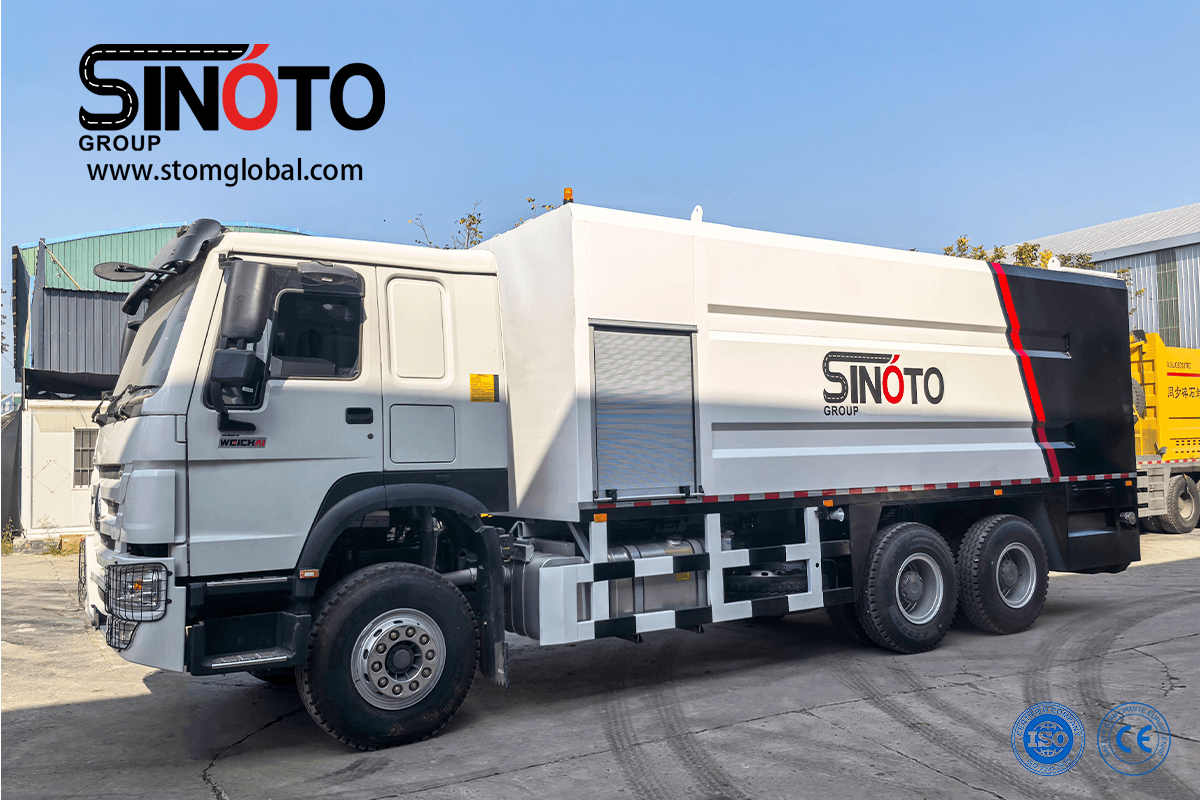
Before requesting a cement distributor price, it helps to line up the core specifications side by side. Here is a representative configuration for a high-capacity cement spreader truck:
| Parameter | Value |
|---|---|
| Chassis Brand | SinoTruck / Shacman |
| Engine Power | 257 kW (350 hp) |
| Cement Bins Capacity | 18 m³ |
| Spreading Capacity | 0.9–60 kg/m² |
| Max. Spreading Width | 2,500 mm |
| Spreading Accuracy | ±1% |
| Curb Weight / Total Weight | 15 t / 23 t |
| Overall Size (L×W×H) | 9,500 × 2,500 × 4,100 mm |
Notice the wide spreading capacity range (0.9–60 kg/m²). This range is only usable in practice if the control system can dial in and hold precise rates across the entire band — otherwise the printed spec sheet is meaningless on a real road base stabilization job.
Beyond rate adjustability, buyers evaluating a cement spreader for sale are usually weighing a broader set of priorities: dust control, labor requirements, and how well the machine fits into existing cement treated base or subgrade improvement workflows. A well-engineered cement distributor addresses all three at once.
For contractors building cement treated base layers ahead of asphalt or concrete paving, this combination of automated rate control and dust suppression is frequently the deciding factor over a lower-cost powder spreader that lacks a true closed-loop weighing system.
When comparing quotes for a cement spreader truck price, buyers should look past the headline number and confirm the following:
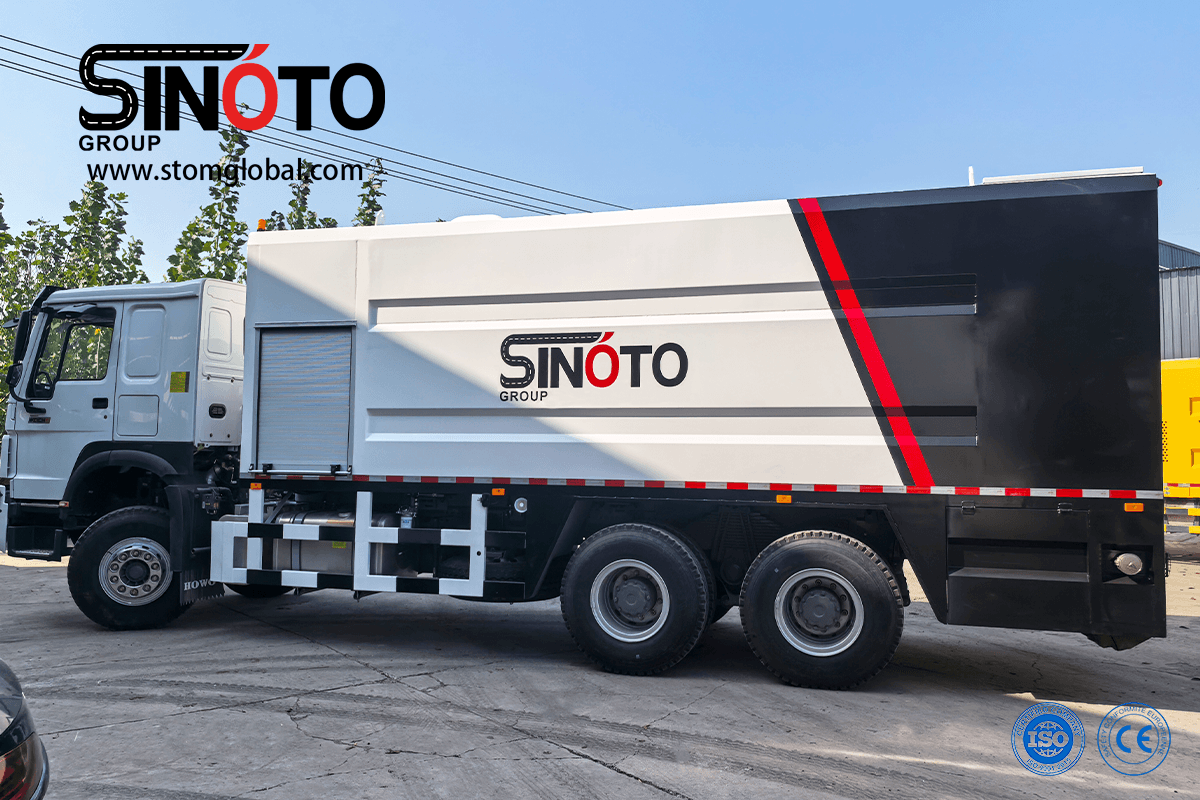
A cement distributor price varies mainly based on tank capacity (commonly 15–25 m³), chassis brand and emission standard, the sophistication of the weighing and control system, and whether dust-collection and remote-monitoring features are included as standard or optional. Buyers comparing an automatic cement spreader against a basic mechanical unit should factor in reduced material waste (thanks to ±1% accuracy) and lower labor costs (single-operator operation) when calculating total cost of ownership — not just the upfront cement spreader truck price.
If you are evaluating a cement spreader truck for an upcoming road base stabilization or soil stabilization project and want a spreading-rate demonstration, technical parameters, or a formal cement distributor price quotation, Request a Free Quote Now →
#CementSpreader #CementDistributor #SoilStabilization #RoadConstruction #ConstructionEquipment #RoadBaseStabilization

Whatsapp ID: 8619059581045

WeChat ID: +8619059581045

