Road builders and soil-stabilization contractors ask the same question every bidding season: can one machine handle cement, lime, and fly ash without swapping equipment between jobs? The short answer is yes — a modern cement spreader truck is engineered to do exactly that, and understanding how it works (and what to look for before you buy) can save a contractor thousands of dollars in downtime and material waste. This article breaks down what buyers actually care about and the real selling points behind today’s cement distributor machines.
“A spreader that can’t hold ±1% accuracy isn’t a spreader — it’s a guessing machine.” — a common complaint from site engineers who’ve used uncalibrated equipment.
A cement spreader, sometimes called a powder spreader or cement distributor, is purpose-built mechanical equipment used in road construction, foundation treatment, and large-scale earthworks. Its job is simple to describe but hard to execute well: distribute cement — or blends of cement with other powdered materials — evenly across a construction surface.
In practice, a cement spreader truck works alongside soil stabilizers and road rollers to build cement-stabilized layers, such as cement-stabilized crushed stone base courses, or to support broader soil-improvement projects. The machine loads powder into an onboard bin, meters it through a conveyor and discharge system, and releases a controlled, uniform layer onto the roadbed as the truck moves forward. Because the whole process is chassis-mounted, one driver can complete a job that would otherwise require a labor crew with hand tools — a major reason contractors are replacing manual spreading with automated equipment.
🚛 Mobility — Truck-mounted for fast repositioning between sites ⚖️ Precision Metering — Weighing system controls output down to the kilogram 🌬️ Dust Control — Bag-filter system limits airborne powder 📱 Remote Monitoring — Vehicle networking platform tracks construction data live 🔧 Anti-Bridging — Patented arch-breaking device keeps material flowing
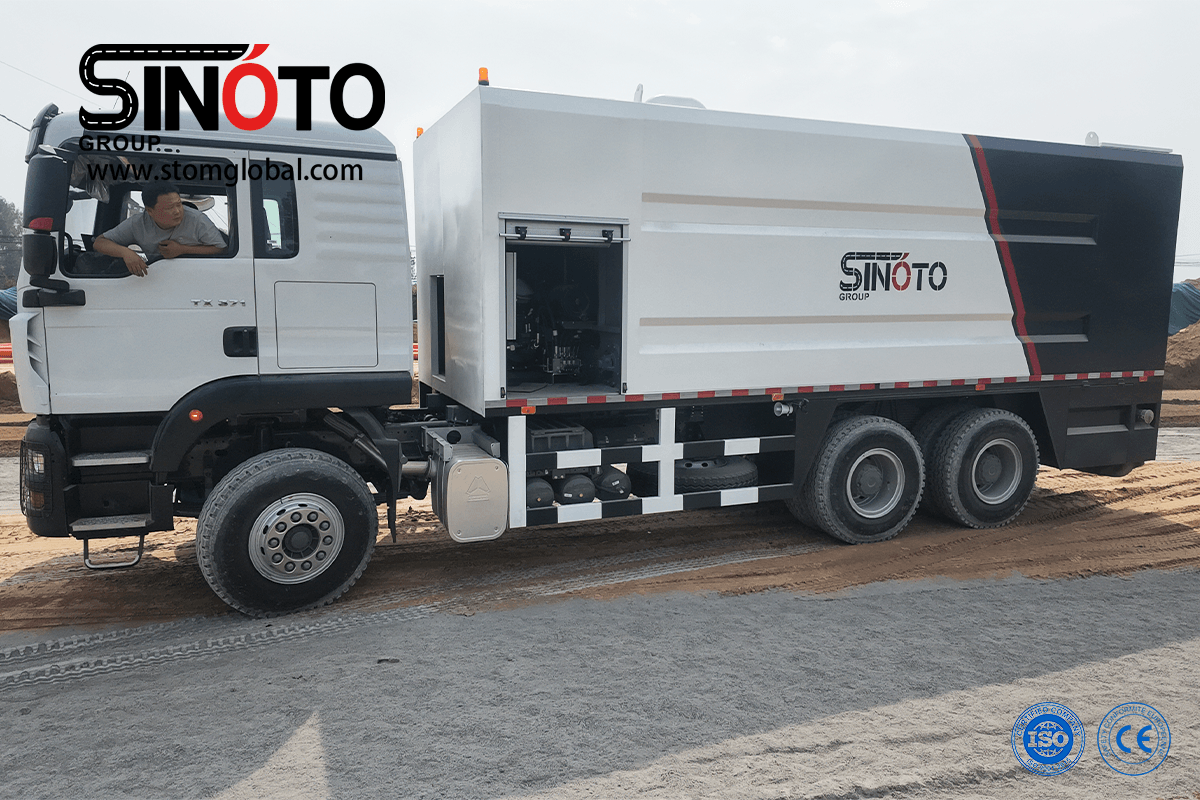
This is the question most buyers lead with, and it’s worth answering directly: yes. A well-designed cement spreader truck for soil stabilization is not limited to Portland cement. The same bin, conveyor, and discharge system that handle cement can also distribute lime and fly ash, making the machine suitable for cold recycling of roads and general road base stabilization work where different binder materials are specified by the engineer.
This versatility matters because highway, railway, and municipal projects rarely use a single material across an entire alignment. A subgrade might call for lime stabilization in one section and cement treated base construction in another, depending on soil conditions. Rather than mobilizing separate machines for each material, a single cement spreading machine with an adjustable metering system can switch between cement, lime, and fly ash with only a parameter change on the control panel — no mechanical retrofitting required.
| Material | Typical Application | Compatible Spreading Range |
|---|---|---|
| Cement | Cement-stabilized base courses, CTB layers | 0.9–60 kg/m² |
| Lime | Subgrade soil improvement | 0.9–60 kg/m² |
| Fly Ash | Cold recycling, soil modification | 0.9–60 kg/m² |
When contractors shop for a cement spreader for sale, the conversation almost always centers on four things: accuracy, dust protection, durability, and total cost of ownership.
Spreading accuracy. An automatic cement spreader with a weighing system should hit roughly ±1% accuracy. The buyer inputs the target kg/m² into a touchscreen, and the automated control system manages the rest — meaning the output doesn’t fluctuate with truck speed. That consistency is what prevents both under-treatment (weak subgrade) and over-treatment (wasted material and budget overruns).
Dust-free operation. On eco-sensitive or urban sites, dust complaints can shut down a project. A dust-free cement spreader design typically pairs a bag-filter system with a low-position discharge curtain to suppress powder clouds during spreading.
Feeding system reliability. Powdered materials are notorious for bridging and forming lumps inside storage bins. Buyers should ask specifically about anti-bridge vibration technology and inspection-hatch access, since a clogged feeding system is one of the most common causes of on-site downtime.
Chassis and component sourcing. Since the spreader body sits on a commercial chassis, brand reputation matters. Look for well-known chassis brands, imported hydraulic components (pump and valve), and a proven weighing/measuring system supplier — these details tend to separate reliable equipment from short-lived machines.
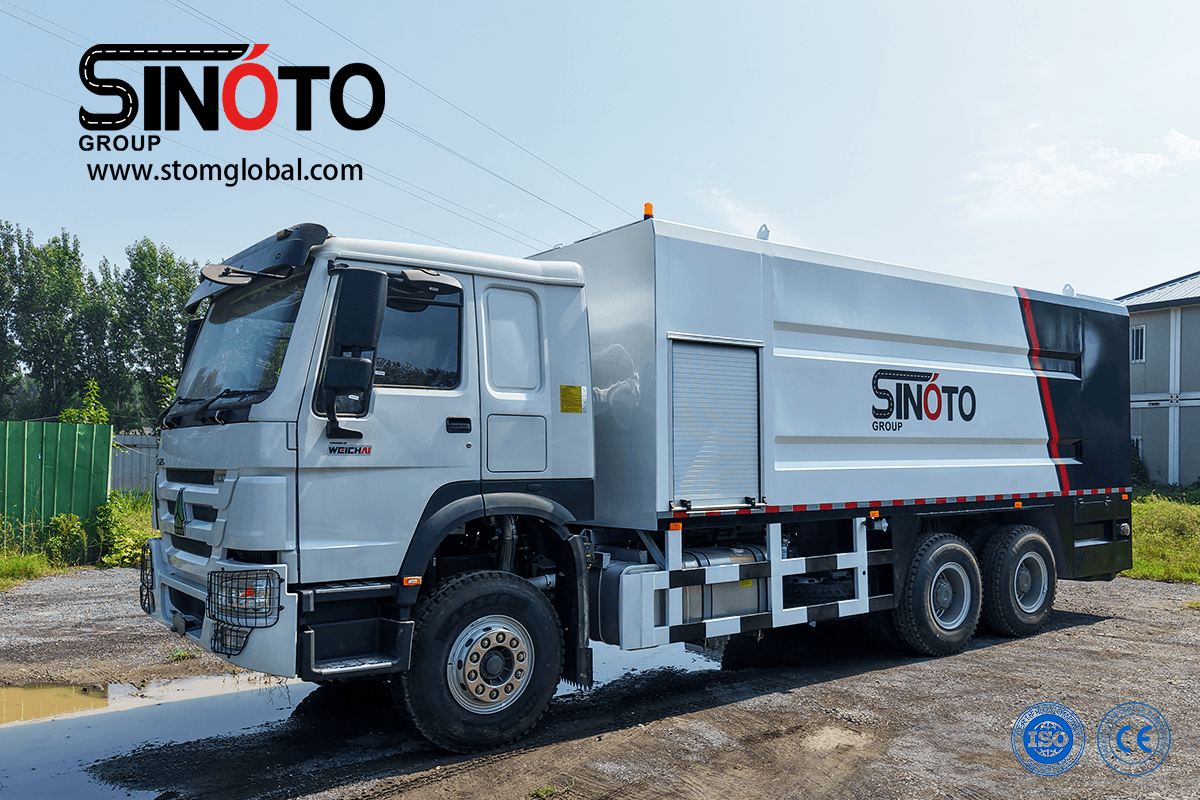
An automatic cement spreader removes the guesswork that plagues manual or semi-manual spreading. Because the fully automatic control system holds output steady regardless of vehicle speed, crews building a cement treated base get a more uniform layer thickness across the entire alignment — which directly affects long-term pavement performance.
There’s also a labor-efficiency argument. A single operator can run the entire spreading operation from the cab, monitoring construction parameters that are displayed, saved, and remotely transmitted through a vehicle networking service platform. Project managers can check spreading status from a mobile phone without visiting the site, which is particularly useful on long linear projects like highways and railways where sites stretch across many kilometers.
For contractors specializing in road base stabilization, this combination of automation, precision metering, and multi-material compatibility (cement, lime, fly ash) is what turns a single machine into a flexible asset across an entire project portfolio rather than a single-purpose tool.
Cement spreader truck price and cement distributor price vary based on several factors, so buyers should treat any quoted number as a starting point for a spec conversation rather than a flat catalog price. Key cost drivers include:
Because these variables interact, the most reliable way to get an accurate cement spreader truck price is to request a quote based on your specific project parameters — daily tonnage, target spreading width, and site conditions — rather than comparing headline prices alone.
Whether you need a cement spreader truck for soil stabilization, a bulk powder spreader for cement, lime, and fly ash, or a full cement distributor package with automated weighing and dust control, matching the right specification to your project scope makes the biggest difference in long-term cost and performance.
Request a Free Quote and Speak With Our Engineering Team →
#CementSpreader #CementSpreaderTruck #SoilStabilization #RoadConstruction #CementDistributor #RoadBaseStabilization

Whatsapp ID: 8619059581045

WeChat ID: +8619059581045

