If you’ve ever managed a road paving project, you already know the headache of dealing with solid, drum-packed bitumen. It won’t flow, it won’t pump, and it definitely won’t pave a road until it’s melted down into a usable liquid. That’s exactly the gap a bitumen melting machine fills — and it’s why this single piece of equipment has quietly become one of the most in-demand assets in modern road construction.
In this article, we’ll break down what a bitumen decanter actually does, how a barrel bitumen melter works step by step, what separates a reliable asphalt drum melter manufacturer from a risky one, and what kind of bitumen melting machine price you should realistically expect. Whether you’re comparing a 20ft bitumen decanter for a large-scale project or scouting a bitumen decanter for sale for a smaller crew, this guide covers the buyer questions that actually matter.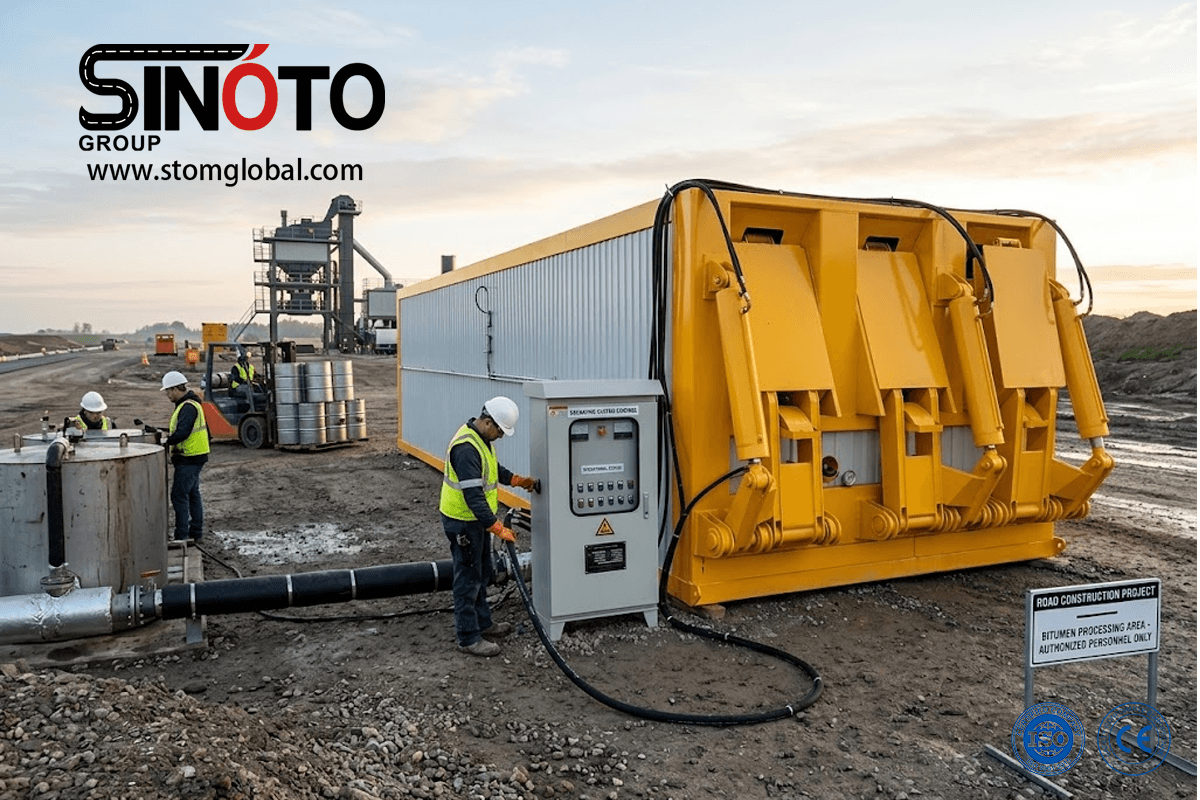
A bitumen decanter — sometimes called a bitumen drum melting machine — is purpose-built equipment designed to de-drum, melt, heat, and transfer packaged bitumen so it can be used directly in asphalt production or road maintenance. Since drummed bitumen is popular for its easy transport and safe storage, contractors need a machine that can take that solid or semi-solid material and turn it into flowable, job-ready liquid asphalt.
Here’s the basic workflow of a barrel bitumen melter:
💡 Industry insight: “The shift from open-flame melting to enclosed thermal-oil systems has cut average bitumen loss and fuel consumption significantly, while also reducing on-site fire risk” — a common observation echoed across road construction equipment reports.
This four-stage process — heating, de-drumming, purifying, and transferring — is why a well-engineered bitumen melting machine consistently outperforms manual, open-fire melting methods in both speed and safety.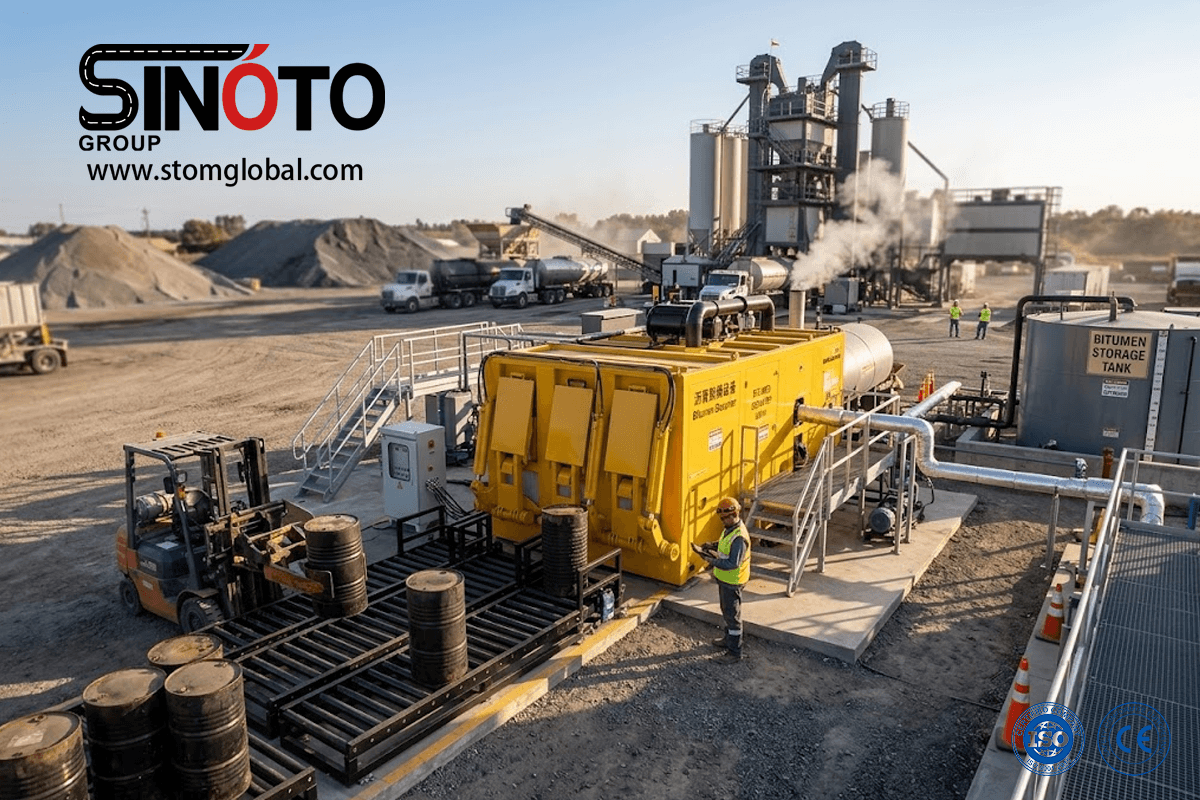
Not every project needs the same scale of equipment. This is one of the first things buyers ask: do I need a compact unit, or a containerized 20ft bitumen decanter?
A 20ft bitumen decanter is built inside a standard shipping-container footprint, which makes it easy to transport, relocate, and set up on remote sites without complex civil works. It’s especially popular for:
Here’s a quick comparison of typical configurations buyers evaluate:
| Footprint | Custom skid, larger area | Standard container size |
| Mobility | Moderate | High (crane/truck loadable) |
| Feed inlets | 3–5 ports | 3–5 ports |
| Rated pressure | Up to 250 psi | Up to 250 psi |
| Power source | Diesel or electric | Diesel-driven (grid-independent) |
| Best for | Fixed mixing plants | Remote/mobile projects |
Because a bitumen storage and melting combo unit reduces double-handling, many contractors treat the 20ft format as the default choice for new projects — especially in regions where reliable electricity isn’t guaranteed.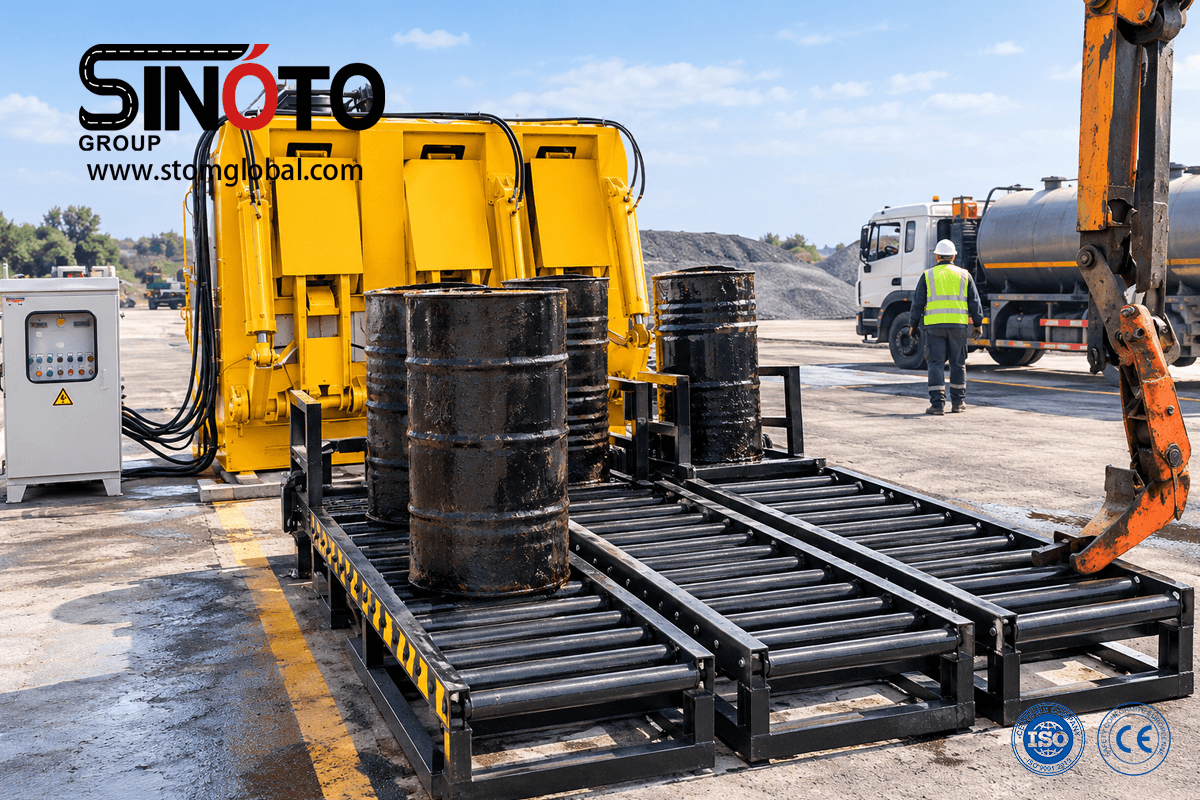
This is where most buyers either save money long-term or end up regretting a purchase. A bitumen melting machine manufacturer worth working with should be able to demonstrate the following without hesitation:
1. Structural durability
Look for heavy-duty, low-carbon steel construction. This isn’t cosmetic — it directly affects how long the machine survives rough job-site handling and how much you’ll spend on maintenance over its lifespan.
2. Automation level
A modern asphalt drum melter should include PLC or timer-based control systems that automatically regulate temperature and pressure. This reduces the need for constant manual monitoring and minimizes human error — a real safety factor when you’re working with material heated above 150°C.
3. Safety certifications and fail-safes
Ask specifically about:
4. After-sales support and spare parts availability
A bitumen decanter for sale listing that looks cheap upfront can become expensive fast if the manufacturer doesn’t stock spare thermal oil pumps, filters, or heating coils.
5. Reference projects
Any credible asphalt drum melter manufacturer should be able to point to real installations — ideally in climates or conditions similar to yours (hot/dry regions typically favor barrel decanters, while colder countries like Russia often lean toward bag-type melters).
🏗️ Buyer tip: Don’t judge a manufacturer purely on unit price. A machine that fails in year two — after you’ve already integrated it into your workflow — costs far more than the initial savings.
This is, understandably, the question everyone eventually asks. The honest answer: bitumen melting machine price varies significantly based on capacity, automation level, and whether you’re buying a standalone unit or an integrated bitumen storage system.
Key cost drivers include:
| Cost Factor | Impact on Price |
|---|---|
| Melting capacity (tons/batch) | Higher capacity = higher base cost |
| Automation (PLC vs manual) | PLC control adds cost but reduces labor |
| Container-based (20ft) vs skid-mounted | Container units often cost more upfront but save on installation |
| Number of feed inlets (3 vs 5) | More inlets increase throughput and price |
| Insulation and safety add-ons | Optional but recommended for high-temp operations |
| Manufacturer origin & shipping | Significant factor for international buyers |
While we won’t quote a single fixed number here (since bitumen decanter price ranges widely by region and specification), the general guidance is this: request itemized quotes from at least two or three manufacturers, and make sure the quote clearly separates equipment cost, shipping, installation support, and warranty terms. This is the only reliable way to compare a bitumen melting machine price apples-to-apples.
Sourcing directly from an established asphalt drum melter manufacturer rather than a reseller typically gives you:
When evaluating a bitumen decanter for sale, request:

A dependable bitumen melting machine — whether it’s a compact barrel bitumen melter, a full bitumen drum melting machine, or a containerized 20ft bitumen decanter — is no longer optional equipment for serious road construction operations. It directly affects your project timeline, your fuel and labor costs, and your on-site safety record.
The buyers who get the best long-term value are the ones who look past the sticker price and evaluate structural quality, automation, safety features, and manufacturer support together. Do that, and your bitumen melting machine price becomes an investment in uptime — not just an equipment line item.
Request a Free Quote for Your Bitumen Melting Machine or Bitumen Decanter →
Our team can help you compare specifications, capacity options, and pricing for both standard units and 20ft bitumen decanter configurations based on your project needs.

Whatsapp ID: 8619059581045

WeChat ID: +8619059581045


