Can one bitumen emulsion plant produce different grades of asphalt emulsion, including standard rapid-setting CRS, slow-setting CSS, and high-content polymer-modified emulsified asphalt?
For road contractors, asphalt producers, pavement maintenance companies, and distributors, this is an important purchasing question. A plant that can support multiple formulations gives producers greater flexibility when serving different road projects and markets.
According to the SINOTO product information, its bitumen emulsion plant is designed for multiple types of emulsified asphalt, including rapid-setting, medium-setting, slow-setting, cationic, anionic, and modified emulsions. The equipment can also be configured for SBS and SBR modified bitumen emulsion production, using heavy-duty colloid mills and enhanced soap systems.
In practical terms, this means the system can be configured to produce products such as CRS, CSS, and polymer-modified emulsified asphalt, provided that the plant configuration, formulation, emulsifier chemistry, polymer system, and operating parameters are matched to the required product.
💡 Quick Answer: Yes. The SINOTO bitumen emulsion plant is designed for flexible asphalt emulsion production, including rapid-setting, slow-setting, and modified emulsions. For high-polymer-content emulsions, the exact polymer type, concentration, formulation, and required equipment configuration should be confirmed before ordering.
The biggest advantage of a flexible asphalt emulsion plant is the ability to adapt the production system to different emulsion formulations.
Asphalt emulsion is not a single standardized product. Different grades are formulated for different applications, setting characteristics, climatic conditions, traffic levels, and pavement-treatment methods.
A producer may need rapid-setting emulsion for chip sealing, slow-setting emulsion for slurry seal applications, or polymer-modified emulsion for higher-performance pavement treatments.
The SINOTO system is designed around adjustable material dosing, water and emulsifier preparation, high-shear colloid milling, heating, pumping, cooling, and automated control.
| Emulsion Category | Example | Typical Purpose |
|---|---|---|
| Rapid-setting | CRS | Chip sealing and rapid breaking applications |
| Slow-setting | CSS | Slurry seal and other slower-breaking applications |
| Medium-setting | MS / CMS | Intermediate pavement applications |
| Cationic | CRS / CSS | Improved aggregate affinity and road applications |
| Anionic | Selected anionic grades | Specific aggregate and formulation requirements |
| Polymer-modified | SBS / SBR modified | Higher-performance pavement treatments |
| Modified emulsion | Customized formulation | Specialized road projects |
The manufacturer lists RS, CRS, MS, CMS, SS, CSS and CQS grades among the emulsion types that can be produced, with the actual production configuration depending on the requiredformulation.
Imagine a company supplying emulsified asphalt to several contractors.
One customer requires CRS for chip sealing.
Another requires CSS for slurry sealing.
A highway project requires a polymer-modified emulsion.
Buying a separate production line for every formulation would increase capital investment, factory space, maintenance requirements, and operating complexity.
A flexible bitumen emulsion machine can instead be configured around a production process capable of supporting different formulations.
The key components include:
Bitumen heating system
Water heating system
Soap solution preparation
Emulsifier dosing
Bitumen metering
High-shear colloid mill
Emulsion pumping
Cooling system
Storage tanks
PLC control system
📌 Buyer Insight: A plant’s flexibility is determined by the complete process configuration—not simply by the colloid mill. Before purchasing bitumen emulsion equipment, ask the manufacturer to confirm which formulations can be produced with the proposed configuration.
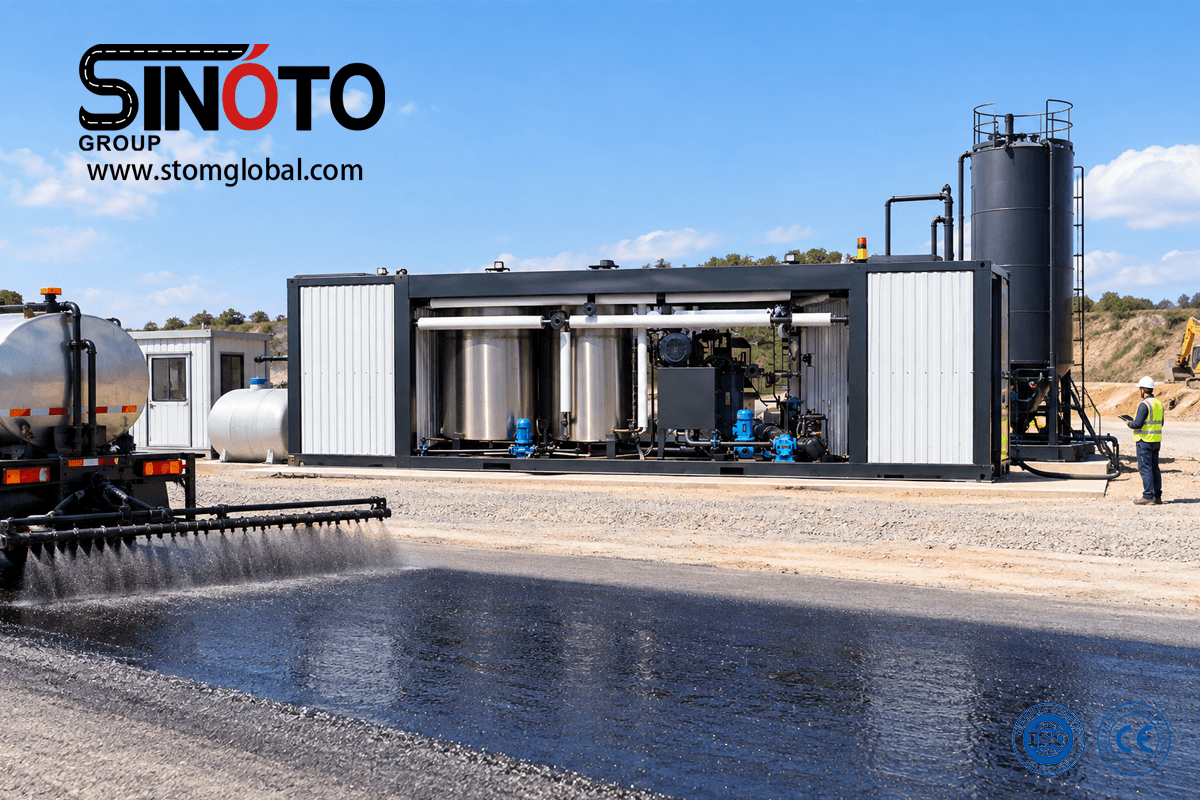
Yes, the SINOTO bitumen emulsion machine is designed to support different setting-speed classifications, including rapid-setting and slow-setting emulsions.
However, CRS and CSS are not produced simply by changing one machine setting. The formulation must be adjusted according to the desired emulsion characteristics.
CRS refers to a cationic rapid-setting asphalt emulsion classification.
Rapid-setting emulsions are commonly associated with applications where the emulsion needs to break relatively quickly after being applied and comes into contact with aggregate.
Typical applications can include:
Chip sealing
Surface dressing
Aggregate coating
Pavement maintenance
Road surface treatments
For producers targeting CRS, the formulation needs to consider the:
Bitumen Grade + Emulsifier + Water Ratio + Additives + Processing Temperature + Milling Conditions
A properly configured bitumen emulsion equipment system provides the dosing and emulsification functions required to maintain the target formulation.
CSS represents a cationic slow-setting asphalt emulsion classification.
Compared with rapid-setting grades, slow-setting emulsions are designed for applications where more working time is beneficial.
They can be used in applications such as:
Slurry seal
Surface treatments
Aggregate mixing
Pavement preservation
Certain cold-mix applications
For CSS production, the manufacturer needs to configure the soap system and formulation according to the required grade.
The plant therefore needs more than just a high-speed mill. Accurate metering and reliable control of the water, bitumen, emulsifier, and additives are equally important.
| Characteristic | CRS | CSS |
|---|---|---|
| Classification | Cationic rapid-setting | Cationic slow-setting |
| Breaking behavior | Relatively rapid | Relatively slow |
| Typical application | Chip sealing / surface dressing | Slurry seal / mixing applications |
| Key consideration | Fast breaking and aggregate coating | Longer working time and controlled breaking |
| Plant requirement | Accurate dosing + emulsification | Accurate dosing + emulsification |
Therefore, when purchasing a bitumen emulsion plant for sale, buyers should tell the manufacturer the exact emulsion grades they intend to produce.
The manufacturer can then determine the appropriate soap preparation system, dosing system, colloid mill configuration, heating/cooling arrangement, and control parameters.
This is one of the most important questions for buyers targeting premium pavement applications.
The answer is yes, with the appropriate configuration.
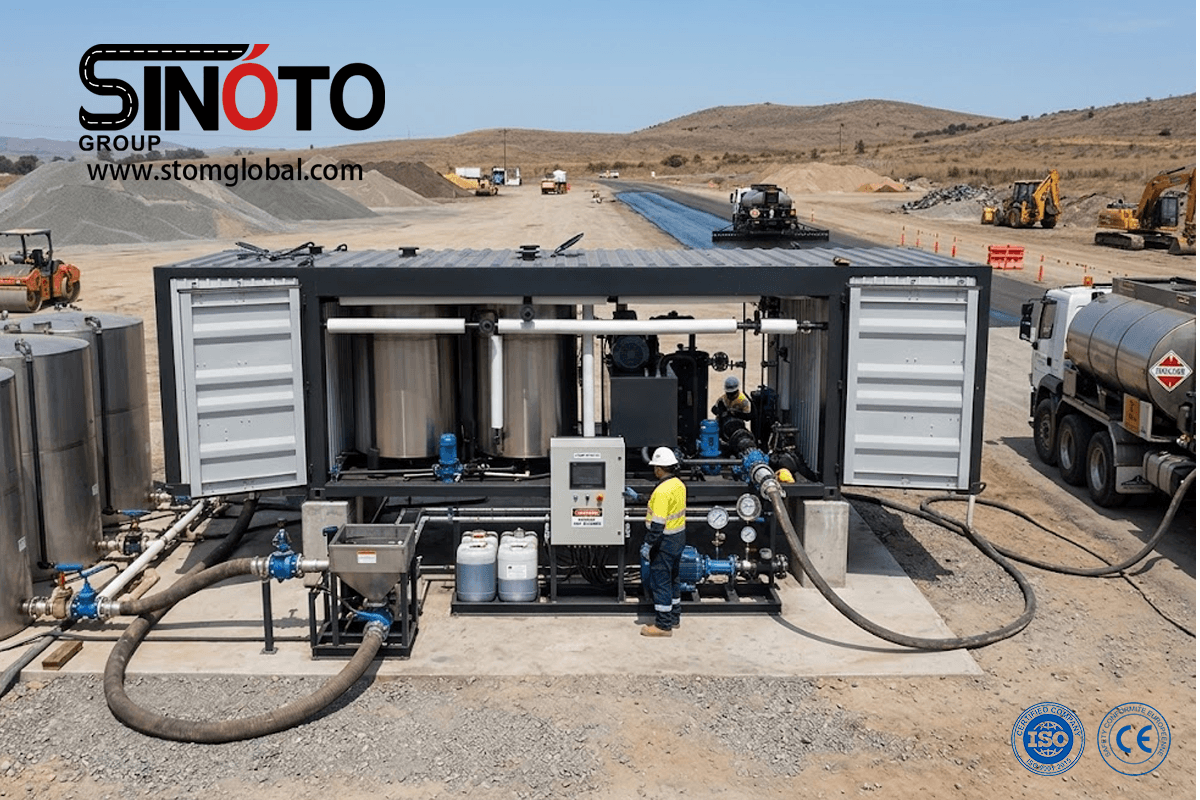
SINOTO states that its equipment can be configured for SBS and SBR modified bitumen emulsion production. For modified emulsions, the system can use heavy-duty colloid mills and enhanced soap systems designed for more demanding formulations.
Polymer-modified emulsified asphalt combines asphalt emulsion technology with polymer modification.
The polymer can improve selected performance characteristics of the resulting binder, depending on the polymer type, dosage, formulation, and application.
Common polymer systems include:
SBS — Styrene-Butadiene-Styrene
and
SBR — Styrene-Butadiene Rubber
These materials can be incorporated into modified asphalt systems to achieve different performance requirements.
However, “high-content polymer-modified” should not be interpreted as one universal formulation.
The actual polymer percentage depends on:
Required performance
Polymer type
Base bitumen
Emulsifier system
Polymer compatibility
Desired viscosity
Storage stability
Application method
Local standards
Customer specifications
Polymer-modified emulsions can place higher demands on the production system.
Compared with a conventional asphalt emulsion, a modified formulation may require:
Higher mixing intensity
More precise temperature control
Higher shear
Enhanced emulsifier system
Specialized colloid mill configuration
More precise polymer dosing
Additional storage or mixing capacity
This is why buyers looking for a bitumen emulsion machine for sale should provide their intended polymer formulation before receiving a final quotation.
🔬 Technical Note: The ability to produce polymer-modified emulsion depends on the complete formulation and equipment configuration. The plant should be engineered around the target polymer type, polymer content, base bitumen, emulsifier system, and required product specification.
When comparing a bitumen emulsion equipment manufacturer, buyers often focus on the initial bitumen emulsion plant price.
Price matters, but the more important question is whether the plant can reliably produce the formulations required by the business.
A low-cost machine that cannot produce your target CRS, CSS, or polymer-modified emulsion may ultimately require expensive modifications.
Before requesting a quotation, prepare a list of your target products.
For example:
| Required Product | Priority | Confirm With Manufacturer |
|---|---|---|
| CRS | High | Yes |
| CSS | High | Yes |
| Cationic emulsion | High | Yes |
| Anionic emulsion | Optional | Yes |
| SBS modified emulsion | Project dependent | Yes |
| SBR modified emulsion | Project dependent | Yes |
| High-polymer-content emulsion | Project dependent | Confirm exact formulation |
This allows the bitumen emulsion plant manufacturer to design the system around your actual production requirements.
The colloid mill is one of the most important components.
SINOTO’s system uses a high-shear colloid mill with an adjustable rotor-stator clearance down to approximately 0.01 mm.
The standard plant models use different colloid mill powers according to production capacity.
| Plant Model | Production Capacity | Colloid Mill Power |
|---|---|---|
| STEB-4 | 3–4 TPH | 11 kW |
| STEB-6 | 5–6 TPH | 22 kW |
| STEB-10 | 8–10 TPH | 37 kW |
| STEB-15 | 12–15 TPH | 45 kW |
For customers looking for a bitumen emulsion machine with higher production capacity, the colloid mill should be evaluated together with the complete material-flow system.
CRS, CSS, and modified emulsions can require precise formulation control.
The SINOTO system uses PLC-based automatic proportioning for asphalt, emulsifier, and water. The manufacturer states that automatic compensation can control proportioning error to approximately 0.5%.
This type of control can help maintain repeatability between production runs.
For commercial producers, consistency can be just as important as nominal production capacity.
Temperature management is another important factor.
Bitumen needs to be heated to an appropriate processing temperature, while the final emulsion may need controlled cooling before storage.
A complete asphalt emulsion plant for sale should therefore be evaluated based on:
Bitumen heating
Water heating
Soap preparation
Heat exchange
Emulsion cooling
Pipeline insulation
Pumping
Storage
If polymer-modified asphalt emulsion is part of your business plan, do not simply ask:
“Can this machine produce modified emulsion?”
Instead, provide specific information:
Polymer type: SBS / SBR / other
Target polymer content: ______ %
Base bitumen: ______
Target emulsion grade: ______
Required production capacity: ______ TPH
Application: chip seal / micro-surfacing / slurry seal / other
This allows the asphalt emulsion plant manufacturer to determine whether a standard configuration is sufficient or whether additional equipment is required.
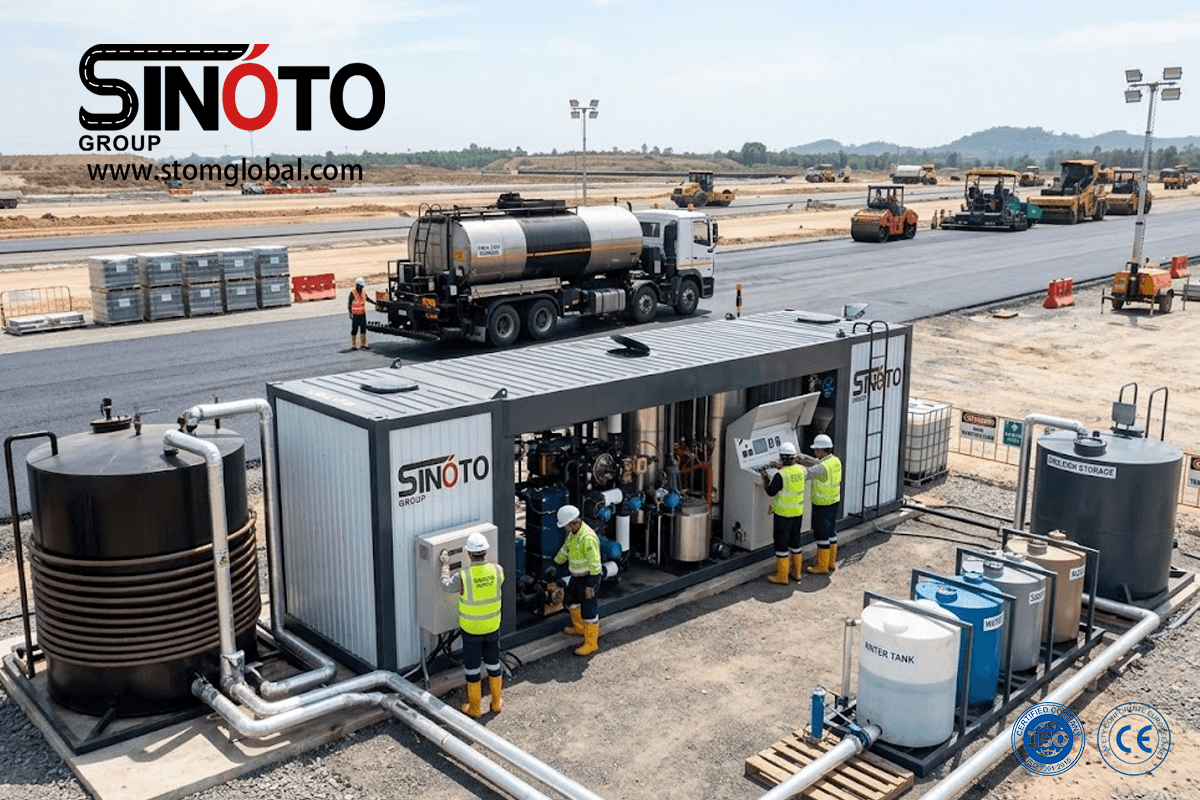
For international buyers searching for a bitumen emulsion plant for sale, equipment selection should be based on the complete production objective.
The following checklist can help.
Determine whether you need approximately 3–4 TPH, 5–6 TPH, 8–10 TPH, 12–15 TPH, or a customized capacity.
Determine whether you need:
CRS
CSS
MS
CMS
Cationic emulsion
Anionic emulsion
SBS modified emulsion
SBR modified emulsion
Consider whether automatic dosing, PLC control, automatic temperature control, and automatic production management are required.
Ask about:
Mill type
Motor power
Rotor material
Stator material
Adjustable clearance
Maintenance interval
Expected service life
Ask whether the supplier can help with:
Emulsifier selection
Soap solution preparation
Bitumen-to-water ratio
Polymer compatibility
Production parameters
Commissioning
Operator training
💡 Purchasing Tip: When comparing bitumen emulsion plant price, request quotations based on the same technical specification. A quotation without the same capacity, mill power, automation level, tank configuration, and formulation capability cannot provide a meaningful price comparison.
Yes, when the plant is properly configured, one production system can support multiple asphalt emulsion products for different pavement applications.
For example:
CRS
→ Chip sealing
→ Surface dressing
CSS
→ Slurry seal
→ Selected cold-mix applications
Polymer-Modified Emulsion
→ High-performance pavement treatments
→ Micro-surfacing and specialized applications
This flexibility can be particularly valuable for an asphalt emulsion producer serving multiple contractors.
Instead of building a separate factory for each product, the producer can use a flexible asphalt emulsion machine and adjust the production formulation according to the required product.
However, product changeovers should be managed carefully. Residual material in tanks, pipes, pumps, and the colloid mill can affect subsequent production. The plant’s cleaning and changeover procedures should therefore be included in the engineering plan.
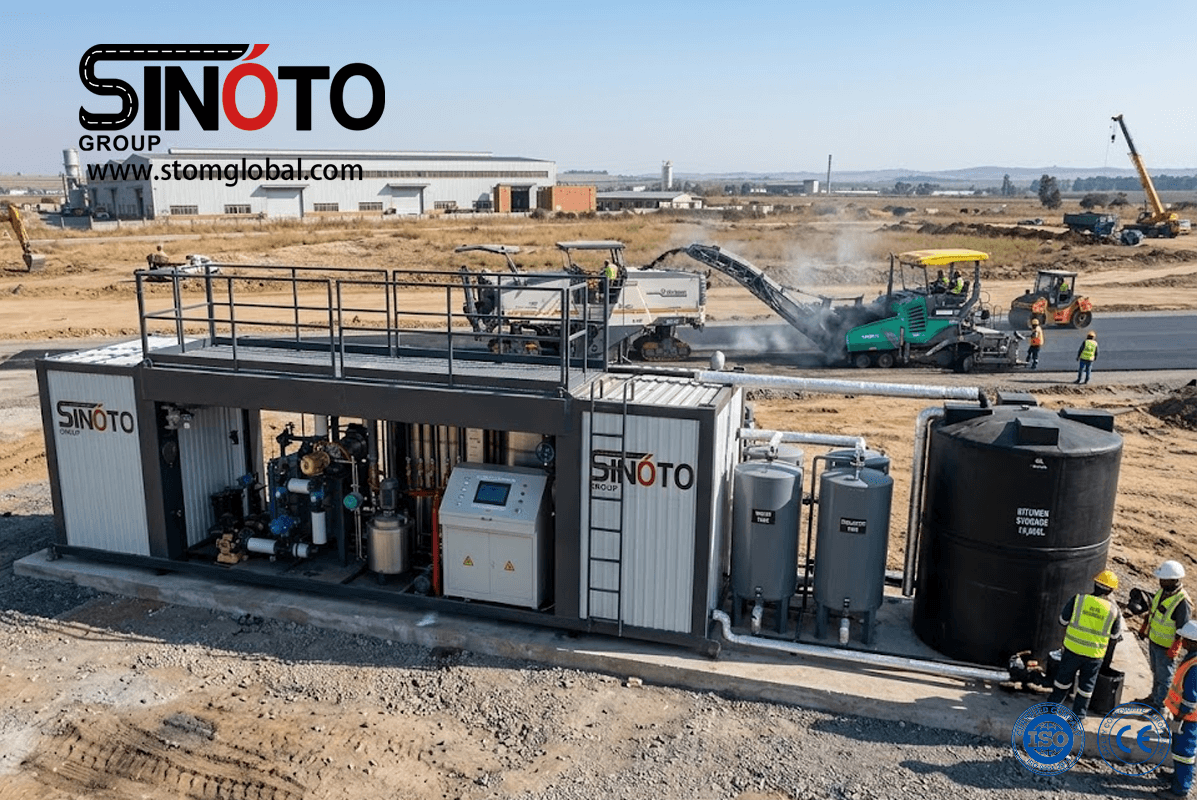
The answer is yes—with the appropriate plant configuration and formulation.
The SINOTO bitumen emulsion plant is designed for multiple asphalt emulsion grades, including rapid-setting and slow-setting cationic emulsions. The manufacturer’s technical information also states that the system can be configured for SBS and SBR modified bitumen emulsion production.
| Buyer Question | Answer |
|---|---|
| Can it produce CRS? | Yes, with the appropriate cationic rapid-setting formulation |
| Can it produce CSS? | Yes, with the appropriate cationic slow-setting formulation |
| Can it produce modified emulsion? | Yes |
| Can it support SBS modification? | Yes, with appropriate configuration |
| Can it support SBR modification? | Yes, with appropriate configuration |
| Can it produce high-polymer-content emulsion? | Potentially, subject to exact formulation and engineering requirements |
| Is a special configuration needed for modified emulsion? | Yes, depending on polymer type and formulation |
| Can production parameters be automated? | Yes, PLC-based automatic control is available |
| Can capacity be customized? | Yes, customized solutions are available |
The most important purchasing principle is to define the final asphalt emulsion product first, and then select the equipment configuration.
A buyer who only specifies “10 TPH asphalt emulsion plant” provides incomplete information.
A more useful requirement would be:
10 TPH + CRS + CSS + SBS-modified emulsion + automatic dosing + required storage capacity + destination-country electrical standard.
That specification gives an asphalt emulsion plant manufacturer enough information to develop a more accurate technical proposal and quotation.
If you are looking for a bitumen emulsion plant for sale, bitumen emulsion equipment, or a complete asphalt emulsion plant for sale, SINOTO can help match the production system to your required asphalt emulsion grades.
Send your requirements for CRS, CSS, SBS, SBR, polymer content, production capacity, and destination country.
The engineering team can then evaluate the appropriate colloid mill, emulsifier system, dosing equipment, heating/cooling system, storage configuration, and automation level.
👉 REQUEST A QUOTE FOR YOUR BITUMEN EMULSION PLANT

Whatsapp ID: 8619059581045

WeChat ID: +8619059581045

