If you are planning a highway, airport, port or municipal road project, one equipment question comes first: how does an automatic asphalt mixing plant work, and which one is worth buying? An asphalt mixing plant combines cold aggregate, filler and hot bitumen into consistent hot mix asphalt, one precisely weighed batch at a time. For contractors comparing an asphalt plant for sale, understanding the process is the fastest way to judge mix quality, emissions performance and long-term ownership cost. This guide walks through the workflow and highlights the buyer concerns and selling points of SINOTO’s stationary 40–400 tph range.
💡 Quick Answer: A modern automatic plant feeds cold aggregate, dries and heats it, screens it into hot bins, weighs every ingredient and mixes each batch in about 45 seconds under computer control.
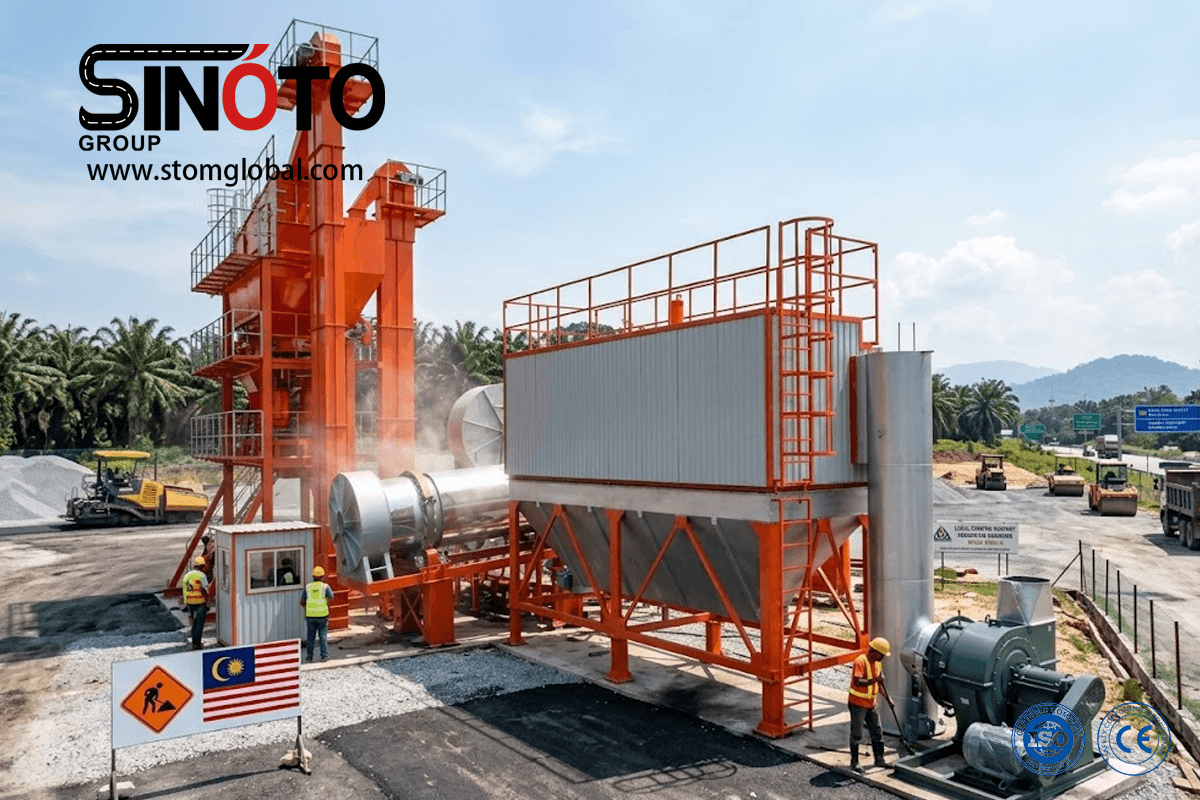
The process works as a tightly synchronized production line. Every stage feeds the next, while the control system keeps the whole chain balanced.
📊 Process Infographic: From Cold Stone to Finished Asphalt
🪨 Cold Feed ➜ 🔥 Drying ➜ 🌫️ Dust Removal ➜ 📶 Screening ➜ ⚖️ Weighing ➜ 🌀 Mixing
🪨 1. Cold aggregate feeding. A loader fills the cold bins with sand and stone of different sizes. Belt feeders with frequency inverters adjust each fraction’s flow, which sets the basic mix ratio. On the LB1000, for example, the cold bins total 4 × 7 m³.
🔥 2. Drying and heating. Aggregate enters a rotating dryer drum where the burner removes moisture and raises temperature. Burners can run on diesel, heavy oil, fuel oil, coal or natural gas, so buyers can pick the most economical local fuel.
🌫️ 3. Dust collection. Exhaust passes through a primary gravity or cyclone collector, then a baghouse fitted with NOMEX filter bags from DuPont. Emissions stay at or below 20 mg/Nm³, with Ringelmann I smoke density and noise at or below 70 dB.
📶 4. Screening and hot storage. A chain-type hot elevator lifts heated aggregate to a vibrating screen with four to six decks, which sorts it into separate hot bins (4+1 up to 6+1, depending on the model).
⚖️ 5. Precision weighing. Hot aggregate is weighed to ±0.5%, bitumen to ±0.25% and filler to ±0.2%. Bitumen arrives from a heated tank through a screw pump, using either electric or hot oil heating.
🌀 6. Mixing and discharge. A double-shaft forced batch mixer blends everything in a 45-second cycle. The finished mix drops into a truck or an optional hot-mix storage silo of 40, 60 or 80 tons.
Behind the scenes, a filler supply system delivers mineral powder by screw conveyor (15 to 44 t/h, depending on the model), while the control system coordinates every motor, burner and valve. It combines an industrial computer, PLC, monitor and printer, so operators follow the whole process on screen. This automation reduces operating intensity and keeps quality consistent from the first batch to the last.
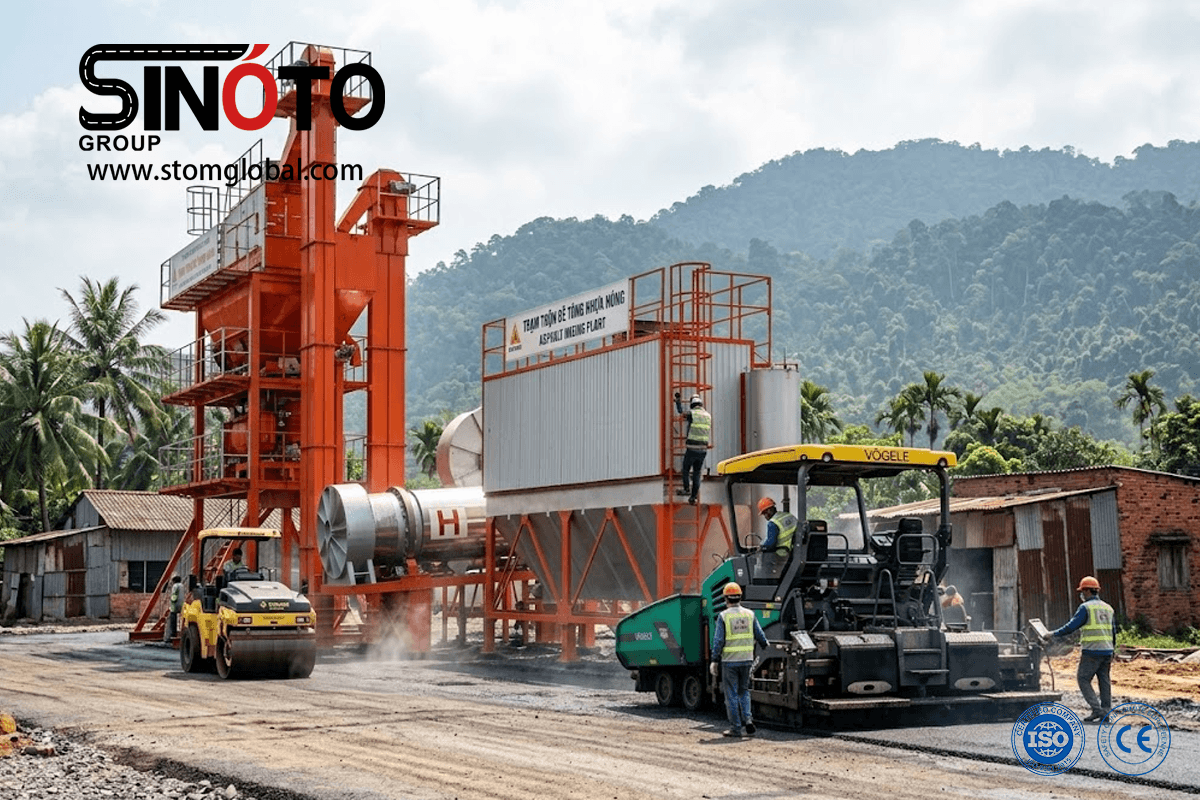
A stationary plant is built for long-term projects at a fixed location. Compared with mobile units, it offers higher capacity (up to 400 tph), better structural stability and more advanced dust collection, which is why it is the standard choice for highway construction. When evaluating an asphalt plant manufacturer, buyers usually focus on four pain points: emissions compliance, energy and labor efficiency, formula precision, and system reliability. The table below links each concern to a concrete selling point.
| Buyer Concern | Selling Point | Key Data |
|---|---|---|
| 🌍 Environmental compliance | Baghouse, eco-friendly burner, flue gas purification | ≤20 mg/Nm³ emissions |
| 🎯 Mix accuracy | Computerized batching and weighing | ±0.5% / ±0.25% / ±0.2% |
| ⚡ Productivity | 110% mixing capacity margin | 45-second cycle |
| ⛽ Fuel and energy | Multi-fuel burners; RAP exhaust reuse on some models | 5 fuel options |
| 🛠️ Uptime | Modular design, predictive maintenance, VFDs | Up to 80% less fault downtime in humid or hot sites |
| 🚚 Installation and moving | Quick-release flange connections | Assembly within 72 hours, 40% less labor |
🛠️ Buyer Tip: Ask every supplier for measurable data, not adjectives. Emission figures, weighing tolerances and filter bag material are easy to verify and hard to fake.
The modular structure deserves special attention. Because the main tower and drying drum use quick-release flange connections, disassembly and reassembly can be completed within 72 hours, saving about 40% labor compared with traditional welded structures. Some models also add sensor-actuated doors and intelligent compensation for material loss during batching.
Model choice depends on daily asphalt demand, site space and fuel availability. Smaller units suit urban maintenance, while larger models serve highways and airports.
| Model | Capacity (t/h) | Mixer (kg) | Power (kW) | Dryer Drum (mm) | Hot Bins |
|---|---|---|---|---|---|
| LB1000 | 90 | 1,100 | 242 | Φ1650×7000 | 4+1 |
| LB1500 | 130 | 1,600 | 326 | Φ1800×8000 | 4+1 |
| LB2000 | 175 | 2,200 | 413 | Φ2200×9000 | 5+1 |
| LB3000 | 260 | 3,000 | 590 | 2600×9500 | 5+1 |
| LB4000 | 340 | 4,000 | 836 | Φ2800×11000 | 6+1 |
Specifications are for reference only and may be adjusted by the manufacturer.
Mixer capacity grows from 1,100 kg to 4,000 kg per batch across the range, while the 45-second cycle stays the same. Footprint matters too: the LB1000 occupies about 40 × 32 × 18 m, while the LB4000 needs about 53 × 42 × 18 m. Before contacting any asphalt batch plant manufacturer, prepare your target tonnage, aggregate sizes, fuel choice and site altitude. High-altitude work above 2,500 meters is supported through nozzle replacement and air-fuel ratio optimization, and constant-temperature dehumidification modules help in humid climates.
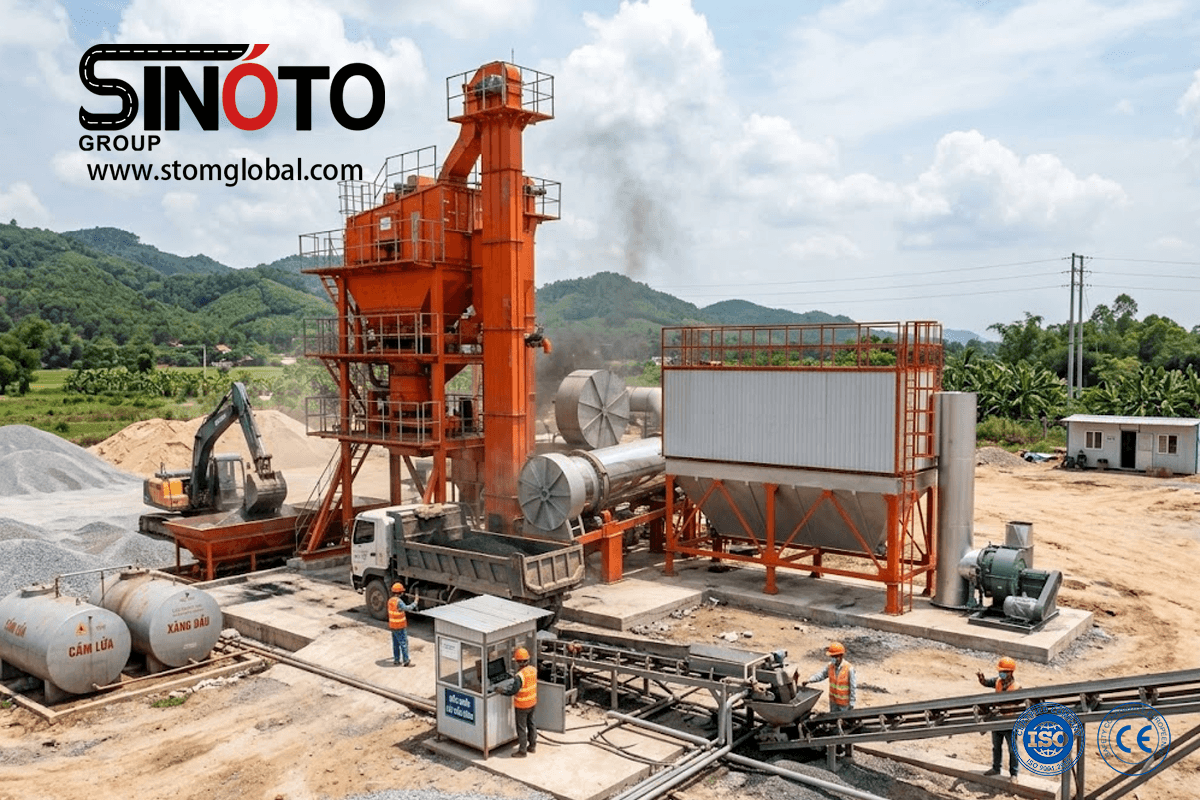
No one can give a fair figure without knowing your configuration, so treat headline numbers with caution. The asphalt mixing plant price mainly depends on:
Total asphalt plant cost goes well beyond the purchase invoice. Fuel consumption, labor, spare parts and downtime shape the real return. Selected models even cut fuel use by burning RAP exhaust gases in a secondary combustion stage. A plant with flexible burners and full automation may cost more upfront yet deliver a lower cost per ton. Request a written quotation that itemizes each subsystem so offers can be compared like for like.
📣 Pro Tip: Compare cost per ton produced over five years, not only the total on the quotation.
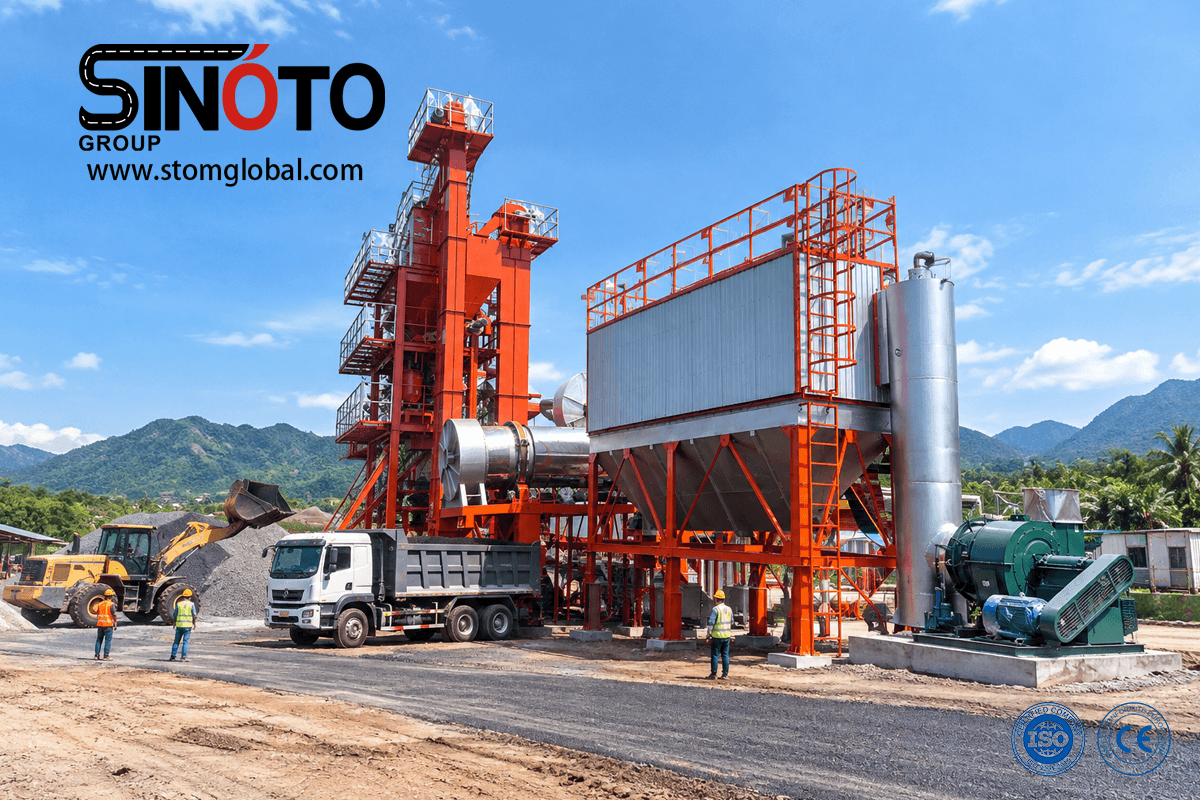
When shortlisting an asphalt mixing plant supplier, confirm these points:
SINOTO (Henan Sinoto Machinery Technology Co., Ltd.) positions itself as an asphalt mixing plant manufacturer and global supplier of road construction equipment. Whether you need an asphalt batching plant for sale for a highway contract or a compact unit for city maintenance, matching the plant to your real output target is the smartest first step.
📩 Ready to compare options? Tell us your target capacity, fuel type and project location, and our engineers will recommend a customized solution.
👉 Request a Free Asphalt Plant Quotation Now | 📧 info@stomglobal.com | 📱 WhatsApp +86 190 5958 1045
#AsphaltMixingPlant #AsphaltBatchingPlant #AsphaltPlant #RoadConstruction #SINOTO

Whatsapp ID: 8619059581045

WeChat ID: +8619059581045

