Every modern asphalt mixing plant is judged by two things: how consistently it produces hot mix, and how cleanly it does so. For contractors, stricter environmental rules have turned dust and emissions into a core purchasing criterion. Whether you are evaluating an asphalt batching plant for a highway project or an asphalt plant for municipal maintenance, knowing how dust is captured and fumes are treated helps you protect your permit, your crew, and your budget. This guide explains how a stationary plant handles both, using the STOM LB series (40–400 tph) as a reference.
| 🌪️ Two-Stage Dust Removal | 🔥 Multi-Fuel Burners | 🧪 Fume Treatment | 📉 Verified Output |
|---|---|---|---|
| Cyclone + baghouse | Diesel, heavy oil, natural gas, coal | High-temperature cracking | ≤20 mg/Nm³, Ringelmann I |
An asphalt batch plant dries and heats aggregate in a rotating drum, then blends it with bitumen and filler. Each step can release pollutants:
Buyers typically worry about failed inspections, complaints from nearby communities, wasted fuel, and unplanned downtime. STOM’s stationary asphalt mixing plant page addresses these directly. It lists environmental protection and exhaust emissions alongside energy waste, formula precision, and system stability as the four industry pain points its design targets.
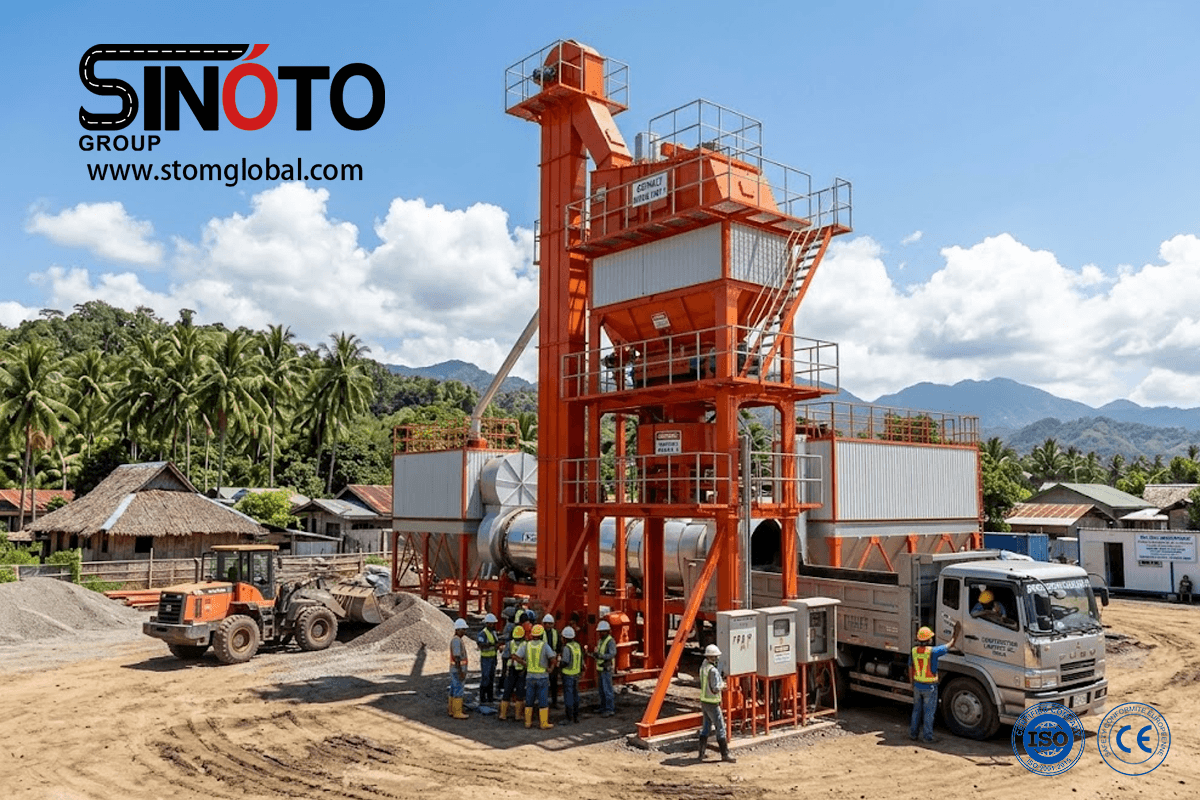
A well-designed asphalt mixing plant does not rely on a single filter. It uses staged collection so each device does the job it does best:
The table below shows how collection capacity scales across the LB range.
| Model | Capacity (t/h) | Baghouse Filter Area (m²) | Blower (m³/min) | Air Emissions |
|---|---|---|---|---|
| LB1000 | 90 | 420 | 570 | ≤20 mg/Nm³ |
| LB1500 | 130 | 530 | 740 | ≤20 mg/Nm³ |
| LB2000 | 175 | 620 | 1,130 | ≤20 mg/Nm³ |
| LB3000 | 260 | 1,020 | 1,600 | ≤20 mg/Nm³ |
| LB4000 | 340 | 1,260 | 2,230 | ≤20 mg/Nm³ |
Source: STOM technical parameters. Specifications are for reference and subject to change.
💡 Buyer’s Tip: Compare filter area against blower airflow, not just the emission claim. A generous filter area for the airflow means lower bag loading, steadier performance, and longer bag life. Recovered fines can often be reused as mineral filler, depending on your mix design.
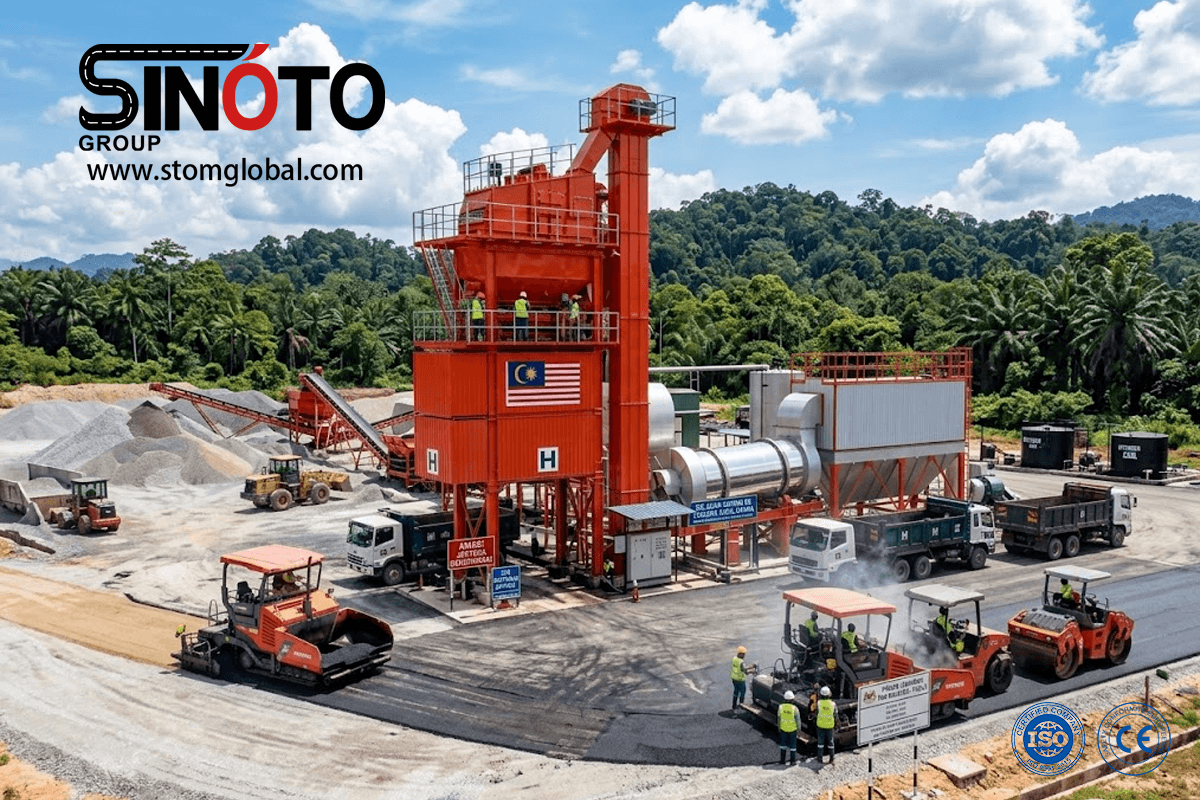
Filters catch what the burner and drum produce, but the cleanest emission is the one never created. Three design choices make the difference:
The result is an asphalt mixing plant that targets air emissions of ≤20 mg/Nm³, black smoke at Ringelmann I, and noise of ≤70 dB. An intelligent monitoring system adds real-time visibility, and predictive maintenance gives early fault warnings, which helps keep dust and emission equipment performing between service intervals.
A low asphalt plant price on paper can become expensive if the plant struggles with emission tests or needs frequent bag replacement. When you compare an asphalt mixing plant price, look beyond the headline number. The real asphalt plant cost includes fuel, filter bags, maintenance, downtime, and potential fines. Use this checklist with any asphalt plant supplier:
| Cost Factor | Why It Matters | Question to Ask |
|---|---|---|
| 🌪️ Dust collection design | Drives compliance and bag life | What emission value is guaranteed in mg/Nm³, and what filter area and bag material are used? |
| ⛽ Fuel flexibility | Fuel is one of the largest running costs | Which fuels can the burner run, and can it switch later? |
| 🔧 Installation and relocation | Affects labor and start-up time | How long does assembly take, and is the structure modular? |
| 🖥️ Automation and maintenance | Reduces downtime and rework | Does the system offer real-time monitoring and predictive maintenance? |
| 🤝 After-sales support | Protects long-term uptime | Are spare parts and technical guidance available? |
A capable asphalt batch plant manufacturer should answer each question in writing. STOM’s modular design, for example, uses quick-release flange connections so assembly or disassembly can be completed within 72 hours, saving about 40% of labor compared with traditional welded structures. For humid or hot climates, constant-temperature dehumidification modules and variable frequency drives are reported to reduce fault downtime by 80%.
Key takeaway: Dust and emissions are controlled by a system, not a single component. Two-stage collection, cleaner combustion, fume treatment, and precise automation work together, and the best purchase is the plant that documents all four.
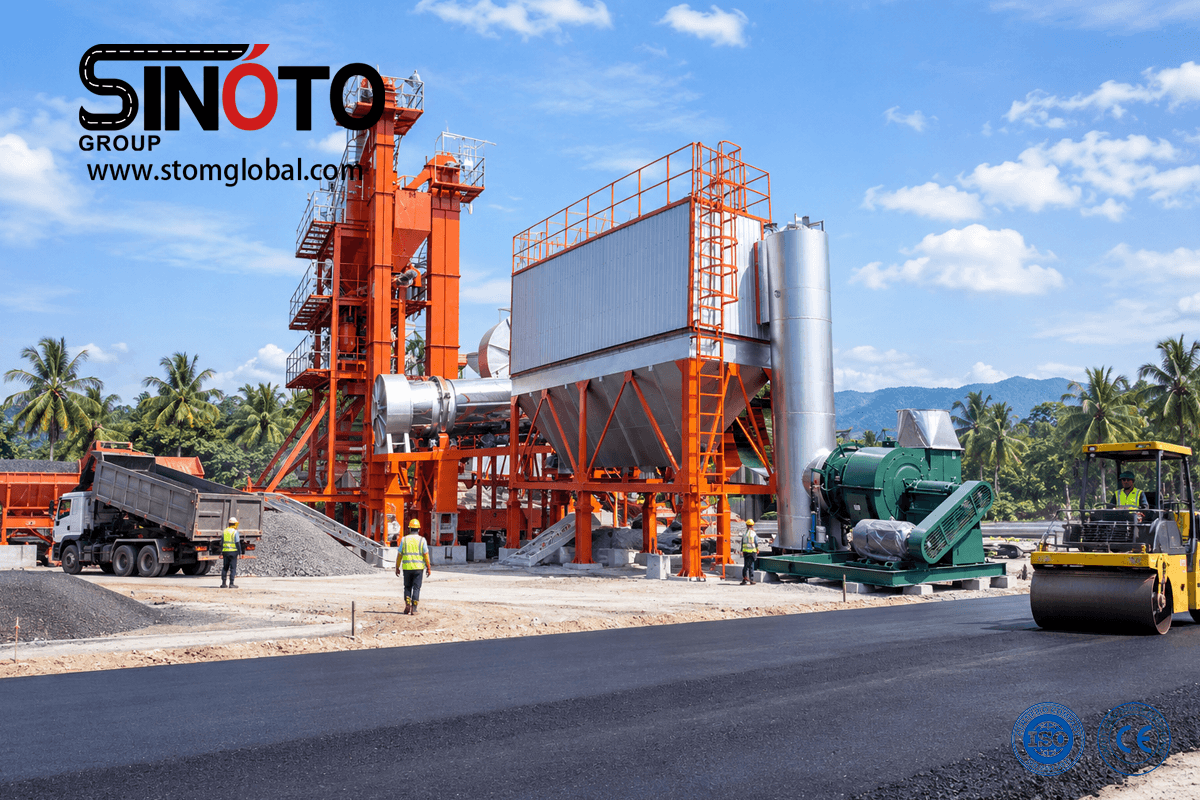
HENAN SINOTO MACHINERY TECHNOLOGY CO., LTD. (STOM) is a manufacturer and global supplier of asphalt machinery and road construction equipment. Its stationary asphalt batching plant for sale range spans LB1000 (90 tph) to LB4000 (340 tph), with a 45-second mixing cycle and a 110% mixing capacity margin. If you are searching for an asphalt plant for sale to serve highways, airports, ports, or city roads, the engineering team can customize the configuration to your output, fuel, altitude, and local emission standards.
📧 info@stomglobal.com | 💬 WhatsApp: +86-190 5958 1045
#AsphaltMixingPlant #AsphaltBatchingPlant #AsphaltPlantForSale #DustControl #RoadConstruction #STOM

Whatsapp ID: 8619059581045

WeChat ID: +8619059581045

