Choosing between a stationary asphalt mixing plant and a mobile asphalt batching plant is one of the most consequential decisions a contractor or plant owner will make. The right asphalt plant manufacturer doesn’t just sell equipment — they help you match production capacity, mobility needs, and budget to your actual project pipeline. This guide breaks down how these systems work, what separates the major product series, and how to evaluate a batch mix plant price against long-term value.
“A single underperforming subsystem — whether it’s the burner, the vibrating screen, or the dust collector — can quietly erode the output quality of an entire batch mix operation.”
Below, we walk through the engineering fundamentals, the classification systems buyers rely on, and the practical checklist for sourcing an asphalt batch plant for sale that actually fits your operation.

An asphalt batch mix plant is not a single machine — it’s an integrated production line made up of roughly a dozen coordinated subsystems. Understanding this structure is the first step toward evaluating any asphalt mixing plant manufacturers’ catalog intelligently.
📊 Core Subsystems of a Batch Mix Plant
| System | Function |
|---|---|
| Cold Feed Bins | Proportion raw aggregate before drying |
| Drying Drum | Removes moisture, heats aggregate |
| Burner | Supplies heat (coal or oil-fired options) |
| Hot Elevator | Lifts hot aggregate to the screening deck |
| Vibrating Screen | Sorts aggregate by particle size |
| Hot Storage Bins | Holds graded aggregate before weighing |
| Weighing & Mixing Unit | Precisely doses aggregate, filler, bitumen; blends |
| Bitumen Supply System | Meters and delivers hot bitumen |
| Filler Supply System | Delivers mineral filler |
| Dust Collector | Captures emissions for environmental compliance |
| Finished Product Silo | Stores mix pending truck loading |
| PLC Control System | Automates the full cycle, flags faults |
💡 Info point: In a typical bitumen batch mix plant, each cycle — weighing, mixing, discharge — takes roughly 45 to 60 seconds. This batch-by-batch process, rather than continuous flow, is precisely what allows for tighter gradation control and consistent oil-to-stone ratios.
Because every stage feeds the next, buyers evaluating any asphalt batch plant should ask manufacturers for cycle-time data and dust-emission compliance certificates, not just headline tonnage figures.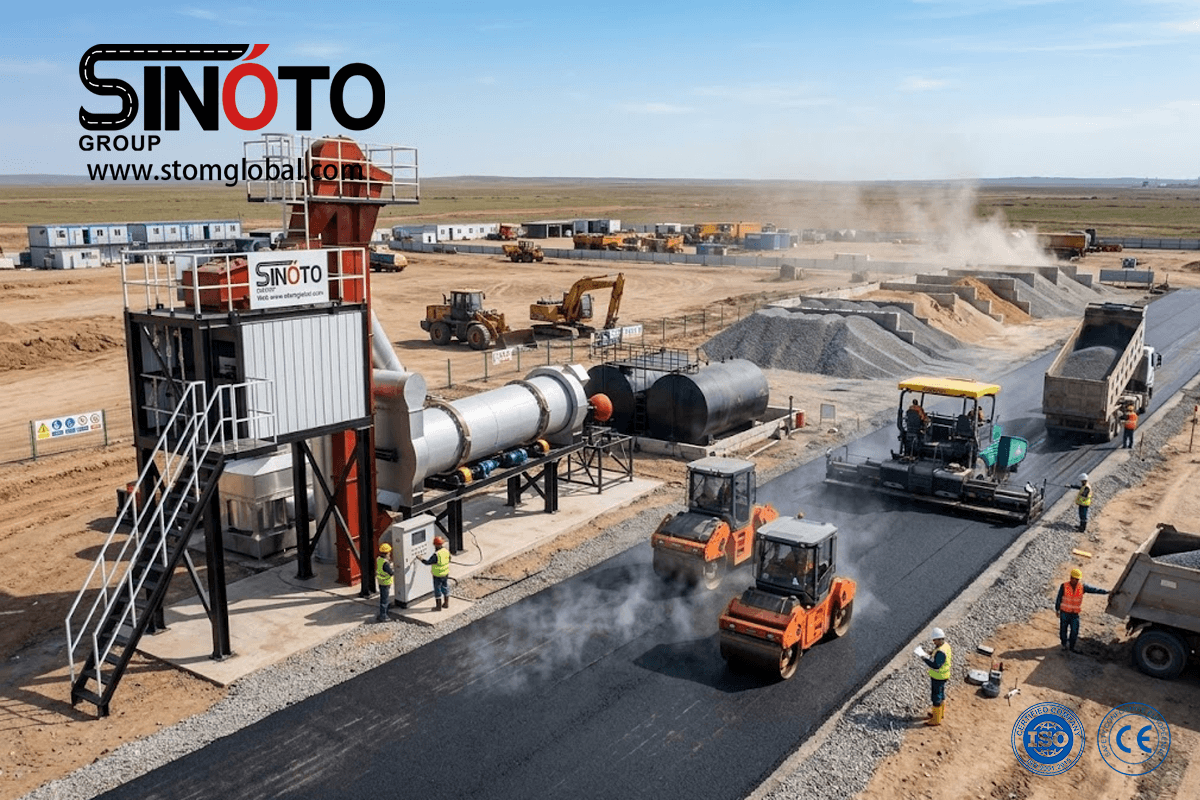
This is usually the first fork in the road for buyers. The market segments into three mobility categories, and the answer depends entirely on how often you relocate.
“If you plan to relocate your plant several times a year, the higher upfront cost of a mobile asphalt batch mix plant is typically recovered within about two years through saved relocation expenses.”
📊 Mobility Comparison at a Glance
| Configuration | Relocation Frequency | Upfront Cost | Best Fit |
|---|---|---|---|
| Stationary plant | Rarely/Never | Lower | Urban programs, fixed hubs |
| Semi-fixed plant | Occasional | Moderate | Mid-size highway jobs |
| Mobile asphalt plant | Multiple times/year | Higher | Rural roads, maintenance crews |
For contractors weighing a mobile asphalt plant for sale against a stationary unit, the deciding factor isn’t just mobile asphalt plant price — it’s the total relocation math over the equipment’s service life. A portable asphalt plant for sale with a lower sticker price can end up costing more if it sits idle while being disassembled and re-erected repeatedly.
 Batch Plant or Drum Plant — Which Mixing Technology Delivers Better Value?
This is the second major classification, and it drives quality outcomes as much as cost. Buyers researching asphalt mixing plant portable or fixed options will encounter two dominant technologies.
📊 Continuous Drum Mix vs. Intermittent Batch Mix
| Comparison Point | Drum Mix (Continuous) | Batch Mix (Intermittent) |
|---|---|---|
| Process | Cold aggregate dries and mixes continuously in one drum | Aggregate is dried, then re-screened, weighed, and mixed per batch |
| Workflow | Simplified, single-drum flow | Multi-stage: weigh → mix → discharge, ~45–60 sec/cycle |
| Precision | Moderate gradation accuracy | Higher precision via double screening and double weighing |
| Complexity/Cost | Simpler, lower investment | More complex systems, stronger quality assurance |
| Flexibility | Best for a single, consistent mix design | Can switch mix formulas between batches |
⚠️ Selection tip: A drum-style asphalt mobile plant suits cost-sensitive operations producing a narrow range of mix specs. A bitumen batching plant built on batch technology is the better fit when specification changes are frequent or quality tolerances are tight — for example, when a single job requires both a base course and a surface course mix.
For reference, a forced (batch) plant with a 1,500 kg mixer typically produces around 120 tons per hour, running one batch roughly every 45 seconds — a figure worth requesting from any asphalt plant manufacturer during your comparison.
Most manufacturers organize their lineups into three main series, and understanding the technical differences helps you interpret any asphalt batch mix plant price quote you receive.
1. Mobile Twin-Drum Series — integrates the drying drum and mixing drum into a unified structure, lowering investment cost. Forward rotation dries, reverse rotation discharges, with mid-mounted draft. This design underlies many entry-level mobile asphalt batch plant offerings.
2. Mobile Forced-Mix Series — pairs the drying drum with a twin-shaft forced mixer for more thorough blending and superior finished-mix quality, backed by higher-precision weighing systems. This is a common choice among buyers comparing mobile bitumen plant options where consistency matters more than rock-bottom pricing.
3. Bottom-Silo Finished Product Series — the most technically dense product line, featuring:
📊 Nine Engineering Highlights
| # | Design Feature |
|---|---|
| 1 | Bottom-mounted product silo reduces footprint and removes the shuttle-conveyor failure point |
| 2 | Bag dust collector positioned above the drying drum, cutting heat loss |
| 3 | Imported vibration motors drive linear screens for higher sorting efficiency |
| 4 | Double-row plate-chain elevator extends service life |
| 5 | Specialized mixing paddle design with high-torque drive |
| 6 | Optimized drum lifting-flight structure for drying efficiency |
| 7 | Reserved interface for hot recycling equipment expansion |
| 8 | Dual-machine, dual-control automation with self-diagnostic fault feedback |
| 9 | Modular design for fast transport and installation |
📊 Quick Series Comparison
| Series | Core Advantage | Best Suited For |
|---|---|---|
| Twin-Drum | Simple structure, lower cost | Budget-conscious small/mid contractors |
| Forced-Mix | Thorough mixing, stable quality | Projects with strict quality demands |
| Bottom-Silo | Compact, automated, expandable | Large enterprises, long-term operations |
 New vs. Used, and How Much Capacity Do You Actually Need?
Beyond configuration and mixing technology, two practical questions decide the final purchase.
New equipment vs. secondhand:
📊 New vs. Used Asphalt Plant Comparison
| Factor | New Plant | Used Plant |
|---|---|---|
| Condition | Factory-fresh, transparent history | Requires inspection for wear/abuse |
| Manufacturer Support | Full installation & commissioning support | Often limited or unavailable |
| Upfront Cost | Higher | Lower |
| Best For | New entrants seeking stable operation | Budget-limited or short-term projects |
Sizing to demand: Companies without historical production data should size capacity to peak-season demand rather than average demand. For instance, if daily output needs to hit 3,000 tons during 10% of the year but only 1,000 tons the rest of the time, a plant rated in the 200–400 ton-per-hour range is a reasonable middle ground — a calculation any serious asphalt batch mix plant price conversation should account for.
Whether you’re evaluating a stationary asphalt mixing plant for a fixed hub or sourcing a mobile asphalt mixing plant for a multi-site rural program, the right configuration depends on your production targets, relocation frequency, and quality requirements.
👉 Request a Free Quote & Technical Consultation — talk to our engineering team about matching your project scope to the right plant series and get a detailed batch mix plant price breakdown today.

Whatsapp ID: 8619059581045

WeChat ID: +8619059581045

